Sea Level Acceleration

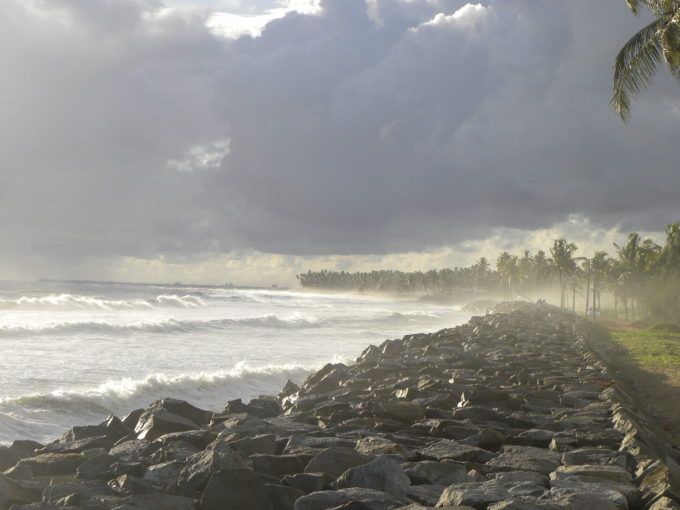
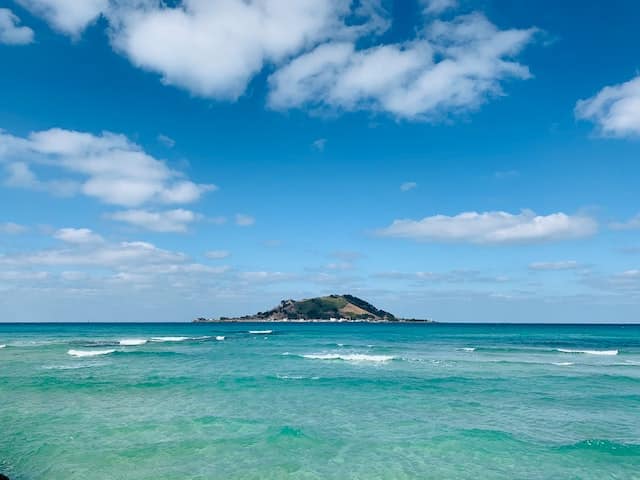
Photo by Jieun Lim on Unsplash

Sea Level Acceleration

By Robert Hunziker

This article addresses the most current research on sea level rise, as well as adaptation measures being taken around the world. Of special interest, brilliant adaptation measures are taking place in the face of higher seas.

“Sea level has been fairly stable for 6,000 years, which is most of human civilization… but its risen eight (8) inches or twenty (20) centimeters in the last century, and the rate is tripling right now.” (Source: John Englander, Expert on Sea Level Rise, Talks with US Harbors About Changing Coastal Waters, July 5, 2022).

According to knowledgeable sources, regardless of mitigation efforts, sea levels are destined to rise by approximately one foot by 2050. Thereafter, fairly high probabilities indicate up to 5 feet-to-10 feet by the end of the century, which is considerably more than “up to 3 feet in a high-GHG emissions scenario” forecast by the Intergovernmental Panel on Climate Change (IPCC).

The oceans have absorbed 93% of the planet’s heat, and there’s no off switch to stop warming ocean waters from melting the world’s two largest ice structures Greenland and Antarctica. What if the oceans did not absorb 93% of the planet’s heat? According to scientists’ calculations in the multi-award-winning documentary Chasing Coral (2017) if oceans stopped absorbing heat, land temps would average 122°F.

During the 1990s Greenland and Antarctica combined lost 81 billion tons of ice mass per year on average. A decade later, during the decade of the 2010s, the ice mass loss increased 6-fold to 475 billion tons per year on average. (Source: Greenland, Antarctica Melting Six Times Faster Than in the 1990s, NASA, March 16, 2020)

NASA’s findings, published online in the journal Nature from an international team of 89 polar scientists from 50 organizations, are the most comprehensive assessment to date of the changing ice sheets. It is startling information that seems to predestine higher sea levels. The question of the decade, therefore: How to stop the runaway-freight-train loss of ice by Greenland and Antarctica? Is it even possible to control a warming ocean as the root cause?

Speaking of which, on August 30, 2022 the Journal of Geophysical Research published the following paper by A. T. Bradley, et al: The Influence of Pine Island Ice Shelf Calving on Basal Melting. (Basal melting occurs from heat delivered by the ocean beneath ice shelves.)

Synopsis of the Bradley paper: “Pine Island Ice Shelf in West Antarctica, which holds back enough ice to raise sea levels by 0.5 meters (1.5 feet), could be more vulnerable to complete disintegration than previously thought. A new study led by British Antarctic Survey (BAS) scientists shows two processes whose recent enhancement already threatens the stability of the shelf can interact to increase the likelihood of collapse.” (Source: British Antarctic Survey, Scientists Expose Vulnerabilities of Critical Antarctic Ice Shelf, Phys.org, September 21, 2022)

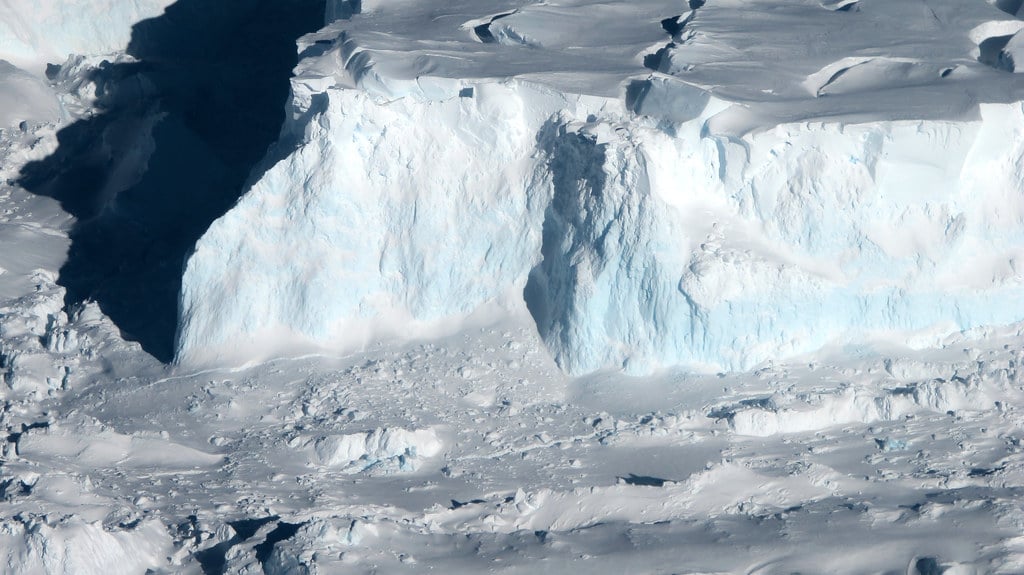
Pine Island ice shelf, which serves to buttress Pine Island Glacier, is but one of a few hundred ice shelves surrounding Antarctica that hold back the potential of rapid flow of glacial ice to the sea. A collapsing ice shelf is equivalent to taking the goalie out of a hockey game; the net is wide open for rapid flow of the glacier to the sea. As it happens, an ice shelf collapse increases the rate of glacial flow by up to eight (8) times.

It goes without saying that collapsing ice sheets that buttress glacial ice flow are not a welcomed event for the world’s 136 port cities, each with more than one million inhabitants.

Scientists are still shaking in their boots over the shocking disintegration/collapse of Conger Ice Shelf six months ago. It’s the first-ever ice shelf collapse on East Antarctica, which is the coldest and driest location on the planet. On March 14-16 Conger ice shelf suddenly disappeared from satellite photos. It had been there for over a thousand years. All it took was an unusual warm spell and more than a thousand years of solid ice collapsed within only a few days! It’s little wonder scientists are still shaken. East Antarctica has always been considered invincible… until the recent past.

US Harbors of Rockland, ME recently interviewed John Englander, an oceanographer and a Research Fellow at the Institute of Marine Sciences at UC Santa Cruz and one of the world’s foremost speakers on sea level rise. (Source: John Englander, Expert on Sea Level Rise, Talks with US Harbors About Changing Coastal Waters, July 5, 2022).

According to Englander: “By midcentury, it’s going to be at least a foot higher and by the end of the century, perhaps 5-to-10 feet higher. We need to wake up to a new reality about sea level because sea level determines the shoreline… We need to start now re-designing harbors for the future… Adaptation to higher sea levels is the future.”

Of major concern, “The rate of global sea level rise has tripled in 30 years. It’s gone from an average of a millimeter and a half up to five millimeters in 30 years… if we only melt 5% of global glacial ice, it’s 10 feet of sea level rise.”

Yet, Englander says: “The good news is that we have time to adapt. The bad news is it’s going to change harbors; it’s going to change every coastline from big cities like Jakarta and New York to rural fishing villages in Thailand and Africa.”

A leading institution for ocean studies is NASA’s Jet Propulsion Laboratory, which will increasingly be an important resource for civil engineers around the world. A recent NASA JPL seminar provides perspective: (1) sea level change (2) how fast it is rising (3) contributing factors, and (4) the influence of land hydrology and melting ice. Josh Willis an oceanographer at NASA JPL recently conducted the following seminar: Rising Tide: Tackling Sea Level Rise from Above and Below, California Institute of Technology, 2022.

The ocean’s cover more than 2/3rds of the planet’s surface, and they are rising. In Willis’s view, “it’s a bit of a startling idea that 2/3rds of the planet is rising.” The rising sea level is a well-documented event since the early nineties by a series of satellites that have been launched to give a record of how sea levels change all across the planet. The satellites with launch dates: Sentinel 6 (2020) Jason 3 (2016) OSTM/Jason 2 (2008) Jason 1 (2001) and TOPEX/Poseidon (1992).

Thereby, NASA has tools to measure sea level rise as well as its causes. In precise fashion, satellite measurements of the ocean repeatedly occur every second of the hour. This produces an entire map of the ocean once every ten days, providing a global picture of the ocean, similar to tidal gauges of the world.

According to Willis: The planet has been warming pretty rapidly for the past 100 years. And on an historic basis, it’s happening very quickly. What’s different today is that over the last 150 years we’ve changed the composition of the atmosphere radically and increased CO2 by almost a factor of two, meaning we’re running at double the rate of CO2 of the past one-half million years. This is a major global change that will not go away for a long time.

As such, we are changing how the climate works as most of the excessive energy or heat that’s trapped by greenhouse gases goes into the ocean; it’s actually 93%. Thus the oceans get warmer as well as bigger as heated water expands, which accounts for 1/3rd of modern day sea level rise. In total (1) melting inland glaciers and (2) melting ice sheets and (3) warming of the water account for sea level rise.

Significantly, the past 150 years of sea level rise is unprecedented in human history. A graph of the last 30 years of satellite recordings demonstrates the rate of rise increasing during the first 10 years at 2mm per year followed by 3mm in the middle 10 years and 4.5mm per year over the past 10 years. That rate of rise has more than doubled in only 30 years. NASA views this as one of the most comprehensive indicators of how much human influence has changed the climate.

Additionally, Grace satellite missions are another source that actually weigh the land. For example, since the early 2000s, Greenland (20+ feet of water trapped in ice) has lost 5,000,000,000 (five trillion) tons of ice. The heated oceans are responsible for melting Greenland around the edges of the island, which is the major contributor to sea level rise.

New research by the Geological Survey of Denmark and Greenland claims that anthropogenic-influenced climate change has set in motion irreversible Greenland ice loses amounting to 110 trillion tons, which would trigger nearly a one-foot global sea level rise this century on its own. (Source: Jason E. Box, et al, Greenland Ice Sheet Climate Disequilibrium and Committee Sea-Level Rise, Nature Climate Change, August 29, 2022).

Moreover, the National Ocean Service of the National Oceanic and Atmospheric Administration (NOAA) 2022 Sea Level Rise Report technical analysis provides an updated projection for U.S. coastal waters thru the year 2150. Accordingly, the next 30 years or today’s generation will see sea level rise of 10-12 inches or one solid foot along U.S. coastlines. This projection is equivalent to the sea level rise of the past 100 years, 1920-2020 happening in only 30 years. This is one more example of acceleration.

Making matters much more tenuous, NOAA warns: “Failing to curb future emissions (ed.- which is about where mitigation efforts stand today) could cause an additional 1.5-5.0 feet of rise for a total of 3.5-7.0 feet by the end of this century.” (Source: 2022 Sea Level Rise Technical Report, National Oceanic and Atmospheric Administration).

Adaptation to Higher Sea Levels

According to John Englander, society needs a new vision of the planet. It needs to learn to “build higher and smarter.”

For example, Korea is building the first floating community for thousands of homes. Busan Metropolitan City, Korea, the second-largest city in South Korea and home to the country’s largest port is home to Oceanix Busan, a floating city prototype to house 12,000 people. The floating city will be dependent upon its own energy, water, and food without relying upon city resources. Completion date is set for 2025. The design will help regenerate marine ecosystems by promoting coral reef growth underneath the complex.

In the Netherlands, floating homes of Schoonschip in Amsterdam rise up during flood periods with utilities attached via an umbilical that absorbs movement. During flooding episodes, homes float and then settle back down to the ground able to handle 6-8 feet of sea level rise.

Finest Bay Area Development (Finnish/Estonian), Shimizu Corporation (Japanese), and Blue21 (Dutch) have plans to build Green Float Tallinn, a floating island city for 40,000 inhabitants on the Baltic Sea. The floating island will not generate waste. Resources will either be reused, recycled, or upcycled. The objective is to achieve food self-sufficiency, energy autarky, circular water systems, and carbon positivity within a closed loop system.

The Dutch floating home model is now a project under construction in the Maldives. The first block of floating homes for the Maldives Floating City development of 5,000 homes are tethered to a lagoon floor and linked together.

Denmark, the Netherlands, Germany, and the UK are all strengthening design standards for building and coastal infrastructure to protect against sea level rise according to the OECD Responding to Rising Seas report, utilizing sea walls, surge barriers, water pumps, and overflow chambers.

China is building sponge cities. The underlying principle of sponge cities is to give water enough room and enough time to drain into the soil where it falls instead of channeling it away and sequestering it in dams. Sponge cities require large green spaces. An example is the coastal city Ninbgo, where an eco-corridor on an uninhabitable post-industrial site turned the channelized river into a meandering waterway surrounded by native plants that filter water. It has become a habitat for native flora and fauna and improved water quality as well as control over flooding.

British architecture studio Grimshaw and Dutch manufacturer Concrete Valley are developing Modular Water Dwellings, floating concrete and glass houses for areas subject to flooding. The dwellings will be prefabricated in factories and used to turn waterfronts into new city neighborhoods. Solar panels will allow each dwelling to self-generate power. Prototypes are under construction.

San Francisco Bay, which has lost 90% of its wetlands, still has some of the most important coastal wetlands in the Western Hemisphere. It is working to expand and protect its wetlands, which are key to a functioning hydrology system: “Wetlands not only provide valuable habitat for fish and birds, acting as the base of the marine ecosystem, but wetlands have also been shown to be one of nature’s most efficient plant communities for capturing carbon from the atmosphere, trapping organic carbon quicker and better than forests, thus reducing carbon in the atmosphere. Coastal wetlands also help to buffer our communities from sea level rise, acting as a sponge to capture floodwaters before they reach our homes and businesses. In short, wetlands, if protected, expanded and restored, are one of the most valuable ecosystem tools for reducing the impact of climate change.” (Source: Expand & Restore Bay Wetlands to Fight Climate Change, April 30, 2022)

Adaptation planning has never been more important. Mauna Loa, Hawaii measurements of CO2 continue a relentless upwards trajectory, causing more global warming, which nowadays should be labeled “global heating,” as sea level goes ever higher, and higher, at ever faster rates.

Mauna Loa CO2 measurements:

August 2022 @ 417.19 ppm

August 2021 @ 414.47 ppm

August 2020 @ 412.78 ppm

During the 1960s the global growth rate of CO2 averaged +0.8 ppm. Today it’s nearly three times that rate. Correspondingly, the rate of sea level rising of the past 30 years has more than doubled.

Since the beginnings of humanity when rubbing two sticks together was an eye-opening moment nothing compares to today’s rate of CO2 and sea level rise. Could it be that a few thousand years of the wonderful Goldilocks era not too hot, not to cold fostered complacency? Which, in turn, propagates the brand-new Age of Adaptation.

Post Script


Adaptation takes on new significance when consideration is given to the following update from a highly respected source. The following statement comes from Climate Dominoes, Publisher: Breakthrough – National Centre for Climate Restoration, Melbourne, May 2022 by David Spratt, Climate Code Red, September 28, 2022:

“At just 1.2°C of global average warming, tipping points have been passed for several large Earth systems.  These include Arctic sea ice, the Greenland Ice Sheet, The Amundsen Sea glaciers in West Antarctica, the eastern Amazonian rainforest, and the world’s coral systems. The world will warm to 1.5°C by around 2030, with additional warming well beyond 1.5°C in the system after that. Yet even at the current level of warming, these systems will continue to move to qualitatively different states. In most cases, strong positive feedbacks are driving abrupt change. At higher levels of warming, the rate of change will quicken. The meme that “we have eight years to avoid 1.5°C and tipping points” should be deleted from the climate advocacy vocabulary. It is simply wrong.”

“Certainly, in the case of West Antarctica, the evidence continues to pile in that the Thwaites glacier is primed to trigger a much wider loss of ice mass across the Amundsen sea glacial system, for example: Thwaites ‘doomsday’ glacier could begin rapid melt with ‘just a small kick’, researchers say.”

“Similarly, scientists now report that Greenland ice sheet has passed a point of system stability and is now “irreversibly committed” to a significant sea-level rise regardless of twenty-first-century climate pathways.”


Robert Hunziker is a freelance writer and environmental journalist whose articles have been translated into foreign languages and published in over 50 journals, magazines and sites worldwide.

This article was originally published on September 30, 2022 © Counterpunch
Robert Hunziker lives in Los Angeles and can be reached at rlhunziker@gmail.com.
The Overshoot Dilemma

Photo by Kelly Sikemma; Unsplash
Image by Kelly Sikkema; Unsplash

The Overshoot Dilemma

By Robert Hunziker

Climate change and global warming, which is the largest part of the ‘change’ aspect, is suddenly getting the kind of special treatment that’s reserved for national tragedies. A special commission has been established to investigate a way out of the biggest human-caused failure of all time.

It wouldn’t be quite so disturbing if it were not for the fact that the truth about the widespread danger from fossil fuels has been in the public domain for decades now.

People in the highest positions academically, politically, and the business community have known for decades that CO2 emissions will eventually overheat the planet. But, none of them had the balls to stand up to the fossil fuel companies and right-wing hacks and the despicable denier core of charlatans. They are as guilty as the denier hacks.

Whenever society at large is under extraordinary threat, aka existential threat, special commissions composed of prominent members of the establishment pop up to study the situation and make recommendations. Only recently the 911 Commission (2002) and the Financial Crisis Inquiry Commission (2009) are two prime examples. These special commissions have a common genesis of responding to a threat to the established way of life.

Hooray (maybe, maybe not, but at any rate sorrowfully) climate change has now joined the ranks. It’s officially designated an extraordinary threat to society. As of May 2022 the Climate Overshoot Commission has been established. Its first meeting is June 2022 at Lake Como, Italy.

The commission is composed of a wide swath of pristine leadership personalities, including past presidents, prime ministers, ministers of foreign affairs, professors, former heads of international organizations like the WTO. Indeed, they are a shiny brass group with credentials up the wazoo.

The commission will consider the risks attendant to overshooting 1.5°C and the range of response options for addressing overshoot. Based upon their mission statement, 1.5°C overshoot is preordained.

But honestly, isn’t this commission comparable to creating a commission to study what to do after the dam breaks?

Why study an overshoot of 1.5C? Ecosystems throughout the planet are already nearly overshooting or maybe actually overshooting in some cases at only 1.2C above baseline. By the time 1.5C hits there may not be enough pieces left to put Humpty Dumpty back together again.

The commission may have the wrong idea and wrong target. If the commission is going to tackle the manifold risks of climate change, they should focus on the root cause, not the after effects. Why should a commission spend time and energy trying to figure out how to handle a totally unprecedented blowup of the climate system, when they should focus on the root cause of global heat and try to stop it before exceeding 1.5C?

Maybe the answer is to pivot to the Special Commission on Removing Fossil Fuel Infrastructure.

Several ecosystems (the Great Barrier Reef) are already in trouble. In that sense the commission may be needlessly spinning its wheels. Moreover, the signs of irreversible collapse is discussed in several key situations described in a recent landmark study: Dana M Bergstrom, et al, Combating Ecosystem Collapse from the Tropics to the Antarctic, Global Change Biology, Vol. 27, issue 9, February 25, 2021.

The Bergstrom study examined 20 ecosystems from Australia’s coral reefs to terrestrial Antarctica and discovered forces of ecosystem collapse driven by global climate change and regional human impacts. Nineteen (19) of the twenty (20) ecosystems are already bordering on irreversible damage.

According to the study group, an estimated 30% of global land area is already degraded, directly affecting nearly one-half of the world’s population. Ecosystems are deteriorating globally. “The endpoint of disruption and degradation of ecosystems is potentially or actually irreversible collapse.” The study found destructive processes at an advanced stage.

“We assessed evidence of collapse in 19 ecosystems (both terrestrial and marine) … extending from northern Australia to coastal Antarctica, from deserts to mountains to rainforests, to freshwater and marine biomes, all of which have equivalents elsewhere in the world,” Ibid.

In other words, their domain of study is a facsimile for what’s happening throughout the planet. In their words: “We assessed evidence of collapse.” The evidence was ubiquitous, wherever they looked. “Our analysis clearly demonstrates the widespread and rapid collapse, and in some cases the irreversible transition rather than gradual change at a regional scale.” (Bergstrom)

Here’s a summation of the Bergstrom study findings: “The 19 ecosystems presented have collapsed or are collapsing according to our four criteria (see Table S1 for details). None has collapsed across the entire distribution, but for all there is evidence of local collapse. Rapid change (months to years) has occurred in several cases (Figure 2c, Table S1). We identified 17 pressure types affecting the 19 ecosystems (Figure 1). The key global climate change presses are changes in temperature (18 ecosystems) and precipitation (15 ecosystems), and key pulses are heatwaves (14 ecosystems), storms (13 ecosystems) and fires (12 ecosystems). In addition, each ecosystem experienced up to 10 (median 6) regional human impact pressures (presses and/or pulses) (see Figure 1). Habitat modification or destruction has occurred in 18 ecosystems, often at substantial levels, but over a relatively small spatial scale in the Antarctic ecosystem. Run-off with associated pollutants was the most common single human impact pulse (6 ecosystems).”

Note that “the key global climate change presses” are all directly or indirectly a result of global warming. Hence, the primary target for any commission should be how to prevent global warming in the first instance, not what to do once it’s exceeded a flash point of 1.5C above baseline. Then, it may be too late.

More to the point, we as a society know much more about how to control greenhouse gas emissions at the source than we know about mitigation of ecosystem damage once 1.5C is breached or metaphorically after the dam bursts.

Where’s the commission to get off fossil fuels?


Robert Hunziker is a freelance writer and environmental journalist whose articles have been translated into foreign languages and published in over 50 journals, magazines and sites worldwide.

This article was originally published on June 14, 2022 © Counterpunch
Robert Hunziker lives in Los Angeles and can be reached at rlhunziker@gmail.com.
Polar Scientist Explains Peril of Thwaites

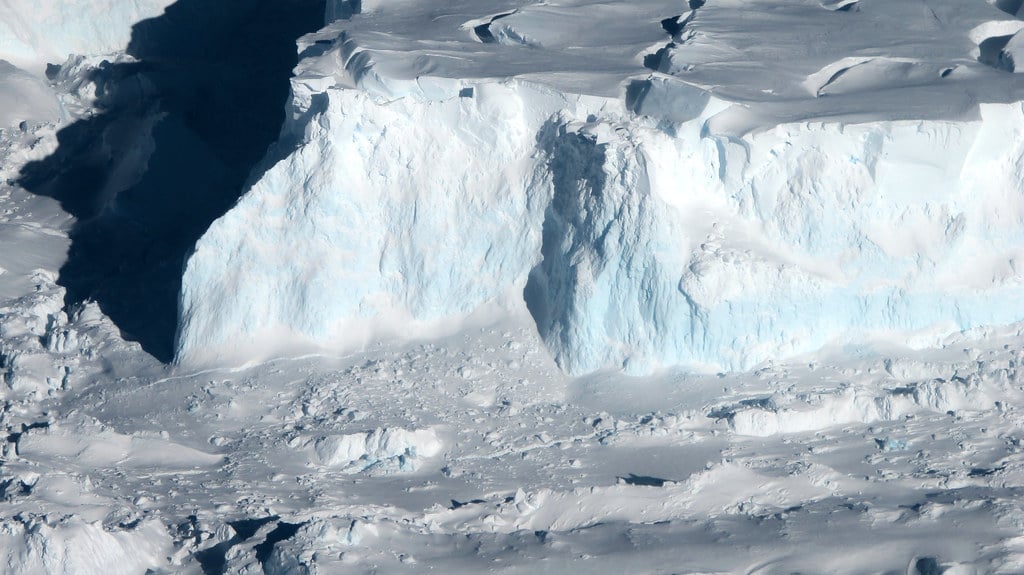
Photo: Thwaites Glacier in West Antarctica, by sjrankin is licensed under CC BY-NC 2.0.
“Thwaites Glacier in West Antarctica” by sjrankin is licensed under CC BY-NC 2.0.

Polar Scientist Explains Peril of Thwaites

By Robert Hunziker

Ted Scambos, a polar scientist with 20 trips to Antarctica under his belt, makes a living trekking across glaciers, measuring the speed, thickness, and structure of ice. Dr. Scambos (University of Colorado/Boulder) recently penned an article: Ice World: Antarctica’s Riskiest Glacier is Under Assault From Below and Losing Its Grip. The Conversation, June 7, 2022.

Photo: Interview with Ted Scambos by NSIDC is licensed under CC BY 2.0.
Interview with Ted Scambos” by NSIDC is licensed under CC BY 2.0.

Scambos is a lead principal investigator for the Science Coordination Office of the International Thwaites Glacier Collaboration (SCO project). How many glaciers in the world have a team of scientists dedicated to an international collaborative research effort?

Answer: Thwaites is the single most dominate factor influencing the integrity (survival) of every coastal city in the world, and it is clearly at risk.

According to Scambos: “Antarctica is a continent comprising several large islands, one of them the size of Australia, under a 10,000-foot-thick layer of ice… Its glaciers have always been in motion, but beneath the ice, changes are taking place that are having profound effects on the future of the ice sheet – and on the future of coastal communities around the world.”

Significantly, the ice sheet was “nearly in balance as recently as the 1980s,” meaning annual snowfall replaced annual ice flows. As a result, the early ice research in Antarctica involved trying to find any kind of dramatic changes but with little success.

However within only a couple of decades in the context of thousands of years of stability, everything suddenly changed. According to Scambos: “But now, as the surrounding air and ocean warm, areas of the Antarctic ice sheet that had been stable for thousands of years are breaking, thinning, melting, or in some case collapsing in a heap. As these edges of the ice react, they send a powerful reminder: If even a small part of the ice sheet were to completely crumble into the sea, the impact for the world’s coasts would be severe.”

Photo: "Camp on Thwaites Glacier" by NSIDC is licensed under CC BY 2.0.
Camp on Thwaites Glacier” by NSIDC is licensed under CC BY 2.0.

West Antarctica’s Thwaites glacier is the continent’s prime candidate for a major collapse. In contrast to East Antarctica’s solid core of small mountain ranges underneath the ice bed, West Antarctica was once the ocean bottom. Its ice gets warmer and moves much faster. Only 120,000 years ago it was likely an open ocean and definitely 2 million years ago. Accordingly: “This is important because our climate today is fast approaching temperatures like those of a few million years ago… The realization that the West Antarctic ice sheet was gone in the past is the cause of great concern in the global warming era.” (Scambos)

Thwaites is the “big boy” glacier of West Antarctica. It is the widest glacier on the planet at 70 miles across. At issue, recent changes on the vast continent have been sudden and fast, much faster than ever expected. As for Thwaites in particular: The height of the surface has been dropping by up to three (3) feet each year. Huge cracks are forming at the coast, and ice now flows at over a mile per year. That flow rate has doubled since 1990.

The net result is a new era of geologically rapid ice flow officially underway for the 21st century. This is not a welcomed event. Nobody knows for sure how it will play out or how soon, but the risk is unfathomably scary, punctuated by the dispiriting fact that scientists’ models that predict future climate change are almost always late to the party. This makes it nearly impossible to plan for the next catastrophe, like Thwaites glacier.

As further explained by Scambos: Under the ice the geological structure of Thwaites is “a recipe for disaster.” Until only recently, Thwaites had not measurably changed since it was first mapped in the 1940s. All of that has changed now that global warming has intervened. It’s what’s happening hidden underneath that spooks scientists: “Ocean water well above melting point is eroding the base of the ice.”

All of which impacts the entire structure. Mapping of Thwaites now exposes fractures and huge cracks along with the speed of flow all-in suggesting the monster may ‘give way’ within only a few years, which would be a horrendous step towards more rapid ice flow to the sea.

Bottom line: “West Antarctica could soon begin a multi-century decline that would add up to 10 feet to sea level. In the process, the rate of sea level would increase several fold, posing large challenges for people with a stake in coastal cities.” (Scambos)

But, when does the first foot of sea level register on shorelines? Nobody really knows for sure.

Meantime, as the world wonders aloud why and how the planet’s solidest long-standing ice sheet is ever closer to crumbling, it’s frankly disgusting and outrageous that it’s even an issue, especially considering decades of warnings by scientists about the risks of fossil fuels that spew CO2 emissions into the atmosphere, blanketing heat. Now, because of human recklessness in the face of warning after warning, an ominous horrific cycle of meltdown has already started at the worst possible location on the planet where 150-to-200 feet of water has remained frozen in time throughout all of human history… until now.

Forthwith, it’s payback time after decades of human stupidity bordering on lunacy in the face of science that has been right all along. Smart people know to adhere to the science.

Recommended reading: How Trump Damaged Science – and Why it Could Take Decades to Recover, Nature, October 5, 2020.


Robert Hunziker is a freelance writer and environmental journalist whose articles have been translated into foreign languages and published in over 50 journals, magazines and sites worldwide.

This article was originally published on June 10, 2022 © Counterpunch
Robert Hunziker lives in Los Angeles and can be reached at rlhunziker@gmail.com.
John Kerry’s Global Fix-it Campaign

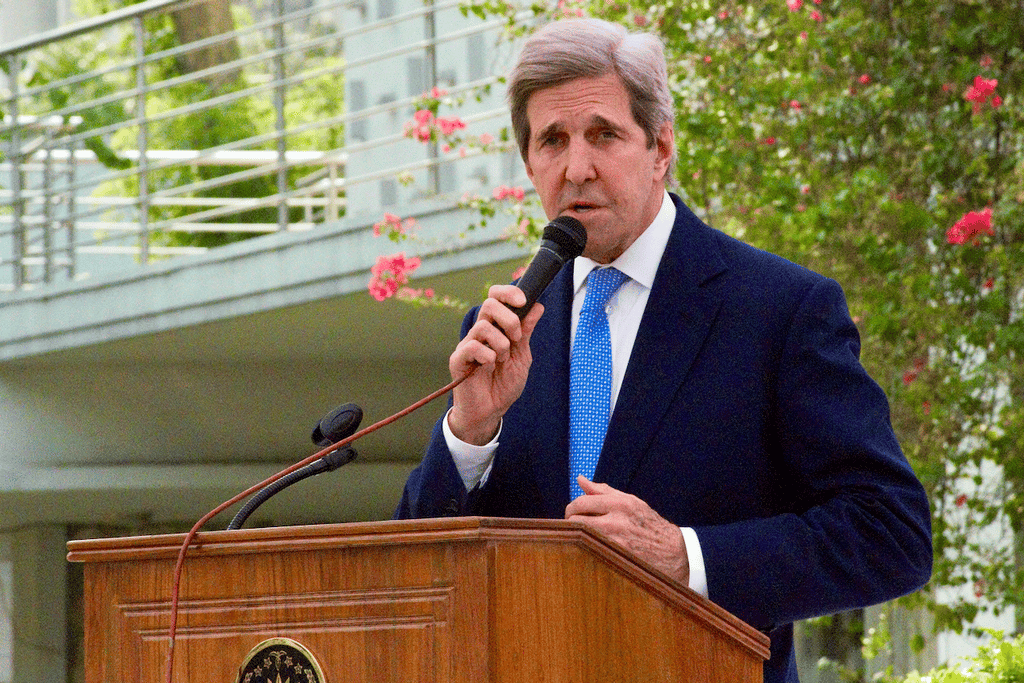
Photograph Source: John Kerry, U.S. Embassy Dhaka from Bangladesh – Public Domain
Special Presidential Envoy for Climate John Kerry Visits Bangladesh, by U.S. Embassy Dhaka, Public Domain

John Kerry’s Global Fix-it Campaign

By Robert Hunziker

“I’m absolutely convinced we will get a low-carbon, no-carbon economy at some point in time. The challenge is will we get there in time to heed the warnings of the scientists and avoid the worst consequences of the crisis?” (John Kerry, Special Presidential Envoy for Climate, May 2022)

In a soft pitch interview by Andy Serwer of Yahoo Finance on Saturday, May 28th at Davos World Economic Forum the Climate Czar expressed optimism about handling the climate change crisis, in part, based upon the fact that several of the world’s leading corporations are dead set on stopping the multitude of dangers associated with an out of whack climate system. They understand the risks.

Photo: "John Kerry" by Center for American Progress Action Fund is licensed under CC BY-ND 2.0.
“John Kerry” by Center for American Progress Action Fund is licensed under CC BY-ND 2.0.

According to Kerry, climate change is not complicated. It is basic physics: “There isn’t anybody I know today who doesn’t admit that the planet is warming and that life has changed as a result of this… this trend is pretty obvious… the climate crisis is getting worse, not better, and we have to more rapidly reduce emissions and take the necessary steps, not what politicians are saying we should do, but scientists whose lives are dedicated to determining the mathematics and the physics of this particular challenge.”

The Climate Czar presented an interesting viewpoint of how corporate CEOs are now coming together to take on the challenge. As explained by Mr. Kerry, there’s lots of money to be made, which, of course, is good enough to get the corporate juices flowing.

If Mr. Kerry’s message and climate plan is realistically on target, which is more inclusive than just CEOs and venture capitalists foaming dollar bills at the mouth, then the world may have a shot at containing the biggest threat of all time. But, there are plenty of ifs.

Kerry was quick to caution: “Assuming it can happen fast enough.” That is a key watchword for serious students of climate change/global warming.

There are serious-minded scientists who believe it’s already too late, and there are others who nod their heads in full agreement with the Doomsday Clock’s most recent reading at only 100 seconds to midnight. It is the closest to midnight of all time. Midnight represents a catastrophe. One of the principal factors taken into consideration for setting at 100 seconds to midnight was a warning by the IPCC: “This report is a dire warning about the consequences of inaction,” according to Hoesung Lee, Chair of the IPCC. “It shows that climate change is a grave and mounting threat to our wellbeing and a healthy planet.”

“Is there enough time” is a common theme amongst knowledgeable people. People whom have deep-dived the subject see serious threats. Major ecosystems, all of them, are rapidly approaching, in some cases exceeding, dangerous stages or tipping points: the Arctic, Antarctica, Greenland, Siberian permafrost, the Great Barrier Reef, the Amazon rainforest, mountain glaciers: the Himalayas, the Caucasus, the Alps, the Rocky Mtn, the Andes, ocean acidification, marine heat waves, Patagonia, the Atlantic Gulf Stream… as examples.

Here’s a more specific example: During the 1990s, Greenland and Antarctica combined lost 81 billion tons of ice mass per year on average during that decade. Moving ahead to the decade of the 2010s, the ice mass loss was 475 billion tons per year on average throughout the decade. That’s flat-out breathtaking, almost exponential at face value. (Source: Greenland, Antarctica Melting Six Times Faster Than in the 1990s, NASA, March 16, 2020)

It’s an understatement to say a six-fold increase of ice mass loss within only one decade is especially troubling and nearly impossible to comprehend. After all, it’s not within centuries, which wouldn’t be quite so alarming; it’s within only one decade. Whew! So then, what’s in store for the 2020s, or how about the upcoming knotty 2030s?

81 billion tons versus 475 billion tons can only mean one thing: The impact of global warming is a helluva lot worse than what’s expected at only 1.2°C above baseline or could it be that 1.2°C is not really accurate?

Beware: “The greatest shortcoming of the human race is our inability to understand the exponential function.” (Albert Bartlett 1923-2013, emeritus professor, physics, University of Colorado)

As it goes, Mr. Kerry not only has the mannerisms and cadence and stature and personal background to get the job done, he has depth of knowledge about the danger of advanced climate change/global warming that’s revealed within his choice of words and emphasis without openly proclaiming the horrific truth that “we’re screwed unless we act quickly,” but his message is just that.

The following synopsis of his interview is provided for readers to decide for themselves the likelihood of his success, or not:

As explained by Kerry, some months ago he started a movement called First Mover Coalition inclusive of thirty-five (35) major corporations that have volunteered leadership roles to create “demand for change,” e.g., Maersk Shipping, the largest container shipper in the world has agreed that the next 8 ships they build will be carbon free. Volvo promised that 10% of the steel they buy to be “green steel.” United Airlines, Delta, and Boeing and Apple agreed to buy 5% sustainable aviation fuel and eventually go to 85% reduction in emissions.

The First Mover Coalition is working in cooperation with the World Economic Forum. Kerry claims the CEOs are stepping right up to the plate and swinging away: “They understand the urgency.” They want to lead by example with “demand signals” to change behavior of industry throughout the world. Plus, a big plus, they are working on the “hard-to-do things,” like aluminum, steel, and concrete manufacturers.

When asked about the Russian Ukrainian invasion, Kerry said it has taught Europeans a lesson to be independent, and that is a motivating factor to spur ahead with renewable infrastructure development. Thus, Russia is working against its own self-interest and turning away future fossil fuel sales at a rapid clip via invading Ukraine.

According to the Climate Czar, President Biden sees a significant part of the solution of climate change to be nuclear power. He’s kept nuclear on the table. New designs for nuclear plants are being researched and worked on. France, for example, is doubling down on nuclear. According to Kerry, “we cannot get to net zero by 2050 without nuclear.” Really? Honestly?

Headline News:Electricite de France SA’s nuclear failures are sending ripples through European energy markets, threatening to undermine the continent’s plan to turn its back on Russian gas.” (Source: EDF Nuclear Failures Undermine Europe’s Push to Exit Russian Gas, Bloomberg, US Edition, May 26, 2022)

“About half of EDF’s 56 reactors are currently halted, and EDF has estimated that output this year will be the lowest in more than 30 years. While many plants are offline for regular maintenance or refueling, a dozen are idled for checks and repairs following the discovery of stress-corrosion issues at units in late 2021,” Ibid.

Nuclear power plants put more stress per square inch on foundational structure than any other form of energy production. It’s inherently dangerous! One small crack can make all of the difference between meltdown and no meltdown. That’s how risky it is to use nuclear to boil water. For example, the following Scientific American article discusses a real event descriptive of the inherent dangers of nuclear power plant structural pressure points:

“On Feb. 16, 2002, the nuclear power plant called Davis–Besse on the shores of Lake Erie near Toledo, Ohio, shut down. On inspection, a pineapple-size section on the 6.63-inch- (16.84-centimeter-) thick carbon steel lid that holds in the pressurized, fission-heated water in the site’s sole reactor had been entirely eaten away by boric acid formed from a leak. The only thing standing between the escape of nuclear steam and a possible chain of events leading to a meltdown was an internal liner of stainless steel just three sixteenths of an inch (0.48 centimeter) thick that had slowly bent out about an eighth of an inch (0.32 centimeter) into the cavity due to the constant 2,200 pound-per–square-inch (155-kilogram-per-square-centimeter) pressure.” (Source: Atomic Weight: Balancing the Risks and Rewards of a Power Source, Scientific American, Jan. 29, 2019)

According to Kerry, the private sector is really moving. “There’s a gigantic shift with the private sector taking the lead in many places, and it involves all kinds of private sector institutions… some fossil fuel companies are now working to become energy companies and transition to producing electricity and doing it in a clean way either through hydrogen or nuclear or in other ways.”

As explained by Kerry: “This is one of the greatest economic opportunities that we’ve ever faced, potentially much larger than the industrial revolution” by building out new energy grids and new electric vehicles. By 2035, Ford and GM will only have electric vehicles. Everything has to be part of the solution, agriculture, shipping, buildings, transportation, and manufacturing.

Kerry is meeting with his Chinese counterpart to work together to see how best to achieve the promises made in Glasgow where the US and China agreed to reduce methane (CH4) and to meet about transitioning off coal, to perhaps gas or nuclear.

Headline News: China is Building More Than Half of the World’s New Coal Power Plants, NewScientist, April 26, 2022: “Some 176 gigawatts of coal capacity was under construction in 2021, and more than half of that was being built in China.” Note: 176 gigawatts equal enough power for one hundred twenty-three million (123,000,000) homes.

It looks like the Climate Czar is gonna have his hands full.

Still, according to Kerry: China has already committed to submit an ambitious national action plan on methane to the Conference of the Parties in Sharm El-Sheikh this coming November for COP 27, UNFCCC.

He says the world has now joined the methane battle, which is front and center in discussions. Kerry says it’s where “we can achieve some of the fastest reductions in greenhouse gases… 116 nations have now signed up to achieve a 30% reduction of CH4 by 2030. It is the equivalent of every car in the world, every truck in the world, every ship in the world, every airplane in the world going to zero emissions by 2030.” (hmm, really?)

Furthermore, Kerry claims the transition needs to happen all over the world. And, they’ll be working on deforestation, which he sees as a huge challenge. Illegal deforestation is the biggest threat to rainforests.

Still, the pre-eminent question is whether John Kerry and the CEOs carry enough cache around the world to achieve what decades of broken promises have failed to do? Not only that, but is it really enough? And, is the approach correct? Switching coal to gas or nuclear?

Frankly, aside from Kerry’s hopeful climate plans, what’s really desperately needed is something more, much more all-inclusive like a Climate Marshall Plan throughout the entire planet with a goal of zero fossil fuels by 2030. This is achievable if every major nation/state fully commits the funds and resources, similar to the rebuild of Europe post WWII. But sadly, that is only a dream, especially in light of the history of broken promises, one after another.

Photo: António Guterres
António Guterres at the EP, by European Parliament, CC-BY-4.0:  © European Union 2021– Source: EP.

During the most recent IPCC meetings, U.N. Secretary-General Antonio Guterres said the report by the Intergovernmental Panel on Climate Change reveals: “A litany of broken climate promises by governments and corporations.” He accused them of stoking global warming by clinging to harmful fossil fuels. “It is a file of shame, cataloguing the empty pledges that put us firmly on track toward an unlivable world.”

Thinking out loud about Kerry’s monumental task… what’s with Kerry’s continual references to striving for net zero by 2050? Several really smart well-known climate scientists, many of whom I am sure Mr. Kerry knows, think net zero by 2050 should be taken off the table. That’s too late, and Kerry knows this. He’s the Climate Czar; he must know it. And, it’s not “net zero” that’s required; it’s “net negative,” and he likely knows this as well.

London. 26 August 2021: “The latest report published today by the Climate Crisis Advisory Group (CCAG) warns that reaching net zero greenhouse gas emissions by 2050 is now “too little too late” and will not achieve the long-term temperature goals identified in the Paris Agreement… Drawing upon findings recently published by the Intergovernmental Panel on Climate Change’s (IPCC) Sixth Assessment Report (AR6), it states that current global emissions targets are inadequate and that net negative – rather than net zero – strategies are required. (Source: Net Zero by 2050 is ‘too little too late’: World-Leading Scientists Urge Global Leaders to Focus on Net Negative Strategies, Climate Crisis Advisory Group, August 2021)

Members of Climate Crisis Advisory Group are accomplished scientists at prestigious institutions around the world, widely considered at the top of the field.

Regardless of the twists and turns of what Climate Czar John Kerry experiences, at the end of the day an overused cliché, “money talks” will either save the day or ruin it for good as it can work one of two ways going forward (1) funding positive results for climate mitigation programs or (2) buying denial. Hopefully, funding mitigation prevails over the past several decades of “buying denial” with underhanded dark money, which has been the big winner, especially in America, Kerry’s home base.

Here’s wishing the Special Presidential Envoy for Climate the best of luck. He’ll need it.


Robert Hunziker is a freelance writer and environmental journalist whose articles have been translated into foreign languages and published in over 50 journals, magazines and sites worldwide.

This article was originally published on June 3, 2022 © Counterpunch
Robert Hunziker lives in Los Angeles and can be reached at rlhunziker@gmail.com.
The Truth About IPCC Reports

Photo by Citt is marked by CC BY-NC-ND 2.0
Photo by Citt has been cropped & is marked by  CC-BY-NC-ND-2.0.  (CC BY-NC-ND 2.0  )

The Truth About IPCC Report

By Robert Hunziker

The Intergovernmental Panel on Climate Change (IPCC), in many respects, is a Delphic institution whose reports are a function of political discretion as it provides justification for nation/state policies that are seldom fulfilled, e.g., only a handful of the 193 signatory nations to Paris ’15 have met commitments. This scandalous outright failure at a dicey time for the climate system only serves to hasten loss of stability and integrity of the planet’s most important ecosystems.

That provocative depiction is examined in a recent Nick Breeze ClimateGenn podcast interview: Existential Risk Management with David Spratt, research director of the Breakthrough National Centre for Climate Restoration in Melbourne. Dr. Spratt is highly regarded for solid research, which is evidenced throughout his refreshingly straightforward interview.

Spratt’s interview tackles: (1) failings of the IPCC, (2) tipping points, and (3) a nearly out of control global warming challenge that’s not realistically understood, even as wobbly ecosystems start to falter.

The truth is the IPCC has been politicized to such an extent that its reports unintentionally confuse public opinion whilst misdirecting public policy issues for mitigation. At the center of the issue the IPCC does not expose the full extent of existential risk, which happens to be such an unthinkable event so hard to accept that nobody believes it will ever really truly happen, more on this later.

During the interview a tipping point is discussed in the context of reduction of Arctic summer sea ice to 3/4ths of its volume, as the Arctic’s highly reflective ice melts into a dark background of sea water that easily absorbs almost all of the incoming solar radiation, in turn, absorbing warmth that would otherwise be 80%-90% reflected back to outer space via the long-standing albedo effect of ice. In turn, a warming Arctic causes excessive warmth to hit Greenland, which, according to Dr. Jason Box (professor in glaciology at the Geological Survey of Denmark and Greenland) is already “past the point of system stability,” meaning past a tipping point of no return. Recently Box publicly warned of abrupt climate change forthcoming. Meanwhile, Greenland’s melt releases cold water into the Atlantic, in turn, slowing down the Atlantic Gulf Stream, and, as follows, weakens Atlantic circulation that, in turn, negatively impacts precipitation in the eastern Amazon.

Like a series of dominoes falling one onto another, one initial event (a) loss of Arctic sea ice brings (b) warmer Arctic waters (c) cascading into more Greenland melt-off, causing (d) slower Atlantic circulation, triggering (e) loss of precipitation for the eastern Amazon. The net result because of one non-linear event, i.e., loss of Arctic sea ice triggers four additional major events. Ipso facto, those five events reinforce each other for who knows how long?

According to Spratt: “So, we see that a change in one system, i.e., Arctic ice volume echoes or has domino effects through other systems,” which triggers a tipping point that, in fact, is already at a seminal stage.

Regarding the IPCC’s approach to risk, first it is important to emphasize the fact that big risks must be the key to successful climate change analysis. By definition, big risks are at the top end of a range of possibilities. But, the IPCC does not see risks that way. Their view is more generalized and this has become normalized over the past 20 years, e.g., we have a 50% chance of not exceeding 2°C with our current carbon budget. According to Spratt: That is catastrophically wrong. That type of risk assessment has been normalized now for 20 years in policy-making, and “it is horribly wrong.”

When risks are existential, and they clearly are in this particular instance, everybody knows if it gets to the range of 3C to 4C pre-industrial (and 60% of scientists say we’re already headed for 3C plus) “we’ll destroy human civilization.”

Therefore, when risks are existential, you can’t look at an on-average analysis, rather, you must look at the worst possible outcome as your primary calculation. It’s the only way to approach an existential risk.

In that regard and interestingly enough the foreword of the IPCC report of a few years ago actually said: “Critical instances calculating probabilities don’t matter. What matters is the high-end possibility.”

But nowadays a figure such as “50% probability introduces a fundamental problem with the assessment process. More realistically, the proper way to look at existential risks is by stating x-amount of additional carbon has a 50% chance of reaching 2C but also has a 10% chance of 4C or in other words, a 50% chance of staying below 2C is also a 10% chance of reaching 4C. Would you take an elevator ride with a 10% chance of the cable breaking at the 75th floor?

When it comes to existential risks, the expectation should be: “Why should we accept risks with the climate system that we would not accept with our own lives?” They are really one in the same.

Thus, the core of existential risk management must focus on the high-end, not middling ranges of probability. The focus must be, and this is an absolute: “What is the worst that can happen, and what do we have to do to prevent it?”

That assumption is not part of the latest IPCC report. When it comes to non-linear responses of cascades, the IPCC says: “There is no evidence of such non-linear responses at the global scaling climate projections for the next century. But, according to Spratt: “This is just wrong.”

After all, “everybody knows, for example, that emissions from permafrost are non-trivial at the moment. We know that warming in the last decade has been higher than in previous decades and the system is about to warm at an accelerating rate as major systems are already changing state. And the IPCC says there is no evidence of moving into non-linear climate change. This is absurd!” (Spratt)

Ipso facto, because of a badly misjudged bias, IPCC models can’t deal with non-linear processes. As a result, they’re missing the big picture by a country mile. And, mitigation policies, for what that’s worth, are inadequate.

Yet, according to Dr. Spratt: “The paleoclimate record tells us that, in the long run, each one-degree of warming brings 10-20 meters (32- 66 feet) of sea level rise. Frankly, that would be a legitimate statement for the IPCC, but they do not deal with non-linear events.”

All of which leads to inadvertent problems for policy makers because people judge the IPCC report as pure science. “It is not. The IPCC is a political body. Diplomats of 190 governments run the IPCC. They appoint the lead authors for reports. The IPCC is the intersection of policy and politics.” (Spratt)

Meanwhile, as if misdirection by the IPCC is not enough of a problem, change is happening so much faster than forecasts. For example, early IPCC reports said Antarctica would be stable for a thousand years. But, back in 2007, Richard Alley (Penn State) said it’s already melting 100 years ahead of schedule.

Of special concern in the near future, when the Arctic goes Full Monty, a 100% ice-free summer, “it will drive changes that will be unstoppable.” This existential risk is already capriciously inconstant across the entire northern horizon.

Furthermore, it’s already apparent to many scientists that we’ll be at 1.5C a decade from now, regardless of emissions over the next 10 years. In fact 1.5C around 2030 looks to be locked-in in part because of the aerosol dilemma. If so, we’re only a decade away from Hot House Earth becoming reality. Thenceforth, the climate system will accelerate much faster than ever before.

Fourteen years ago Spratt published a book Climate Code Red, which codified the idea of a climate emergency by conceptually stating that the climate problem could not be solved “with business as usual.” (Footnote: It’s still business as usual, but bigger)

A review of the book states: Climate Code Red: The Case for Emergency Action is a 2008 book which presents scientific evidence that the global warming crisis is worse than official reports and national governments have so far indicated.

Based upon this current interview, Spratt seems to indicate that it is even worse (actually bigger) today than it was in 2008.

To avert what looks to be an inevitable existential event requires an enormous commitment of resources comparable to a wartime economy with single-minded focus on climate policy, and it also requires a major change in the way society works. Those are awfully big requests, so one has to wonder what’s truly feasible.

As things now stand current mitigation stems from the IPCC’s embedded idea that there can be “incremental non-destructive change as a solution… This will not work.” (Spratt)

The harsh truth is global emissions are continuing to go up, as all of the decarbonization efforts like wind, solar, electric cars, and energy efficiency only serve to produce “more energy for growth.” For example, if the global economy grows 2% per year and 2% of the energy system converts to renewables, then the same amount of fossil fuel energy is used every year. That is a very rough facsimile of what has been happening. Fossil fuel use as a percentage of all energy is essentially the same today as 50 years ago.

Moreover, “there is no way that a system with ‘hands-off’ government, other than a few token regulations, and ‘the free market deciding the outcome’ is going to work.” In fact, the evidence is already telling us it does not work. Not even close.

A true fixit requires overwhelmingly powerful political leadership. In that regard, according to Spratt: “What I really fear and my experience is that those in the elite, whether it’s in business or in politics, simply, I think, do not understand the problem as it really exists.”

There’s a profound ignorance because of the IPCC telling a story that incrementalism is a successful approach when it’s clearly not.

A collateral problem is a large segment of the professional climate advocacy NGO community has been “swallowed by the whale,” meaning they buy into the lame Conference of the Parties “COP” meetings and swallow the corporate-origin net zero nonsense by 2050, over and over again, umm, but it’s too little too late, horribly misdirected. Whereas, according to several scientists, 2030 is the deadly deadline, not incremental movement to 2050.

The crux of the matter is that the most prominent existential risk in human history does not conform to scientific models. It’s almost always ahead of the scientific models, sometimes by several decades. Then, why would it wait around for net zero by 2050?


Based in Los Angeles, Robert Hunziker is a freelance writer and environmental journalist whose articles have been translated into foreign languages and published in over 50 journals, magazines and sites worldwide.

Robert Hunziker can be reached at rlhunziker@gmail.com.

This article was originally published on March 25, 2022 © Counterpunch

When to Build Sea Walls

Coastline - Arunvrparavur-CC BY-SA 3.0
Photograph Source: Arunvrparavur – CC BY-SA 3.0

When to Build Sea Walls

By Robert Hunziker

During the month of December 2021 two warnings of impending sea level rise were issued by highly respected groups of climate scientists. These are professional scientists who do not deal in hyperbole. Rather, they are archetypical, conservative serious-minded scientists who follow the facts.

The most recent warning on December 30th is of deteriorating conditions at the Arctic and Greenland. The second warning is the threatening collapse in Antarctica of one of the largest glaciers in the world. As these events unfortunately coincide so close together, one at the top of the world, the other at the bottom, should coastal cities plan to build sea walls?

The scale of time and material and costs to build sea walls is nearly overwhelming. In fact, it is overwhelming. The US Army Corps of Engineers is already drafting plans for a gigantic sea wall to protect New York-New Jersey Harbour and Tributaries from surges and flooding. It’s a multi-year study that should be completed this year, 2022. The estimated cost is US$119 billion built-out over a period of 25 years for 6 miles of seawall. Yet, already there is concern that it may prove inadequate, only defending against storm surges, not rising sea levels. NYC Comptroller Scott M. Stringer has suggested 520 miles of exposed shorelines as an alternative plan. (Source: US Army Weighs Up Proposal For Gigantic Sea Wall to Defend NY From Future Floods, ScienceAlert, January 20, 2020)

The Army Corps of Engineers also estimated $4.6 billion for a one-mile wall for Miami-Dade and $2 billion for an eight-mile sea wall around Charleston. It’s not known if these bids are only for storm surges or sea level rise but most likely it’s the former.

A study by the Center for Climate Integrity at the Institute for Governance and Sustainable Development, Washington, D.C. concluded: If sea walls were built in every coastal community, the national cost over the next couple of decades would be $400+ billion, which would be designated for storm surge protection. According to YaleEnvironment360: “That’s nearly the price of building the 47,000 miles of the interstate highway system, which took four decades and cost more than $500 billion in today’s dollars.” (Source: Who Will Pay for the Huge Costs of Holding Back Rising Seas? YaleEnvironment360, August 9, 2019)

Jason Box, professor in glaciology at the Geological Survey of Denmark and Greenland, created a seven-minute video on December 30th entitled: Recent Developments in Arctic Climate Observational Indicators.

Link: https://www.youtube.com/watch?v=3cBVs2NOWsQ

His final statement in the video sums up the facts: “At these levels of CO2, the world needs to prepare itself for abrupt sea level rise.”

This can only mean nation/states need to start planning on either building continent-wide sea walls, which will hit taxpayers right between the eyes, or prepare residents of coastal cities, like Miami, to move to higher ground. There are no alternatives. For decades now it has become only too obvious that world governments are not going to seriously tackle CO2 emissions to slow down greenhouse gases from warming the planet with a resulting onslaught of rising sea levels.

Here’s Jason Box’s opening statement: “I am part of a team of about 20 scientists/authors where we look at all kinds of observational records of Arctic climate. We take in everything like rivers, temperatures, snow cover, and so I am going to quickly take you through our updated summary survey of these observational records,” as follows herein:

“The Arctic is getting wetter. There is more rain falling instead of snow. This is the largest trend in the Arctic, the increasing rainfall trend.”

That’s an incredibly disturbing statement. Isn’t the Arctic supposed to be “the brutal cold of the North” that freezes over as endless solid ice and importantly serves as the planet’s biggest reflector of incoming solar radiation? Answer: Yes, that’s true, but that was pre-global warming. Nowadays, the planet’s Coppertone, i.e., multi-year thick ice, is almost gone, exposing it to severe sunburn.

Moreover, counter-intuitively, most of the warming occurs in the cold season of October thru May. It’s the most dynamic season in the Arctic and some of the biggest changes in the permafrost are happening in that cold season. Yes, but doesn’t permafrost mean “permanently frozen?” In fact, Dr. Box claims that permafrost is changing in the middle of the winter. Really!

According to the study details, using new more authoritative data sets, looking at the rate of warming in the Arctic, since 1971, it is warming at a rate of 3.3 times the globe. But, on a seasonal basis, it’s warming at 4 times the global increase during the cold season of October thru May.

Not only is it warming faster in the winter, but the studies also found a “non-surprising coincidence of extreme wildfires” when temperatures are extremely high. For example, only recently Biblical-scale fires, never before witnessed, hit Siberia. At the time, SciTechDaily’s headline stated: “Meteorologists Shocked as Heat and Fire Scorches Siberia,” June 23rd, 2020.

The crux of the matter links “land ice surveys” of Greenland and the overall Arctic, which are some of the largest sources of sea level rise, illustrated on a chart displayed in the video, demonstrating “an increase in sea level contribution every decade.”

Sea level rise, which has been relatively quiescent throughout the Holocene Era over the past 10,000 years is starting to accelerate. This is extremely bad news, meaning the climate system is breaking away from the wonderfully stable Holocene Era of the remarkable forgiving Goldilocks climate, “not too hot, not too cold.” But now, all of a sudden, it’s no longer ”remarkably forgiving.”

As a result of so many years of the wondrous Holocene Era, humanity got spoiled rotten with very stable sea levels and as a result far too complacent. But complacency gives rise to repercussions.

According to Jason Box “future sea level rise contribution from land ice, and especially ice sheets, is very difficult to project into the future.” However, here’s what sends a shiver down the spine, he went on to say: “At best, we can say at these levels of CO2, the world needs to prepare itself for abrupt sea level rise.”

“At best… prepare for abrupt sea level rise” is a powerful warning from scientists who do not take warnings lightly. He did not say prepare for “sea level rise.” He said prepare for “abrupt sea level rise.” There is no subtlety about abrupt. It means “sudden and unexpected.”

Which brings on climate change warning #2, Antarctica: The Thwaites “Doomsday Glacier” in West Antarctica. Satellite images shown at a recent meeting on December 13th of the American Geophysical Union showed numerous large, diagonal cracks extending across the Thwaites floating ice wedge. The ice sheet/glacier could collapse. And, it’s big, 80 miles across with up to 4,000 feet depth and with a 28-mile-wide cracking ice shelf that extends over the Amundsen Sea.

NewScientist d/d December 13, 2021 discussed the satellite images of Thwaites’ massive cracks: “Antarctica’s Thwaites glacier could break free of the continent within 10 years, which could lead to catastrophic sea level rise and potentially set off a domino effect in surrounding ice.”

Meanwhile, by yearend 2021, both poles, North and South, are rumbling and threatening coastal life throughout the world, but frankly, nobody knows how soon or how high the seas will react, 1-3 feet this century, 1-3 feet within a couple decades, or more in less time, maybe 10 feet, or how about “several meters” this century, which is a calculation used in a study in 2015 by Dr. James Hansen of Columbia University before scientists knew what they know today. Dr. Hansen’s paper was published in Atmospheric Chemistry and Physics: Ice Melt, Sea Level Rise and Superstorms Evidence From Paleoclimate Data, Climate Modeling, and Modern Observations that 2°C Global Warming Could Be Dangerous, March 22, 2016.

Part of the Hansen argument is paleoclimate evidence during the Eemian Period 120,000 years ago when “Earth’s oceans were six to nine meters higher (20-30 feet) at less than 1C warmer than it is today.” For perspective purposes, that was 6 years ago, today scientists claim we’re at 1.2°C above pre-industrial, or 0.8°C off the dreaded 2C level.

Six years after Dr. James Hansen’s warning, scientists who study the Arctic and Antarctica are echoing his words but with more immediacy and concern. In plain English, Jason Box did say: ““At these levels of CO2, the world needs to prepare itself for abrupt sea level rise.” After all, who else has a better grasp of the situation than Dr. Jason Box, professor in glaciology at the Geological Survey of Denmark and Greenland?

Warnings today are more pronounced than ever before even though the biosphere is not yet at 1.5° C above pre-industrial, widely considered the IPCC safe limit, or is it? That depends upon how pre-industrial is calculated. Is it 1750 or 1880 or 1950? But even if we’re not there yet, the damage caused to critical ecosystems at only 1.2°C above pre-industrial, where we are today, is enough to write a book, a very long book.

Nevertheless, what is known today is that preparations and build-outs of sea walls will be decades in the making and dreadfully costly. Is there an alternative? Once sea level makes its mark, higher and higher, it’s too late to start drawing sketches and drafting plans.

Climate scientists who are on the front lines of climate change are sending smoke signals of a looming threat on the horizon. It’s much closer than anybody expected.

Alas, considering the disquieting fact that climate change in real time has been outpacing the climate models of scientists by quite a wide margin for quite a long time, abrupt sea level rise needs to be respected as a distinct reality.

An article by M. Farquharson, et al in Geophysical Research Letters d/d June 10, 2019 stated: “Observed maximum thaw depths at our sites are already exceeding those projected to occur by 2090.” In other words, fieldwork in the High Arctic found cataclysmic impact of climate change happening 70 years ahead of what the scientific models expected.

Do something!


Based in Los Angeles, Robert Hunziker is a freelance writer and environmental journalist whose articles have been translated into foreign languages and published in over 50 journals, magazines and sites worldwide.

Robert Hunziker can be reached at rlhunziker@gmail.com.

This article was originally published on January 7, 2022 © Counterpunch

What if the Doomsday Glacier Collapses?

Thwaites Glacier in West Antarctica
“Thwaites Glacier in West Antarctica” by sjrankin is licensed under CC BY-NC 2.0

What if the Doomsday Glacier Collapses?

by Robert Hunziker

The Thwaites “Doomsday Glacier” in West Antarctica is spooking scientists. Satellite images shown at a recent meeting December 13th of the American Geophysical Union showed numerous large, diagonal cracks extending across the Thwaites’ floating ice wedge.

This is new information, and it’s a real shocker if only because it’s happening so quickly, much sooner than expectations. It could collapse. And, it’s big — 80 miles across with up to 4,000 feet depth with a 28-mile-wide cracking ice shelf that extends over the Amundsen Sea.

Meanwhile, and of special interest because of the underlying threat posed by Thwaites, the Intergovernmental Panel on Climate Change (IPCC) COP26 meeting in November 2021 held in Glasgow was panned by scientists as one more sleepy affair, failing to come to grips with Western Civilization’s biggest challenge since the Huns trampled Rome. This outrageous failure by the world’s leaders, evidenced by weak-kneed proposals, is decidedly threatening to coastal cities throughout the world, especially with Thwaites glacier showing signs of impending collapse.

According to glaciologist Erin Pettit of Oregon State University, the weak spots on the Thwaites ice sheet are like cracks in a windshield: “One more blow and they could spider web across the entire ice shelf surface.” (Source: Crucial Antarctic Ice Shelf Could Fail Within Five Years, Scientists Say, SFGATE, December 13, 2021)

An article in NewScientist d/d December 13, 2021 discussed the AGU meeting of the satellite images of massive cracks: “Antarctica’s Thwaites glacier could break free of the continent within 10 years, which could lead to catastrophic sea level rise and potentially set off a domino effect in surrounding ice.”

Thwaites is a monster, one of the largest glaciers in the world. A 2017 Rolling Stone article, which followed the footsteps of a team of glaciologists at Thwaites glacier, summed up the situation, according to Ohio State glaciologist Ian Howat: “If there is going to be a climate catastrophe, it’s probably going to start at Thwaites… if we don’t slow the warming of the planet, it could happen within decades.” (Source: The Doomsday Glacier, Rolling Stone, May 9, 2017)

That was five years ago but after rapidly changing conditions on the ice sheet in only five years, scientists are no longer saying: “It could happen within decades.” Now the timeline has changed to: “Within a decade,” meaning by 2032. Moreover, as suggested in the aforementioned SFGATE article, there’s some speculation that it could burst wide open “sooner rather than later.”

The world is not prepared for a major disaster on a scale that spreads across the planet unimpeded and totally out of control. In that regard, it’s unfortunate that the world’s leaders have failed to take adequate measures, especially since scientists have been warning for decades of dire consequences for failure to limit and/or stop CO2 emissions. The truth of the matter is the world’s leaders have failed to protect their own people because of ignorance, greed, and tons of dark money.

Thwaites is what scientists refer to as “a threshold system.” Which means instead of melting slowly like an ice cube on a summer day, it is more like a house of cards: It’s stable until it’s pushed too far, then it collapses with a resounding thud!

What happens after the Ice Shelf collapses?

Thwaites’ ice shelf is one of the most significant buttresses against sea level rise in West Antarctica. New data provides clear evidence that warming ocean currents are eroding the eastern ice shelf from underneath. Meanwhile, a major risk is that the series of cracks spotted on the surface shatter into hundreds of icebergs. In the words of glaciologist Erin Pettit: “Suddenly the whole thing would collapse.”

A collapse of the ice shelf would not immediately impact sea level rise as the ice shelf itself already floats on the ocean surface. Its weight is already displaced in the water. But, once it collapses, the landlocked glacier containing a much larger volume of ice behind the ice shelf will be released, or sprung lose, and dramatically increase its rate of flow to the sea.

A collapse of Thwaites is no small deal. Depending upon several factors, it would trigger the onset of raised sea levels by some number of feet, and paradoxically, it would be happening in the face of IPCC guidance expecting sea levels to rise by a foot or so by 2100, assuming business as usual. That could turn out to be peanuts compared to a collapse of Thwaites if it triggers a domino effect of surrounding ice in West Antarctica, as alluded to in the aforementioned NewScientist article.

Thwaites’ significance to the normal course of life is so potentially impactful as a negative force that a team of scientists studies the glacier under the title: The International Thwaites Glacier Collaboration. According to the lead glaciologist of the team, Ted Scambos (University of Colorado, Boulder): “Things are evolving really rapidly here… It’s daunting.” He spoke on Zoom from Thwaites glacier.

Once the ice shelf collapses, it’ll lead to massive “ice cliff collapsing,” ongoing collapse of towering walls of ice directly overlooking the ocean that crumbles into the sea. And, once ice cliff collapsing starts, it will likely become a self-sustaining “runaway collapse.”

This alarming signal of impending collapse of one of the world’s largest glaciers underscores a potent political message: What do the world’s leaders, e.g., the US Congress, plan to do about the fossil fuel-derived greenhouse gas emissions from cars, trucks, trains, planes, agriculture, and industry that blanket the atmosphere and heat up the oceans to the extent that a bona fide behemoth of ice is getting much closer to splintering apart and collapsing with attendant sea level rise that will flood Miami, just for starters?

Does Build Back Better include funding for continent-wide seawalls?

And yet, the biggest unknown in this grisly affair is timing, assuming Thwaites does collapse within a decade, how soon will ice cliff collapses bring on sea level rise that drowns the world’s coastal metropolises? Nobody knows the answer to that daunting question, but it certainly appears to be forthcoming.


Based in Los Angeles, Robert Hunziker is a freelance writer and environmental journalist whose articles have been translated into foreign languages and published in over 50 journals, magazines and sites worldwide.

Robert Hunziker can be reached at rlhunziker@gmail.com.
This article was originally published on December 17, 2021 © Counterpunch