Global Warming Surge, Antarctic Seas Bubble

Photo by Margo Evardson is licensed by Unsplash

Global Warming Surges, Antarctic Seas Bubble

By Robert Hunziker

Global warming is on a very ominous trend that has never happened throughout human history, according to a recent study in Geophysical Research Letters.

The rate of global warming has doubled in only ten years. This rapid rate, outside of the influence of nature alone, should be unsustainable for any mass the size of Earth. However, if it is sustainable, danger signals today will be catastrophic results tomorrow. Indeed, new discoveries in the Antarctic region are cause for concern of additional acceleration of global warming.

“The warming trend nearly doubled after 2014,” study co-author Stefan Rahmstorf head of Earth system analysis at the Potsdam Institute for Climate Impact Research in Germany, told Live Science in an email. “The acceleration of the global warming rate means we will cross the 1.5°C [2.7 degrees Fahrenheit] limit earlier,’ he said, adding that they were surprised by the drastic surge as the warming trend nearly doubled after 2014.” (Source: The Rate of Global Warming has Accelerated More in the Past Decade Than Ever Before, LiveScience, d/d March 7, 2026)

Antarctic Seas

Top level scientists may be “surprised by the drastic surge” in global warming over the past decade, but even that surge may be about to accelerate. According to a new study; “Researchers have discovered dozens of new methane seeps littering the ocean floor in the Ross Sea coastal region of Antarctica, raising concerns of an unknown positive climate feedback loop that could accelerate global warming,” a decidedly negative configuration. (Methane Leaks Multiplying Beneath Antarctic Ocean Spark Fears of Climate Doom Loop, LiveScience d/d Oct. 15, 2025)

“In the new study, researchers used acoustic surveys, divers and a remotely operated vehicle to explore seeps located between 16 feet (5 meters) and 787 feet (240 m) below the icy surface of the Ross Sea, off the Antarctic mainland. The team initially only went to investigate one seep in Cape Evans, located on the west side of Ross Island, and were surprised to find the seafloor littered with them… Last year, we went to Cape Evans to look at one small area where gas bubbles had been discovered and were hoping to find that one site still bubbling,” Seabrook said (Sarah Seabrook, Dept of Marine Science, University of Otago, New Zealand) “Instead, we found dozens more…. This system is rapidly changing before our eyes from one year to the next,” Ibid.

It was only several months ago when a Spanish expedition discovered massive methane seeps on the ocean floor off the coast of the Antarctic Peninsula, which is on the opposite side of West Antarctica separated from the Ross Sea discovery by approximately 1,500 miles: Large Methane Leaks Discovered in Antarctica, Polar Journal d/d March 6, 2025.

Meanwhile another study found Antarctica on the verge of polar amplification. This threatens to accelerate the impact of global warming on the continent and throughout the world, which is bad news for coastal megacities. In time, the continuing failure of signatories to the Paris 2015 climate agreement to mitigate fossil fuel emissions, according to original commitments by over 190 countries, will slap the world across the face with cascading Antarctic glaciers that flood NYC and London.

Polar scientists have been warning, with more fervor than ever before, of a rapidly deteriorating Antarctica, especially since 2024. Their warnings via press releases address the public at large; as politicians, especially in America, care less. Major warnings since 2024: (1) August 2024 the 11th Scientific Committee on Antarctic Research attended by 1,500 scientists: Gino Casassa, glaciologist head of Chilean Antarctic Institute claimed: “Based upon current trends, sea levels will be up 13’ by 21oo.” Really? 13 feet? Then, what about 2035? (2) November 2024, 450 polar scientists called an emergency meeting in Australia to make a public announcement: “If we don’t act, and quickly, the melting of Antarctica ice could cause catastrophic sea level rise around the globe within our lifetimes.” (3) A February 2025 study in Nature about Worldwide Glacier Meltdown Underway, a 20-year study by 35 international teams, identified terrestrial glacier losses that are larger than Greenland and Antarctica but not found in scientific models of expected sea level rise. Oops!

A very recent study identifies an upcoming “amplification” scenario for Antarctica; “Antarctica could heat up 1.4 times faster than the rest of the Southern Hemisphere over the coming decades, which would lock in extreme sea-level rise and ravage polar ecosystems, a new modeling study shows.” According to Ariaan Purich, climatologist at Monash University/ Australia: “We’re now seeing abrupt changes occurring in Antarctica, at very rapid rates… With low Antarctic sea ice coverage, there is now the potential for the ice-albedo feedback to start exacerbating warming of the southern high latitudes… our study demonstrates a robust emergence of Antarctic amplification under the 2°C goal of the Paris Agreement and highlights the critical role of SST, i.e., sea surface temperature, changes in shaping this anthropogenic response.”, (Future Sea Surface Temperature as a Key Driver of Antarctic Warming, Geophysical Research Letters d/d Dec. 22, 2025)

The study identified the main driver of Antarctic amplification, unlike in the Arctic, where the ice-albedo feedback is a key driving force, Antarctica will warm mainly via accelerating heat release from the surrounding ocean.

Indeed, Ocean Heat Content (OHC) is a troubling result of global warming. According to the World Meteorological Organization (WMO), in 2025 OHC hit a record high for the ninth consecutive year, and it is accelerating. Similar to global warming that doubled over a decade, OHC has doubled since 2005. This is one more event that has never happened before in human history.

These excesses are not sustainable, given enough time, nature’s vast ecosystem infrastructure crumbles apart. In that regard. based upon studies by Potsdam Institute for Climate Impact Research, the tipping point fuse is getting short.

Indeed, global warming since the start of the 21st century has literally left the past in a cloud of dust, as previous all-time records seem to fall on a regular, nearly annual, basis. It appears global warming is gaining so much momentum, is it stoppable?

Based upon numerous reports out of Antarctica, it’s possible that society will be whiplashed blindsided by sea level rise. Predictions of sea level rise are all over the map. According to the mainstream IPCC Sixth Assessment Report (AR6) global mean sea level will rise by 1-3 feet by 2100. Yet, other reports within the depths of IPCC publications indicate two meters, or 6.5 feet, of sea level rise “cannot be ruled out.”

Still, according to reports from recent meetings of polar scientists, assuming “business as usual,” the next two decades 2030-40 may upstage the year 2100. That’s right around the corner.

In all, nobody really knows. But what is known, the current trend is headed in the wrong direction faster than ever before as actual changes outdistance climate model updates.

Perhaps the most reliable answers are found with polar scientists with boots on the ground. Across the board, they are screaming: Stop CO2 emissions, now!

This article was originally published on Mar 27, 2026 © Counterpunch
———————————————————–
Robert Hunziker lives in Los Angeles and can be reached at rlhunziker@gmail.com.

Note: This article will also be posted on the Facing Future Now! Facebook group. If you would like to comment on this article, please go to the Facebook group and post your comments there under the article posting.

Facing Future Now! https://www.facebook.com/groups/530755592068234
The Doomsday Glacier Flunks 2025 Checkup


Photo by Amar Adestiempo is licensed by Unsplash

The Doomsday Glacier Flunks 2025 Checkup

By Robert Hunziker

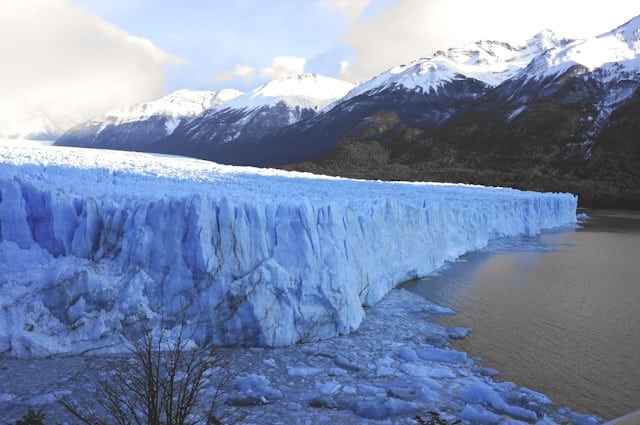
Thwaites, the most studied glacier in the world, commands attention because it is not only the widest in the world at 80 miles but also the shakiest. And its nickname “The Doomsday Glacier” certainly sets it apart from the 500 other named glaciers in Antarctica. Based upon new research of 2024-25, polar scientists have been speaking out like never before, making public predictions about a rapidly deteriorating situation and insisting upon an end to burning fossil fuels, or else!

The new studies identify new concerns: (1) undersea storms that deteriorate/melt from below (2) hundreds of ice earthquakes, fracturing the glacier (3) Thwaites Eastern Ice Shelf, a major portion of the glacier, seriously losing stability.

And finally, a final goodbye to the iconic International Thwaites Glacier Collaboration (ITGC) as it goes dark by year-end 2026. The Trump administration’s FY2026 budget request includes severe cuts to polar science, aiming to end support for the research icebreaker Nathaniel B. Palmer (NBP).

Going forward, Thwaites cascading ice shelves will be unanticipated by polar researchers, as the Nathaniel B. Palmer icebreaker, a veteran of 30 years, is no longer available. It’s been canceled by budget cuts, and the only way to study sea ice is with a vessel. From this point forward, Thwaites abstruse behavior will come as an unwelcomed surprise to coastal megacities of the world.

Nevertheless, as of today, Thwaites followers can exhale because ITGC concluded that the monster glacier will continue to retreat but most likely will not completely collapse this century. However, its impact on sea levels is indeterminate and could be challenging. This conclusion is confusing as several recent studies outside of the purview of ITGC are issuing alarm signals of imminent danger and catastrophic sea level rise for today’s generation, which comes as a real shocker, explained herein. This troubling difference of opinion amongst polar scientists likely points to the difficulties in analyses of an ice continent the size of Antarctica, or the US and Mexico combined; thus, subjective opinions become more prominent and can easily radically disagree. Of special note, the disagreement by scientists over future sea level rise is wide enough to drive a Mack truck through.

Thwaites is so over-the-top controversial that it has its own international study group: International Thwaites Glacier Collaboration involving 100 scientists from world-leading research institutes, but going dark soon. Interestingly, the ITGC web site states: “Thwaites Glacier’s retreat has accelerated considerably…, our findings indicate it is set to retreat further, and faster, through the 21st and 22nd centuries, and general collapse of the West Antarctic Ice Sheet over this timeframe cannot be ruled out.” The date of this general statement on the web site is not provided, but ITGC was established in 2018. Additionally, a solution is offered: “Immediate and sustained climate change mitigation (decarbonization) offers the best hope of delaying this ice loss and avoiding initiation of similar unstable retreat in marine-based sectors of East Antarctica.”

In stark contrast to ITCG’s assessment of sea level rise, other studies reported over the past 24 months by polar scientists, who are not necessarily with the ITCG, are bone rattling, e.g. an August 2024 meeting of the Scientific Committee on Antarctic Research, 1,500 scientists: “Antarctica’s glacial melt is advancing faster than ever before in recorded history.” Gino Casassa, glaciologist and head of the Chilean Antarctic Institute, one of the attendees: “Based upon current trends, sea levels will be up 13’ by 2100,” which begs the question of how high by 2035, one decade from now, and furthermore, this projection by Dr. Casassa is wide of the mark of the ITCG. In fact, this is the first known public statement of such an aggressive prediction. Additionally, in general support of Dr. Casassa’s 13-feet, in November 2024, 450 polar scientists held an emergency summit in Australia, stating: “If we don’t act, and quickly, the melting of Antarctica ice could cause catastrophic sea level rise around the globe within our lifetimes.” It is believed this is the first time such a shocking statement, specifically about Antarctica, has been issued by a major gathering of scientists. “Catastrophic, within our lifetimes” is a real punch to the gut.

Both instances go well beyond expectations by the Intergovernmental Panel on Climate Change (IPCC) and ITCG and published research in general. Both call for immediate halt to greenhouse gases, specifically carbon dioxide CO2 emissions from fossil fuel burning as well as decarbonization. Nevertheless, in the face of scientists’ warnings of deep, deep trouble, the United States is taking a path of climate change ignorance. This puts the world at risks which most of today’s American politicians will not have to face because of indeterminate timing, making it easier to “go for the money” and “screw the environment.” As such, sorrowfully, money becomes the new Golden Calf (Book of Exodus). How’d that biblical story work out?

A chilling new study in Science News, University of Manitoba, with a telling headline: Satellites Spot Rapid ‘Doomsday Glacier’ Collapse, Summary: “Two decades of satellite and GPS data show the Thwaites Eastern Ice Shelf slowly losing its grip on a crucial stabilizing point as fractures multiply and ice speeds up. Scientists warn this pattern could spread to other vulnerable Antarctic shelves… The study notes that the pinning point, once a key factor holding the TEIS in place, has slowly shifted into a feature that now contributes to its instability. This four-stage pattern of structural decline may be a signal for other Antarctic ice shelves that appear to be entering similar phases of weakness.” (Debangshu Banerjee, et al, Evolution of Shear‐Zone Fractures Presages the Disintegration of Thwaites Eastern Ice Shelf. Journal of Geophysical Research: Earth Surface, 2025)

Another new study, as of December 2025, published in Nature Geosciences is the first to systematically analyze how the ocean is melting ice shelves over just hours and days, rather than seasons or years, another real shocker. Swirling underwater storms are the protagonists that aggressively melt from down below. The study is listed in CNN Climate, Underwater ‘Storms’ are Eating Away at the Doomsday Glacier. It Could Have a Big Impact on Sea Level Rise d/d Dec. 10, 2025.

Another new study of Thwaites discusses glacial earthquakes, which weaken the gigantic glacier. About two-thirds of the events detected, 245 out of 362, were located near the marine end of Thwaites. Most of these glacial earthquakes are due to capsizing icebergs. A glacial earthquake is created when tall, thin icebergs fall off a glacier into the ocean. When icebergs capsize, they clash violently with the “mother glacier.” This generates strong mechanical ground vibrations, seismic waves, that propagate thousands of kilometers from origin. (Hundreds of Iceberg Earthquakes Detected at the Crumbling End of Antarctica’s ‘Doomsday Glacier’, Phys.org, December 14, 2025).

Whether the Doomsday Glacier craters with a big splash today, tomorrow, or next century, the fact remains that polar scientists agree it is ultra-high risk surrounded by uncertainty. The dimensions are well known, timing of sea level rise is guesswork. But because it is huge and known to be extremely unstable, someday it’ll disrupt civilization beyond the comprehension of today’s stubborn ill-informed climate deniers. And, assuming the 450 polar scientists are close to correct; they’ll see it during their lifetimes. Then what?

This article was originally published on Dec. 19, 2025 © Counterpunch

———————————–
Robert Hunziker lives in Los Angeles and can be reached at rlhunziker@gmail.com.

Note: This article will also be posted on the Facing Future Now! Facebook group. If you would like to comment on this article, please go to the Facebook group and post your comments there under the article posting.

Facing Future Now! https://www.facebook.com/groups/530755592068234
Krill Defender Arrested by Moscow

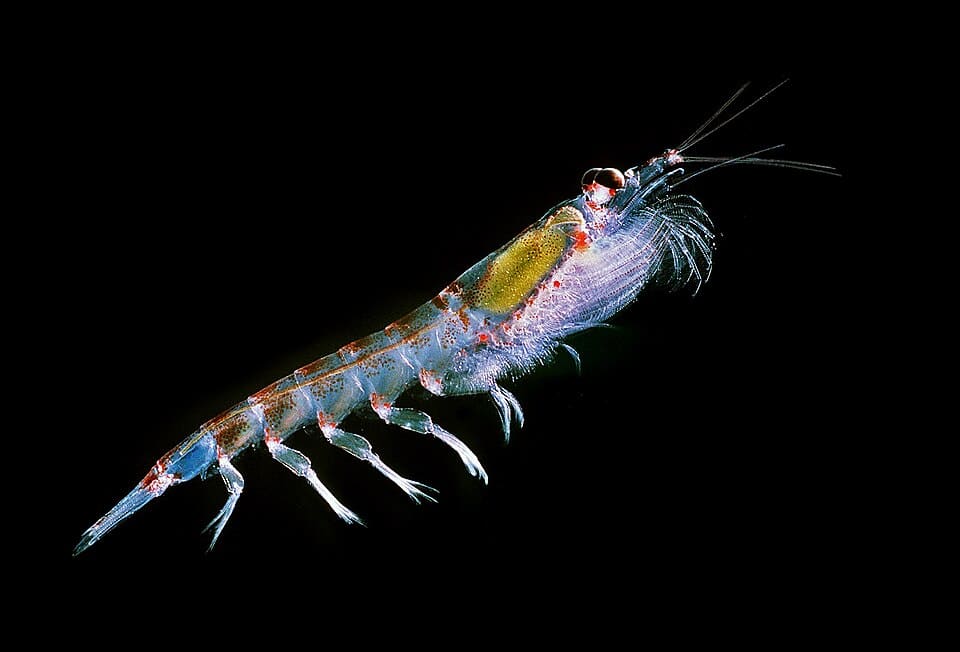
Antarctic krill by Uwe Kils is licensed by CC BY-SA 3.0

Krill Defender Arrested by Moscow

By Robert Hunziker

Leonid Pshenichov, a 70-year-old biologist, has been arrested by the Kremlin for “undermining Russia’s industrial trawling for krill in Antarctica.” He’s been accused of High Treason. He was arrested while preparing to travel to Australia to attend a conference for protecting Antarctic marine life.

According to Russian authorities, Leonid is a citizen of the Russian Federation who defected by joining Ukraine’s delegation to an Antarctic conference, known as the Commission for the Conservation of Antarctic Marine Living Resources. The accusation claims Leonid is using his position to undermine Russia’s fishing of krill in Antarctica by supporting a Ukrainian proposal to “restrict krill harvesting.”

The Commission for the Conservation of Antarctic Marine Living Resources, consisting of 27 member states since 1982, proposes creation of a protected area around the Antarctic Peninsula specifically to protect krill, the prime ingredient in the marine food chain in the Southern Ocean. “This year, for the first time, the number of krill fished in Antarctic waters reached what scientists believe is an unsustainable level.” (Russia Arrests Ukrainian Biologist for Backing Curbs on Antarctic Krill Fishing, The Guardian, Oct. 26, 2025)

Russia and China have blocked proposals for Marine Protected Areas (MPA) in the region for decades. Members of the Commission have called for member states Australia, the US (really?) Japan, and others to condemn Moscow’s actions. Of note: Leonid has conducted research for the Commission since 1983 and as a Ukrainian scientist since 1994. He and family reside in Kerch, Crimea. According to several scientists familiar with his work: His contribution t0 the Commission is “difficult to overestimate.”

Dan Crockett, executive director of the conservation charity Blue Marine Foundation, claims Pschenichnov has been imprisoned for “nothing more than providing scientific evidence about the impact of krill fishing on the Antarctic ecosystem,” Ibid.

Krill Superheroes: According to the National Science Foundation, Antarctic krill are the “Superheroes of the Southern Ocean.” The National Oceanic and Atmospheric Administration (NOAA, which is on Trump’s chopping block) refers to krill as: “Tiny Krill: Giants in the Ocean Marine Life Food Chain.”

Nature Communications describes krill as marine animals that create “the largest monospecific aggregations (swarms) in the animal kingdom,” which means they are easy prey for hungry whales as well as gigantic fishing trawlers.

Moreover, climate change has a position in the life cycle of krill: The Importance of Antarctic Krill in Biogeochemical Cycles, Nature Communications, October 2019, explains the significance of krill as a significant carbon sink: “The role of phytoplankton in atmospheric CO2 drawdown and fish production has been the central focus of many biogeochemical studies,” Ibid.

Industrial Scale Krill Fishing

“The huge trawlers move forward, slowly. Just a short distance from one another, each brand their nets – hundreds of metres in length – before submerging them in the icy waters of the Southern Ocean.” (Licensed to Krill: The Industry Pressures on the Southern Ocean, Oceanographic, September 4, 2025).

As of 2025, Alistar Allan remembers: “Recounting his experience of the fishing effort documented back in 2022 and 2023, Alistair Allan, Antarctic Director at the Bob Brown Foundation admits that he was “blown away” by what he saw, “amazed by the concentration of fishing effort in this small patch of ocean,” Ibid.

Krill fishing by gargantuan trawlers has steadily grown from 106,00o tons in 2006 to 518,000 tons in 2025. Krill is used in salmonid fish farming and as pet food and by humans for its remarkable omega3 content.

At this year’s United Nations Oceans Conference in Nice, France, personalities such as renowned oceanographer Sylvia Earle and actor Benedict Cumberbatch called for a complete ban on krill fishing, claiming the industry is a “non-essential activity.” And making matters even worse, industrial fishing not only negatively impacts one of the most fragile ecosystems of the planet but also directly worsens the climate crisis by eliminating a significant carbon sink.

“If you look at where krill goes, it’s into things that we really do not need,” says Alistair Allan. “It’s not providing an essential foundation for global food security; it’s not feeding the world. It’s been put into pet food, it’s put into salmon aquaculture to feed farmed fish, and it goes into supposed health supplements,” Ibid.

As it happens, human-oriented bizarre nature scenarios keep showing up in the oddest circumstances, for example, the Southern Ocean experiences a surrealistic battle scene of sea mammals, like whales, and human craving for health perfection and abrupt climate change and gigantic metallic trawlers at sea all simultaneously attacking tiny, very small, shrimp-like crustaceans typically 1-2 cm long found at the base, literally the foundation, of the marine food chain. Under normal circumstances the often-transparent creatures use quick backward swimming to escape predators. But trawler nets with total stretch length of 133 m (440 feet) and a mouth perimeter of 300 m (990 feet) wide are a bit too much for quickie escape techniques that have been perfected for centuries. The modern world may be too much for krill that miraculously withstood the aging of time with two lineages of krill surviving the mass extinction event 65 million years ago. Well now, give humans only maybe 200 hundred years to nearly wipeout 65 million years of rugged evolution. Something doesn’t seem right.

The average krill fishing trawler catches roughly 100 tons of krill per day, which is equivalent to 100,000,000 krill per day per ship, so it takes an average trawler about 10 days to catch one billion (1,000,000,000). Krill fishing trawlers can stay at sea for several weeks to months at a time, and sometimes for an entire season (up to 8 months), by using transshipment to offload their catch onto refrigerated cargo vessels (reefers) at sea.

This article is proof positive that civilization is in deep, deep trouble, as it scavenges for the last remaining, most fundamental to life, creatures on the planet. Nothing else compares to such a perfect metaphor for a dying civilization as “harvesting krill.” Welcome to the world of insanity and some strange level of stupidity.

As a footnote to this story and as an alternative to industrial fishing of krill: Ashlan Cousteau, award-winning environmental journalist, producer, and co-founder of EarthEcho International is tackling the krill crisis with a simple but transformative solution. Through her new company, SeaVoir, she’s launched an algae-based omega-3 that delivers the same nutrition as fish and krill oil at the same cost — without harming marine ecosystems.

This article was originally published on Nov.7, 2025 © Counterpunch
————————————–
Robert Hunziker lives in Los Angeles and can be reached at rlhunziker@gmail.com.

Note: This article will also be posted on the Facing Future Now! Facebook group. If you would like to comment on this article, please go to the Facebook group and post your comments there under the article posting.

Facing Future Now! https://www.facebook.com/groups/530755592068234
America’s Impact on the Global Thermostat

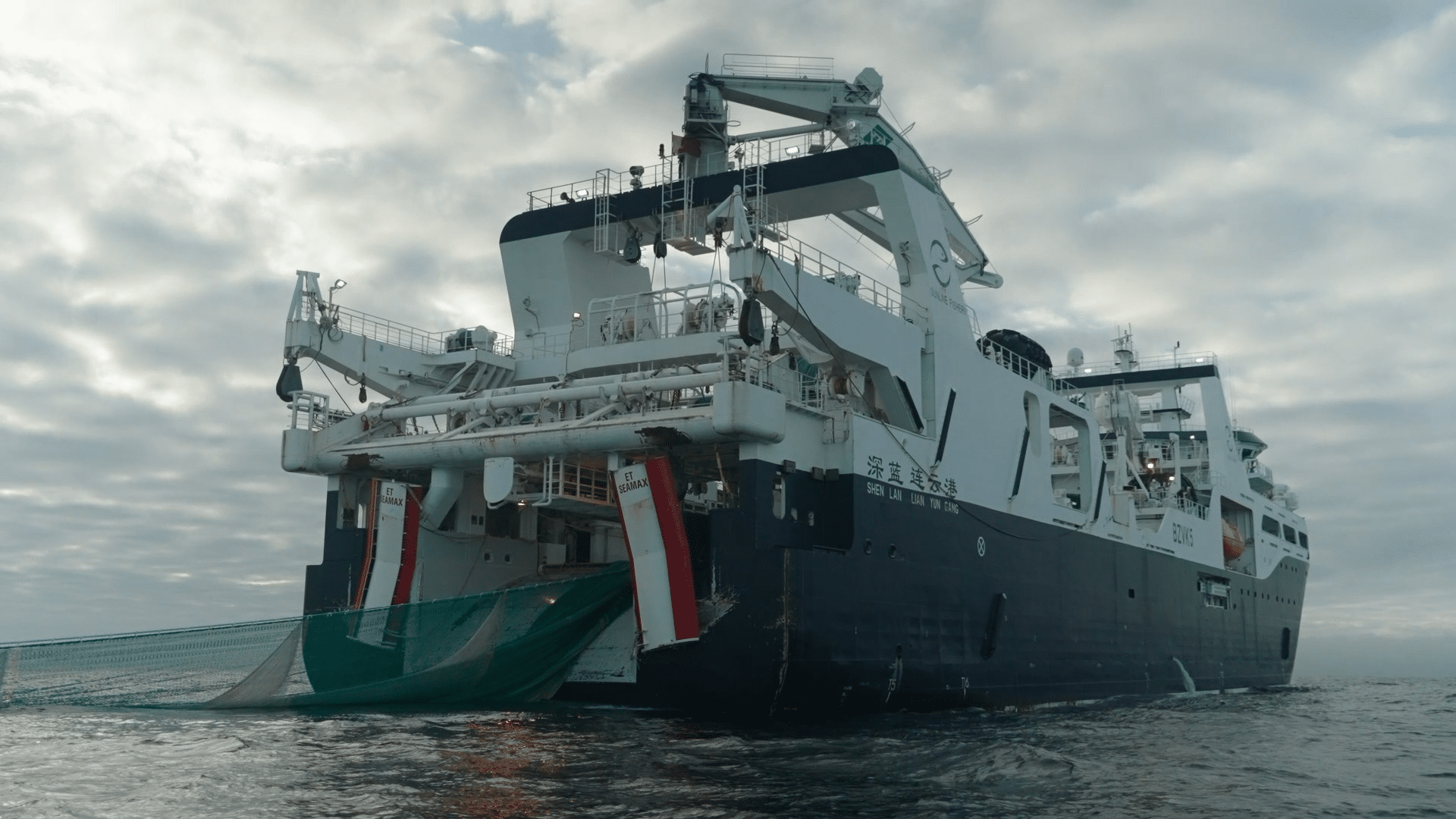
Photo:Orvis State natural gas flare by Tim Evanson is licensed by CC BY-SA 2.0
Photo: Orvis State natural gas flare by Tim Evanson is licensed by CC BY-SA 2.0

America’s Impact on the Global Thermostat

By Robert Hunziker

America is targeting a hotter planet… Bring it on!

That’s the only plausible explanation for the Trump administration’s gung-ho push for 100% fossil fuels and as much coal burning as possible while trashing mitigation of climate change, which is characterized as an expensive hoax, a farce, a threat to the U.S. economy, plus massive roll backs of environmental regulations that force American businesses to spend more to keep America’s environment clean. Based upon these cutbacks of environmental regulations, they’re clearly ignoring climate change.

But the property/casualty insurance industry has no choice in the matter. They are forced to recognize the damage caused by climate change. And, Boy, Oh Boy! are they ever squealing!

More to the point: Climate Change has Trapped the Unites States in a vicious Property Insurance Maelstrom that is negatively impacting home ownership, much more on this sensitive subject follows.

It’s indisputable that the U.S. is intentionally turning up the thermostat at the same time as the world is trying to tone it down. The United States pulling out of the Paris ’15 climate accord is already influencing others to join the U.S., Libya, Iran, and Yemen as the only countries not party to Paris ’15.

But pulling out of Paris ’15 is only part of the hotter climate equation: “Under the Trump administration, U.S. greenhouse gas emissions levels are estimated to rise up to 36 percent higher than current policy by 2035.” (The Trump Administration’s Retreat from Global Climate Leadership, Center for American Progress, Jan. 21, 2025). This certainly helps guarantee a hotter planet.

In addition to withdrawing from Paris ’15, the U.S. has signaled its intent to go one step further and withdraw from the U.N. Framework Convention on Climate Change (UNFCCC, est. 1992). This is the underlying framework, “the father of international cooperation on climate change” that led to meetings such as Paris ’15. Abandonment will freeze-out the U.S. from any future global climate change negotiations and set a dangerous precedent. This could trigger a domino effect among nations questioning climate obligations and destabilizing the global consensus the Paris Agreement represents.

Already, Argentina’s President Javier Milei is reconsidering his country’s commitment to Paris ’15. Already, countries such as Germany are cutting back on mitigation commitments. Already, several brand-name corporate commitments to cut CO2 emissions by 2030 are out the window. Already, the fossil fuel industry is reneging on reduction of CO2 emissions promises.

Yet, the more the U.S. abandons efforts on global warming, the more property insurance companies abandon insurance altogether or crank up moonshot rates, for example, according to Insurify (a website partnered with major insurance companies) 15 States Facing an Imminent Insurance Crisis, October 4, 2024.

Moreover, the overall insurance industry is feeling the heat as explained in a message from a senior officer of Allianz SE, the world’s largest insurance company:   Climate, Risk, Insurance: The Future of Capitalism d/d March 25, 2025).

Unfortunately, the world, other than the property/casualty insurance business, is truly out of touch with the gravity of climate change. Yes, “global warming” is a universal catchall phrase that everybody knows, but “global warming” is too hackneyed to trigger a strong emotional response, and it fails miserably at describing the depths of the biggest challenge in human history. For starters, serious disruptive danger is brewing at both poles and spreading across the land. It’s the reason why 350 polar scientists called an emergency meeting (see below) to warn the world: “Antarctica is starting to come unglued.” This is the nightmare of nightmares.

Already, according to Mau Lau Observatory, CO2 emissions, the primary cause of global warming, are flashing red at 430 ppm. According to an IPCC (Intergovernmental Panel on Climate Change) report: “In 2016, a worldwide body of climate scientists said that a CO2 level of 430 ppm would push the world past its target for avoiding dangerous climate change.” (MIT Climate Portal).

And, making matters worse yet, it was only a couple of months ago when the aforementioned 350 polar scientists held an urgent ad hoc session in Australia to declare an Antarctic emergency on course to catastrophically cascade because of global warming.  That emergency session of November 2024 sent a chilling message to the world: “The experts’ conclusion, published as a press statement, is a somber one: if we don’t act, and quickly, the melting of Antarctica ice could cause catastrophic sea levels rise around the globe.” (Source: Emergency Meeting Reveals the Alarming Extent of Antarctica’s Ice Loss, Earth.com, Nov. 24, 2024)

“Runaway ice loss causing rapid and catastrophic sea-level rise is possible within our lifetimes,’ the team warned in their statement,” Ibid.

Shortly after that spooky news item, another unnerving announcement: Immense methane leaks discovered for the first time in Antarctica. To say “this is troubling” is an understatement. Rapusia.org d/d March 14, 2025, Massive Methane Leaks Detected in Antarctica, Posing Serious Climate Risks: “A team aboard the Sarmiento de Gamboa research vessel observed large columns of gas escaping from the ocean floor, with some extending up to 700 meters (2,300 feet) long and 70 meters (230 feet) wide.” These leaks are whoppers. The methane (CH4) molecule is extremely proficient at blanketing atmospheric heat.

Anthropogenic (human-caused) global warming is indisputable. Global mean temperature has increased far-far beyond nature’s normal course. NASA claims: “The rate change since the mid 20th century is unprecedented over millennia… Scientific evidence for warming of the climate system is unequivocal.” (Evidence, NASA)

Climate change is frustrating; public interest is declining. Climate change/global warming is cast aside as no big deal by people in positions of authority, no worries, blah-blah-blah, whilst perpetrators lose interests in mitigation efforts, with governmental policies abandoning the issue, the reality of global warming falls onto the shoulders of the insurance industry, which is abandoning coverage in some regions and raising prices across the board because of ‘never-witnessed-before’ damage. The property insurance biz is experiencing a crisis. They’re the first ones to admit it

Along the way, every homeowner is getting hosed by insurance rates because of climate change:Even if you haven’t suffered direct damage, you’re paying for increasingly extreme weather.” (Nobody’s Insurance Rates are Safe from Climate Change, Yale Climate Connections, Jan.14, 2025)

How does this end? Does the world, out of necessity, become insurance-less? Here’s how Insurance Europe views the dilemma: “The statistics are alarming, as is the destruction happening across Europe and beyond, and this makes the urgency for action undeniable. Cutting greenhouse gases remains a priority.”

Yet, confusion reigns supreme as the world’s largest economy, the U.S. at $30 trillion GDP, rejects the IPCC claim of human-caused climate change as a threat to society. This is completely rejected. But how can the White House ignore: Homeowners Insurance Has Soared Over 50% in These States, CNBC, May 9, 2025. In Florida, a homeowner with fair credit and $350,000 in dwelling coverage could expect to pay $9,462 a year, or $789 a month for insurance in 2024. Climate change is a costly protagonist.

And more troubling yet: South Florida Homes for Sale Quadruple as Residents Leave En Masse, Newsweek, May 11, 2025. As of April 2025, 52,000 listings versus 12,000 a few years ago, hit the South Florida market like a ton of bricks. Are people running-scared?

Confusion about U.S. climate change policy, and its consequences, is hitting American homeowners with a loud thud that reverberates from coast-to-coast as speculation about a RE-recession builds, in large part, fueled by climate change: The Climate Crisis is Set to Erase $1.47 Trillion in US Home Values, Business Insider, Feb. 4, 2025. According to the study, 40% of the losses will come from “climate abandonment communities.”

When will the Trump administration address this ongoing threat to home ownership? It’s an issue that’s well beyond State’s Rights; it’s a national failure with fossil fuel CO2 emissions trapping heat, upending five-thousand years of a Goldilocks climate system. Exxon scientists saw this coming decades ago. Now, it’s become a national nightmare and an emergency in the face of diminishing guarantors.

“How to end this madness?” is the question of the times.
——————————-
This article was originally published on May 16, 2025 © Counterpunch
Robert Hunziker lives in Los Angeles and can be reached at rlhunziker@gmail.com.

Note: This article will also be posted on the Facing Future Now! Facebook group. If you would like to comment on this article, please go to the Facebook group and post your comments there under the article posting.

Facing Future Now! https://www.facebook.com/groups/530755592068234
Will the U.S. Build Seawalls?

Photo by Parker Hilton is licensed by Unsplash

Will the U.S. Build Seawalls?

By Robert Hunziker

Antarctica is coming apart, crumbling into the sea, much, much faster than anybody ever thought possible. After all, it was only a couple of months ago when polar scientists called an extraordinary emergency meeting to discuss shocking developments: “Runaway ice loss causing rapid and catastrophic sea level rise is possible within our lifetimes.” (Source: Our Science, Your Future: Next Generation of Antarctic Scientists Call for Collaborative Action, Australian Antarctic Research Conference, November 22, 2024).

Another more recent new study using data from the Defense Meteorological Satellite Program is now overshadowing those panicky voices of polar scientists in November 2024. The new study should rattle the cages of every political leader in the world: “This simultaneous decline across both poles reinforces fears that Earth’s polar regions may be undergoing synchronized climate destabilization.” (Antarctica’s 2025 Sea Ice Collapse Shocks Scientists and Raises Fears of a New Climate Normal, Daily Galaxy, April 3, 2025)

“While Antarctica’s summer ice was hitting rock bottom, the Arctic was also seeing near-record-low winter ice… with multiple low-ice years piling up, the question of whether this represents a tipping point is gaining traction in the scientific community.Ibid.

Irreversibility of Cascading Ice Sheets

The tools that once revealed subtle changes in Antarctica are now capturing dramatic losses, lending weight to concerns that Antarctica’s sea ice system is approaching irreversibility. The polar scientists’ emergency meeting in November 2024 sent a chilling message to the world; “The experts’ conclusion, published as a press statement, is a somber one: if we don’t act, and quickly, the melting of Antarctica ice could cause catastrophic sea levels rise around the globe.” (Source: Emergency Meeting Reveals the Alarming Extent of Antarctica’s Ice Loss, Earth.com, Nov. 24, 2024)

“Truth be known, before very long we’ll see cities inundated and catastrophic flooding events, especially in low-lying coastal cities. All of these changes, we can plot them and if we look exponentially, we see really catastrophic effects in the next few years, certainly in the next decade or two the world will be completely different than it is now.” (Peter Wadhams, professor emeritus, Ocean Physics, Cambridge University, author of A Farewell to Ice; A Report from the Arctic )

Extensive research into how to stop this cascading freight train barreling down the mountainside concludes that the only salvation that’ll work soon enough is to stop burning fossil fuels, for example, gasoline-powered cars.

Building Sea Walls?

“Last year, when the Army Corps of Engineers proposed a vast network of seawalls and gates to shield NY and New Jersey Harbor, it argued that the fifty-three-billion dollar ($53B) project was a very good deal, although it ‘will not totally eliminate flood risks’ in the area, it would cost much less than repairing the city after every storm, Hurricane Sandy caused an estimated nineteen billion dollars in damage to NYC alone.” (Source: Can Sea Walls Save Us? The New Yorker, Nov. 5, 2023) Alas, $53B “will not totally eliminate flood risks.”

Across the globe, there is no organized worldwide mitigation plan underway to prevent both poles from crashing much faster and faster yet, which requires an immediate stop to burning fossil fuels. Good luck with that! Therefore, massive flooding is almost guaranteed to hit the world’s coastal megacities, like Miami, New York, and London. But nobody knows how soon, which, in and of itself, dictates taking immediate action to fund, engineer, start building seawalls, tall seawalls.

According to the above-referenced polar scientists’ emergency meeting: “The services of the Southern Ocean and Antarctica — oceanic carbon sink and planetary air-conditioner — have been taken for granted. Global warming-induced shifts observed in the region are immense. Recent research has shown record-low sea ice, extreme heatwaves exceeding 40°C (72°F) above average temperatures, and increased instability around key ice shelves. Shifting ecosystems on land and at sea underscore this sensitive region’s rapid and unprecedented transformations. Runaway ice loss causing rapid and catastrophic sea-level rise is possible within our lifetimes. Whether such irreversible tipping points have already passed is unknown.”

That paragraph contains the formula for rising sea levels beyond anybody’s imagination!

According to Earth.org, coastal megacities are at serious risk, e.g., Bangkok, Amsterdam, Ho Chi Minh City, Cardiff (UK), New Orleans, Manila, London, Shenzhen, Hamburg, and Dubai as well as megacities Miami and New York City. Many Florida and East Coast cities are high risk, e.g., Ft. Lauderdale, Norfolk, Hampton, Charleston, Cambridge, Jersey City, Chesapeake, Boston, Tampa, Palm Beach. It’s a long list.

What’s the likelihood of the Trump administration building seawalls to protect coastal cities? It can’t happen soon enough.

In the year 2020: Trump Blocked Over Plans to Build Wall Around Irish Golf Resort, CNN World, March 12, 2020: “Donald Trump’s hopes to protect his coastal Irish golf resort from erosion with a protective wall have been dashed by planning authorities.”

——————————
This article was originally published on April 7, 2025 © Counterpunch
Robert Hunziker lives in Los Angeles and can be reached at rlhunziker@gmail.com.

Note: This article will also be posted on the Facing Future Now! Facebook group. If you would like to comment on this article, please go to the Facebook group and post your comments there under the article posting.

Facing Future Now! https://www.facebook.com/groups/530755592068234
Risks of Ecosystem Crash-Landings

Photo by Maksim Shutov is licensed by Unsplash

Risks of Ecosystem Crash-Landings

By Robert Hunziker

Biomes as well as individual ecosystems throughout the globe are experiencing considerable stress. As a researcher/writer since 2010 of more than 400 scientific-based articles, I am aware of what science says about the status of the planet’s ecosystems. Since reading hundreds of peer-reviewed papers, it’s not a pretty picture. Yet this is not obvious to the general public inasmuch as damaged ecosystems in large part due to excessive levels of greenhouse gases like CO2 initially show up where almost nobody lives, for example: (1) Antarctica (2) tropical rainforest (3) the oceans (4) Arctic permafrost, covering 25% of Northern Hemisphere landmass. Who lives there?

People who live in NYC or LA or Des Moines don’t see the genesis of a chaotic climate system. But they do see the aftereffects, such as (1) Unprecedented flooding –2024 global record for most floods ever (2) Unprecedented drought, especially the Amazon, which is partially dying (3) Unprecedented heat – exceeded the IPCC line-in-the-sand at +1.5C pre-industrial worldwide, much, much earlier than expected (4) Unprecedented wildfires – twice the loss of the forest tree cover of 20 years ago (5) Unprecedented storms/fires – home insurance rates skyrocket or dropped altogether on both coasts (6) Unprecedented sea level rise -doubled since satellite recordings started.

Nothing is normal any longer. There are no more one-in-100-year events, which statistically means a 1% chance of happening in any given year. Nowadays, it’s all current, no more 1% chances.

Interestingly, emails from readers of my articles address these unprecedented climate events and occasionally somebody with an advanced degree in science or engineering who works for a high-profile institution. One such email recently crossed my desk in response to the article Net Zero/2050, Fantasy or Reality d/d Jan. 10, 2025. That email, in particular, struck a chord because it comes from a senior person at one of the world’s most prestigious, and widely recognized, institutions, and as a bonus, it’s a superb summation of where things stand and where civilization is headed.

It is published herein in its entirety, no edits, no changes, the original email, as follows:

Your latest article (from the weekend edition of CP) – as always – is excellent!   I did notice an assumed subtext and one that permeates all discussions of ‘net-carbon-zero,’– which of course you know and have discussed before, but a fact that often stops people in their tracks during discussions of climate change and ‘mitigating actions’, the 1000 Giga-ton elephant in the room:

Even if we were to achieve net-zero, that would be barely the beginning of our mitigation efforts, as the entire 200-year past atmospheric over-loading is still present, and will remain present for generations, wreaking havoc.  And we are no-where near approaching a path toward ‘net-zero.’

Removing already released atmospheric carbon is 1000’s times more difficult than removing it at the source (or eliminating the source), as you have extensively and excellently discussed, despite what the Fossil Fuel cartels would have us believe – as you have also discussed.

When is it time to say ‘game-over?’ and admit that neo-liberal political systems that have metastatically over-taken most governments of the planet have no impetus to, nor intention of, stopping the ‘growth-forever’ economic model that has doomed us?  I believe the time is now to admit the obvious, that we have destroyed the climate in which we as a species (and most other species) have evolved, and have sent the atmosphere hurtling someplace else – most likely something resembling the Paleocene–Eocene Thermal Maximum, of 55 million years ago, where no terrestrial creature bigger than a poodle survived, and the only habitable continent was Antarctica.  And that was with the ease of transition of several million years – a luxury current Earth biosystems won’t have.   Apparently, our rate of CO2 contamination outstrips the lead-up to the PETM by several orders of magnitude.  Humanity’s efforts seem to be effectively tripping all the Greenhouse Earth tipping points simultaneously and with breath-taking speed.

It has been said (and I don’t have the attribution) that the greatest intellectual failing of mankind is to not be able to comprehend the mathematical implications of the exponential function.  It is my own corollary aphorism that the second scariest place to live is to the left of an exponential knee.  The scariest place to be situated is to the right of the exponential knee.  And here we are at the former, staring blankly at our soon-to-be living-place in the latter.

There probably was a point in the 80’s, soon after Jim Hansen made his famous plea to Congress when – with dramatic action – we could have turned the ocean liner around.  No action (aside from grossly exacerbating action) has been taken.  From any rational engineering perspective, it’s ‘game over,’ the current CO2 loading is sending us to a bad place, there is nothing even remotely on the political/economic horizon that will mitigate the trends, and there is really nothing within our power to stop it in any case, we can’t pull the CO2 and methane back, the Earth herself is refusing to extract any more for us (or absorb any more heat either, for that matter) and is beginning to vomit it all back to us – with considerable interest on the principal to boot.  It’s game over.

I see a couple of benefits to making this admission.  First, it’s probably true.  Second, there’s a certain fairness to encouraging people to ponder the (likely) future.  There is a famous airliner disaster (true) story, of United Airlines Flight 232, in 1989, which crashed on emergency landing in Sioux City Iowa, killing roughly a third of the 300 passengers aboard (it being nearly miraculous that anyone survived).  Flight 232 works as a parable on a number of levels, from the standpoint of an undetected (at least admittedly) manufacturing defect in the blades of the GE fanjet engine to the absolute bone-head engineering mistake in the design of the DC-10’s air-surface control-line routings.  But mostly it is a parable in how Captain Al Haynes let the passengers know what they were about to experience.  In short, the fan-blade in the tail engine failed, sending shrapnel throughout the tail section, and in particular, one shard traced through the primary, secondary and even tertiary back-up hydraulic lines (which were bundled adjacent to one another).  All control-surface hydraulic fluid promptly drained from all lines, leaving Cpt. Haynes with no control of his wing or tail air-surface controls.  Through some of the most magnificent flying art in the history of aviation, Cpt. Haynes, using only throttle controls on the two remaining engines managed to maintain a tiny measure of control of the aircraft, and bring it to within fighting-distance of a landing at Sioux City.  As he approached the runway, at just below cruising speed (about 500 mph, because it was only at this speed that he could keep the nose up) he announced to the passengers that they were going to attempt something that had never been attempted before – a landing at nearly cruising speed.  With about a minute to go before the event, he told them that “this is not going to be a landing, this is going to be a crash.  This is going to be the very worst thing you have ever experienced.  I want you to prepare yourself.”

It’s ‘game over:’ this is going to be a crash.  This is going to be the very worst thing that mankind has ever experienced, and we need to prepare ourselves. Many, perhaps most will not survive, quite possibly there will be no human survivors. Our high-level technical civilization, with all of its delicately intertwined technical, economic, material, sociological channels and meta-stable intricacies will almost certainly not survive.  And we’re going to take much of the biosphere with us – it’s already happening, the sixth great extinction is underway and happening before our eyes.  People need to be able to make critical life decisions with clear-eyed focus on what is likely to happen within many of our lifetimes, about bringing more humans into the world, about selecting careers that serve their own interest vs. that of the destroying powers-that-be, or that builds upon the human intellectual edifice  that seems doomed to be a moot (and mute) monument to an extinct species and/or civilization in a very few years.   It is in the interests of the powers that be, who will continue and accelerate their raping and pillaging of the rest of us and the biosphere for their own narrow self-interest, to demand perpetual and accelerating ‘growth’, perpetual war, more human flesh for cannon fodder and slave-wage-minions, and most of all perpetual obscene profits.  It is in their interest to make us believe that they have the power to save us all, but they do not, they only have the power to make things much, much worse, as you well know and have well discussed.  They will continue to bask in obese luxury until the very end, unless the rest of us rise up to stop them and try desperately to create conditions for some sort of survival (which will be impossible with them continuing to be in charge).  But in order to know that such uprising is necessary, it has to become part of the public consciousness that humanity is about to crash in a hard and grisly fashion.  Technology and its mavens won’t save us, technology and its mavens have likely mortally wounded humanity, and people must become aware, and morally (and mortally) outraged about that fact.
——————————
This article was originally published on January 17, 2025 © Counterpunch
Robert Hunziker lives in Los Angeles and can be reached at rlhunziker@gmail.com.

Note: This article will also be posted on the Facing Future Now! Facebook group. If you would like to comment on this article, please go to the Facebook group and post your comments there under the article posting.

Facing Future Now! https://www.facebook.com/groups/530755592068234
Amazon’s Global Warming Counterweight Threatened

Photo by Andres Medina is licensed by Unsplash

Amazon’s Global Warming Counterweight Threatened

By Robert Hunziker

Since the start of the 21st century, major planetary ecosystems, like the Amazon rainforest and Antarctica have consistently deteriorated, but within only the past two years, these two major ecosystems have deteriorated much faster than ever before. This is happening at geological breakneck speed. Nothing is normal any longer. What’s going on?

The Amazon rainforest experienced a horrific drought event in 2024. Paradoxically, global warming is attacking its own most significant counterweight. A major study found over one third of the Amazon is struggling to recover from four supposedly “one-in-a-century” dry spells in less than 20 years. (Critical Slowing down of the Amazon Forest After Increased Drought Occurrence, PNAS – National Academy of Sciences)

The scientific literature for 2024 focused on some very big issues: (1) record global heat, above the IPCC-warning of 1.5°C above pre-industrial (2) Amazon rainforest rapid deterioration amidst the most brutal drought conditions ever, major rivers dried-up (3) alarming Antarctic conditions prompting an emergency meeting of 450 polar scientists: “Runaway ice loss causing rapid and catastrophic sea-level rise is possible within our lifetimes.” (Emergency Meeting Reveals the Alarming Extent of Antarctica’s Ice Loss, Earth.com, Nov. 24, 2024)

These events are interconnected determinate factors of a global climate system that’s turned unstable. This is not normal. It is erratic and volatile.

For starters, the Amazon rainforest is in terrible condition. Climate scientists would likely agree that loss of the Amazon will be “game over” for civilization in many respects. Based upon current data, they would also likely agree the rainforest is dying.

“A major question is whether a large-scale collapse of the Amazon forest system could actually happen within the twenty-first century…  The Amazon stores an amount of carbon equivalent to 15–20 years of global CO2 emissions and has a net cooling effect from evapotranspiration that stabilizes the Earth’s climate. (Critical Transitions in the Amazon Forest System, Nature, February 14, 2024)

In other words, the Amazon has the biggest job on the planet, stabilizing the climate system. It’s telling that, as the Amazon deteriorates, the climate system turns wackier with massive storms, heat, drought, and floods. No more once in 0ne-hundred-year events. They’re once every other year nowadays.

Evidence of serious Amazon deterioration is prevalent. The world’s leading Amazon authority Carlos Nobre (University of São Paulo) was recently interviewed, November 14, 2024: “Carbon Sink to Carbon Source?”

In 1975, 0.5% of the rainforest was deforested.

Today, 18% is deforested.

Today, 38% of the remaining forest is degraded to a vulnerable condition.

For the first time in recorded history extreme drought has become a regular feature of the rainforest, like clockwork every couple of years. This is not normal. According to NASA, the frequency eliminates natural recovery.

In some regions of the forest, the Amazon emits more carbon than it stores, similar to cars, planes, trains, and industry. This is one more first in climate history, a net carbon CO2 emitter directly into the atmosphere, joining human forces.

But it’s not only the Amazon that’s in deep trouble. Recently, scientists discovered impending Antarctic collapse in some regions, like West Antarctica, more advanced than anybody ever thought possible, necessitating an emergency meeting of 450 polar scientists in Australia only a few weeks ago.

These two major ecosystems have powerful impact on the overall world climate system and by all appearances are in early stages of coming apart at the seams, couched in mystery as to “when” and “how earth-shattering” it will be. Alas, “business as usual,” given enough time, and the world will sit up and take notice and declare an emergency. How to fix it? But when and what to do? And why wasn’t it addressed much sooner?

There are no answers to those questions. The Amazon rainforest, Antarctica, and climate change are not highly ranked in public polls, e.g., according to a Gallup Poll, Dec. 12, 2024, the top concerns include immigration, inflation, the economy, healthcare, and poor government leadership. Climate change didn’t make a showing. It’s of little surprise there is not an effective effort to quantify the risks and recommend what should be done, assuming anything is actually possible, probably not, re anthropogenic destruction of life-supporting ecosystems. But scientists know all about it. Just ask them. Oh yeah, almost forgot, the incoming administration doesn’t believe in science.

In today’s world of politics, especially right-wing, science is ignored or denigrated, as it interferes with cooked up conspiracy stuff that motivates ignorant people to vote for whatever flashes on a TV screen. This results in the greatest dumbing-down of society ever witnessed in human history within a strong science legacy traced back to Ancient Egypt and Mesopotamia 3000 to 1200 BCE. Only brief intervals of modern human history have witnessed political denigration of science like today, other than occasional bouts with religion, e.g., centuries ago, Earth as the center of the universe mayhem, ahem! Could we be going back to that? Maybe.

Meanwhile, threatening, the Amazon is at the most vulnerable of its remarkable history of stability. A key study was posted in the prestigious publication Nature, finding that 75% of the Amazon rainforest is losing “resilience,” or the ability to recover from droughts and fires. (Pronounced Loss of Amazon Rainforest Resilience Since 2000s, Nature).

That chilling fact is the product of global warming and forest-clearing/burning. This is not normal. Quite the opposite, as the mighty rainforest has 55 million years under its belt; it’s a strong survivor, until now.

Four years ago, Princeton held a special Amazon Conference: A World Without the Amazon? Stephen Pacala, the Frederick D. Petrie Professor in Ecology and Evolutionary Biology, Princeton University: “We face four major environmental crises in the world now: climate, food, water, and biodiversity. The Amazon is at the center of all of them.”

“The Amazon is the biggest in a belt of forests that wraps the planet’s midsection. It is a jungle so hot and humid it makes its own rain. Its web of rivers is the largest in the world and contains about one-sixth of the world’s fresh water.” (The Amazon is the Planet’s Counterweight to Global Warming, Inside Climate News).

“The trees in the Amazon release 20 billion tonnes of water into the atmosphere per day, playing a critical role in global and regional carbon and water cycles.” (WWF) Where else could 20B tonnes of water per day come from for the global hydrology system? Answer: Nowhere.

Alas, “Up to half of the Amazon rainforest could transform into grassland or weakened ecosystems in the coming decades, a new study found (A Collapse of the Amazon Could Be C0ming Faster Than Thought, New York Times, Feb. 14, 2024).

According to the World Wildlife Fund: “The largest jungle on our planet, the Amazon, is in danger of drying out. If we lose just 5% more to deforestation, it may never be the same again.” (The Amazon is Dying, Our Planet, WWF, Netflix).

That film is five years old. The 5% is nearly gone.

A world climate system not regulated by Antarctica, crumbling, and the Amazon rainforest, which is already wobbly, will turn dangerously erratic in a reign of climate terrorism that takes lives and livelihoods while destroying megacities from coast-to-coast.

Solutions: Stop deforestation and fires that are 95% human-caused and stop CO2 emissions. But nobody wants to hear this.

——————————
This article was originally published on January 3, 2025 © Counterpunch
Robert Hunziker lives in Los Angeles and can be reached at rlhunziker@gmail.com.

Note: This article will also be posted on the Facing Future Now! Facebook group. If you would like to comment on this article, please go to the Facebook group and post your comments there under the article posting.

Facing Future Now! https://www.facebook.com/groups/530755592068234
Emergency Summit Regarding Antarctic Meltdown

Image by Annie Spratt.

Emergency Summit Regarding Arctic Meltdown

By Robert Hunziker

“Runaway ice loss causing rapid and catastrophic sea level rise is possible within our lifetimes.” (Source: Our Science, Your Future: Next Generation of Antarctic Scientists Call for Collaborative Action, Australian Antarctic Research Conference, November 22, 2024)

Hundreds of scientists gathered in Australia for an “emergency summit” within the auspices of the inaugural Australian Antarctic Research Conference d/d November 2024. This gathering of 450 mostly “early-career” polar scientists flexed scientific muscles to alert the world to the what’s happening to our planet, taking off the gloves and coming out swinging. They claim we’re got a bigger problem than generally realized: “Efforts to slow down climate change through coordinated global action are paramount to protect the future of Australia, Antarctica, and our planet,” Ibid.

“The experts’ conclusion, published as a press statement, is a somber one: if we don’t act, and quickly, the melting of Antarctica ice could cause catastrophic sea levels rise around the globe.” (Source: Emergency Meeting Reveals the Alarming Extent of Antarctica’s Ice Loss, Earth.com, Nov. 24, 2024)

According to the polar scientists: “The services of the Southern Ocean and Antarctica — oceanic carbon sink and planetary air-conditioner — have been taken for granted. Global warming-induced shifts observed in the region are immense. Recent research has shown record-low sea ice, extreme heatwaves exceeding 40°C (72°F) above average temperatures, and increased instability around key ice shelves. Shifting ecosystems on land and at sea underscore this sensitive region’s rapid and unprecedented transformations. Runaway ice loss causing rapid and catastrophic sea-level rise is possible within our lifetimes. Whether such irreversible tipping points have already passed is unknown.” (Our Science, Your Future)

The scientists are calling for society to set immediate targets to “bend the carbon curve.” Failure to do so will commit generations to unpredictable, unstoppable sea level rise, likely beyond current expectations. Drastic action is necessary before it’s too late, calling for immediate reduction of emissions, CO2.

Coastline Megacities at Risk

However, reducing emissions is likely impossible unless and until major governmental authorities force the issue. Voluntary commitments to cut GHG (greenhouse gases) have not worked for over 30 years. Pledges by more than 150 nations to voluntarily cut emissions at the celebrated Paris 2015 UN climate meeting have flopped like a house of cards.

Meanwhile, residents of vulnerable coastal cities may need to consider forcing the issue by forming Citizen Action Flood Prevention Committees to pressure local, state, and federal officials to take immediate measures to protect valuable real estate that’s subject to turning worthless. These committees could be supported by petitions signed by residents, demanding political action to take mitigation measures to protect their coastlines. For example, would nearly 100% of the residents of Miami Beach sign, maybe. And, how about residents of Jersey City? Maybe yes. And onward….

According to Earth.org, coastal megacities are at serious risk, e.g., Bangkok, Amsterdam, Ho Chi Minh City, Cardiff (UK), New Orleans, Manila, London, Shenzhen, Hamburg, and Dubai as well as megacities Miami and New York City. Many Florida and East Coast cities are high risk, e.g., Ft. Lauderdale, Norfolk, Hampton, Charleston, Cambridge, Jersey City, Chesapeake, Boston, Tampa, Palm Beach. It’s a long list.

Unless and until citizen committees authorized by locals with demands en masse are presented to and accepted by local, state, and national policymakers and acted upon, according to a highly regarded analysis by The Universal Ecological Fund, working with climate scientists from the Intergovernmental Panel on Climate Change, The Truth Behind the Climate Pledges: “An environmental and economic disaster from human-induced climate change is on the horizon. An analysis of current commitments to reduce emissions between 2020 and 2030 shows that almost 75 percent of the climate pledges are partially or totally insufficient to contribute to reducing GHG emissions by 50 percent by 2030, and some of these pledges are unlikely to be achieved.”

Moreover, the situation at hand is double trouble as the oil and gas industry has already committed to rapid expansion of fossil fuels at the same time as major corporations are turning up their noses at prior commitments. Climate change has lost its cachet at the worst possible moment: “In February 2024, three major investment companies stepped back from efforts to limit climate-damaging emissions. JPMorgan Chase’s and State Street’s investment arms have both quit a global investor alliance encouraging companies to avoid emissions, and BlackRock has largely limited its involvement. These companies aren’t the only ones backing out on climate agreements. In 2023, Amazon dropped an effort to zero out emissions of half its shipments by 2030, BP scaled back on its plan to reduce emissions by 35 percent by the end of 2030 and Shell Oil dropped an initiative to build a pipeline of carbon credits and other carbon-absorbing projects. Hundreds of companies across the world are backtracking on commitments toward green policies, despite growing concerns that the planet is reaching a crisis point.” (Source: Why Are Companies Reneging On Emissions Reduction? Earth Talk, April 11, 2024)

Recent headlines tell the story: Top Companies Exaggerating Their progress (BBC) When Companies Reverse Their Climate Commitments (Yale Insights) Net Zero Promises from Major Corporations Fall Short (NBC News) Oil Companies Are Still Committed to Burn the Planet Down (Jacobin). A comprehensive list of reneging corporate interests is astonishing.

Making matters more challenging yet, the polar scientists are severely compromised by politics, to wit: “Far-right parties opposing climate action are gaining significant momentum worldwide, especially in Western nations including Argentina, Italy, France, Germany, the Netherlands, and the UK. It is particularly noteworthy that despite their differing domestic agendas, these parties are unified in their resistance to climate initiatives.” (Source: The Betrayal: Why the Far Right Abandoned Action on Climate Change, Oxford Political Review, 18 June 2024)

“The contemporary far-right’s turn against the environment is a major break from the past. During the 1980s, traditional conservatives, like Ronald Reagan and Margaret Thatcher, showed an interest in addressing environmental issues,” Ibid.

The World at a Crossroads

Which will it be? The choice is crystal clear. There are two and only two: (1) Fight dangerous climate change by stopping fossil fuel CO2 emissions now, or (2) Bale-out flooded megacities down the road?

Based upon data from the Intergovernmental Panel on Climate Change 6th Assessment and multiple lines of evidence, current and future emissions will determine the amount of additional sea level rise: the greater the emissions, the greater the warming, and the greater the likelihood of higher sea levels. Based upon emissions to date, two feet of sea level rise will likely occur along the U.S. coastline between 2020 and 2100. That’s already baked into the cake. Failing to curb future emissions could add an additional 1.5 to 5 feet of rise, for a total of 3.5 to 7 feet. (Source: U.S. Sea Level Change, USGS Technical Report, 2022)

The USGS 2022 Technical Report, as outlined in the preceding paragraph, is now choking on the dust of two-years of the hottest 24 months on record, smashing all records with 2023 +1.48C hotter and January-September 2024 +1.54C above the pre-industrial average. A USGS technical update today would almost certainly add to sea level rise projections. Thus, prompting an obvious concern: Is global warming already getting out of hand?

Which way will society turn: (1) stop fossil fuel emissions now, or (2) bale-out flooded megacities later? And would that even be possible?

450 polar scientists are not scaremongers. They’re professionals that are deadly serious. We’ve got a much bigger problem than generally realized.

——————————
This article was originally published on November 29, 2024 © Counterpunch
Robert Hunziker lives in Los Angeles and can be reached at rlhunziker@gmail.com.

Note: This article will also be posted on the Facing Future Now! Facebook group. If you would like to comment on this article, please go to the Facebook group and post your comments there under the article posting.

Facing Future Now! https://www.facebook.com/groups/530755592068234
Doubling Down on ‘Too Much Heat’

Photo by Andrey Grinkevich is licensed by Unsplash

Doubling Down on ‘Too Much ‘Heat’

By Robert Hunziker

A recent Arctic News headline d/d October 4, 2024 refers to one of the most significant climate-related studies this year. It describes in detail the worldwide all-encompassing danger of loss of sea ice: Double Blue Ocean Event, 2025? It demands attention.

A casual reading of climate change literature reveals several mentions of ecosystem impairment or collapse of one sort or another occurring in various timeframes this century. In that context, nothing quite compares to a Double Blue Ocean Event. This event, should it occur, changes everything. It has the potential to be the “holocaust of climate change” with uncontrollable self-propelled rapid global temperature rise damaging or completely destroying ecosystems supportive of life. Already, there’s palpable early-stage evidence this has started, for example, in the Amazon rainforest.

Double Blue Ocean Event 2025? is a lengthy science-based essay of the mechanics and sources and implications of a Double Blue Ocean Event occurring as early as this decade. But, like all climate events, nothing’s certain until it happens. The climate can be fickle. Hopefully, this one doesn’t, but it’s not looking good.

A Double Blue Ocean Event occurs when the sea ice of both Antarctica and the Arctic virtually disappears with sea ice minimum extent (a summer seasonal event) falling below one million km², which is classified as a “blue ocean event.” According to the Danish Meteorological Institute, as of September 2024, Arctic sea ice minimum extent was 4.28 million km². The referenced Arctic News’ study believes several factors have aligned that could speed up loss of sea ice extent rapidly, within a few years.

For another viewpoint, the Arctic Ocean could be ice-free in summer by the 2030s, even if we do a good job of reducing emissions between now and then. That’s the conclusion of a recent peer-reviewed study in Nature Communications.

Of course, none of this would be happening without excessive amounts of CO2 from burning fossil fuels, resulting in human thrusters, i.e., greenhouse gases like CO2, impacting climate change/global warming >10 times faster than nature’s true course. This is well-established fact.

Along with the Arctic, Antarctica is expected to reach an equivalent sea ice minimum extent as early as February 2025. In fact, Antarctic sea ice minimum extent has been well below 2.0 million km² for each of the past three years. It is within striking distance of a blue ocean event.

The worldwide impact of low global sea ice extent drives up global temperatures in multiple ways well beyond current experience. This involves seven (7) mechanisms that cause global surface temperature to rise, in turn, accelerating decline of sea ice extent as the pattern self-perpetuates, faster and faster, bigger and bigger, feeding upon itself. Each of the seven mechanisms relates to profound changes in (1) snow and ice cover (2) wind patterns and (3) ocean currents.

According to Arctic News: “Low global sea ice is driving up global temperatures at the moment in multiple ways. Global sea ice extent is now several million km² lower than it was decades ago, i.e., more than 2.5 million km² lower than the 2010’s average extent and more than 5 million km² lower than the 1980’s average extent.” As a result, global ice cover no longer absorbs nor reflects solar radiation efficiently enough to prevent rapid, excessive global warming. This ageless ice cushion that’s as old as humankind is now departing the timeless equation of keeping Earth in balance. It is nearly gone, forever gone.

According to Arctic News, today’s sea ice extent dictates a call to arms, aka: “Climate Emergency Declaration” today, not tomorrow, but today.

The evidence that low global sea ice is already impacting the climate system is found in NASA data, as of September 2024, showing global temperature more than 1.5°C above a baseline 1903-1924 consecutively for 15 months; however, when compared to the real (much older) pre-industrial base, it is higher yet. This exceeds everything the nations of the world agreed to at the Paris 2015 climate conference, and surprise, surprise, happening within only one decade of their ill-kept promise to limit CO2 emissions so as not to exceed +1.5°C pre-industrial. The Intergovernmental Panel on Climate Change, IPCC: “Exceeding 1.5°C could trigger irreversible climate tipping points, such as (1) collapse of tropical coral reefs (2) thawing permafrost, and (3) breakdown of ocean circulation systems.” All three have respectively started collapsing, thawing, and breaking down:

  1. Coral Reefs Could Pass Their Point of No Return This Decade, GermanWatch, February 16, 2023
  2. Arctic Permafrost is Now a Net Source of Major Greenhouse Gases, NewScientist, April 12, 2024.
  3. A Crucial System of Ocean Currents is Heading for a Collapse That ‘Would Affect Every Person on the Planet’, CNN, July 26, 2023

The most obvious mechanism influencing, and measuring global temperature is the growing energy imbalance or the difference between what Earth absorbs and what Earth reflects of incoming solar radiation to outer space (Problem #1, the Blue Ocean Event eliminates the planet’s biggest reflector). A decade ago (2010s) the energy imbalance was +0.81 W/m2 (watts per square meter). Today it is +1.23 W/m2 That’s a whopping +52% increase in a geological wink of the eye. It’s an earth-shattering increase, spelling trouble, in all-caps. Clearly, the planet’s energy imbalance is skyrocketing, out of control, absorbing way too much heat way too fast. Humanity’s just asking for trouble.

Here’s what the Arctic News article has to say about the severity of the energy imbalance: “It’s obvious that political action can and must improve Earth’s Energy Imbalance, which can and must be achieved by reducing greenhouse gas emissions and further action through transitions in energy use, agriculture, transport, etc.”

“The IPCC has for many years weaved and twisted findings by scientists into a political narrative that downplays the temperature rise and refuses to point at the most effective measures to be taken to act on climate change in an effort to create the illusion that there was a carbon budget to be divided among polluters as if pollution could continue for decades to come.” (Arctic News)

Worldwide Ice Loss – A Gargantuan Planetary Tipping Point

The Arctic News article postulates that civilization, as we know it, is skating on thin ice as a result of the hidden impact and consequences of worldwide ice loss via (1) Arctic sea ice loss (2) permafrost loss in Siberia and North America (3) loss of Antarctica sea ice (4) loss of snow and ice on Greenland (5) loss of mountaintop glaciers like the Tibetan Plateau (6) Patagonian Ice Fields (7) Andes Mountains, and (8) the famous Alps; all tipping points when combined become a gargantuan juggernaut of planetary change no longer serving as a cushion preventing runaway planetary heat. It’s serious business, cannot be ignored, requiring immediate cuts in CO2 emissions… or else?

In the simplest of terms, massive loss of world ice extent, as well as glaciers, is comparable to shutting off the air conditioning of a Phoenix, Arizona apartment complex on a hot summer 115°F day, midday. In the instance of ice loss: Solar radiation is no longer absorbed, neutralized by ice nor reflected to outer space. Thereafter, heat suddenly overwhelms and hangs out in the apartment complex (proxy for the planet). Consequently, record 2024 temperatures of +1.5°C above preindustrial look mild by comparison, as compromised ecosystems, like the Amazon rainforest, lose it.

According to Arctic News: A huge temperature rise could occur soon, as the impact of these mechanisms keeps growing with latent heat tipping points triggered by the Double Blue Ocean Event subsequently triggering a massive seafloor methane tipping point, feeding into a frenzied hot house Earth. Early warning signs of this are prevalent.

“The situation is dire and the precautionary principle calls for rapid, comprehensive and effective action to reduce the damage and to improve the situation, as described in this 2022 post, where needed, in combination with a Climate Emergency Declaration, as discussed at this group.” (Arctic News)

All of which recalls philosopher-economist Kohei Saito (University of Tokyo) Capital in the Anthropocene, Shueisha Publishing, 2020: “Capitalism and a healthy planet are intrinsically at odds.” (Source: A Carbon-free World Isn’t Possible with Capitalism, Broadview, March 14, 2024)

What to do?

And there’s this: 10/28/2024: “A new report reveals the profound consequences of rising temperatures on both the environment and human health. The ‘10 New Insights In Climate Science’ highlight how surging global temperatures are not only threatening the stability of oceans and pushing the Amazon rainforest towards collapse, but also endangering maternal and reproductive health for future generations. The annual synthesis report has been launched by a consortium of more than 80 global experts from the social and natural sciences, including researchers from the Potsdam Institute for Climate Impact Research (PIK).” (Source: 10 New Insights in Climate Science 2024: Heat Surges Risk Ecosystem Collapse, Potsdam Institute For Climate Impact Research, October 28th, 2024)

The study of surging global temperatures making the planet increasingly uninhabitable by the prestigious Potsdam Institute confirms the overriding thesis of the Arctic News’ study and clearly reinforces a call for immediate steps to halt excessive amounts of greenhouse gases, like CO2.
——————————
This article was originally published on November 1, 2024 © Counterpunch
Robert Hunziker lives in Los Angeles and can be reached at rlhunziker@gmail.com.

Note: This article will also be posted on the Facing Future Now! Facebook group. If you would like to comment on this article, please go to the Facebook group and post your comments there under the article posting.

Facing Future Now! https://www.facebook.com/groups/530755592068234

Humans Rescue Doomsday Glacier?

Photo by Bruce Warrington is licensed by Unsplash.

Humans Rescue Doomsday Glacier?

By Robert Hunziker

It was only 3 years ago when a group of distinguished climate scientists led by Erin C. Pettit (Oregon State University) said Thwaites Eastern Ice Shelf of the Thwaites Glacier/Antarctica, aka: Doomsday Glacier, could collapse “within as little as 5 years.” (Source: C34A-07 Collapse of Thwaites Eastern Ice Shelf by intersecting fractures, American Geophysical Union, December 15, 2021)

Assuming they nail it, what happens around the year 2026? Sea levels start rising more than previously but nobody is sure by how much as millions of people could be impacted by flooding. According to the Pettit study: “TEIS (Thwaites Eastern Ice Shelf) has the potential to increase the contribution of Thwaites Glacier to sea level rise by up to 25%.” TEIS buttresses one-third of the world’s widest glacier at 75 miles across. It is a big deal, a very big deal. All of which prompts the question whether it further destabilizes all of Thwaites? The answer seems to be “yes, it probably would.”

However, there are studies only two years later (2023) that claim the loss of Thwaites Eastern Ice Shelf will not impact sea level rise as much as suggested by the Pettit study. For example: Limited Impact of Thwaites Ice Shelf on Future Ice Loss From Antarctica., Geophysical Research Letters, 2023.

Today, there is plenty of research about Thwaites that runs the gamut from a UN climate change panel’s worst-case scenario that collapse would cause global sea levels to drastically rise by three feet by 2070, 10 feet by 2100 to a recent study by Dartmouth College researchers, which disputes the UN panel’s modeling, claiming Thwaites will not see that type of collapse this century. Yet, the Dartmouth report “says retreat is still dire.” (Source: Study Finds Highest Prediction of Sea-Level Rise Unlikely, Dartmouth.edu, August 21, 2024)

The Doomsday Glacier is located at the northern edge of the West Antarctica Ice Sheet. It drains into the Amundsen Sea. And it is big! It’s the world’s widest glacier at 75 miles across. And it is one of the most talked about glaciers in the world. It has its own study group: The International Thwaites Glacier Collaboration, which consist of UK and US scientists investigating one of the most unstable glaciers in the world. For perspective purposes, there are more than 500 named glaciers in Antarctica and many thousands more not named. But Thwaites stands out as the most notorious and most celebrated glaciology superstar.

Thwaites Glacier is like a sore that does not heal; it constantly throbs, drawing attention because it is a real threat to every coastal megacity on the planet. Alas the newest news is that ocean temperatures are skyrocketing, suddenly turning straight up like never before, starting within the past two years. In turn, that’s what works underwater at loosening up Thwaites for collapse. For example, a NYT headline d/d February 27, 2024, says it all: “Scientists Are Freaking Out About Ocean Temperatures.” And, there’s this: Live Science d/d May 21, 2024: Warm Ocean Water is Rushing Beneath Antarctica’s ‘Doomsday Glacier,’ Making Collapse More Likely.

With record-breaking ocean temperatures at rates nobody expected, how long will it take for the Doomsday Glacier to melt completely? According to Eric Rignot, Senior Research Scientist NASA Jet Propulsion Laboratory, when interviewed by USA Today d/d May 20th, 2024: “It will take many decades, not centuries… part of the answer also depends on whether our climate keeps getting warmer or not which depends completely on us and how we manage the planet.”

But low-lying metropolises like Miami Beach are not as concerned about melting taking “many decades, not centuries” as they are concerned about which decade starts the major melting process. This is where the rubber meets the road for low-lying megacities of the world, according to a UN report: New York City, Cairo, Mumbai, Jakarta, Shanghai, Copenhagen, London, Bangkok, Buenos Aires, Lagos, and Los Angeles are all at risk.

So, which decade does it start with full force? Nobody knows but Thwaites is tipsy. That much is known, and that’s why Thwaites has its own study group. Conceivably, the initial decades of collapse could be disastrous.

The risks of collapse have never been higher. Here’s why: Climate change mitigation efforts across the globe have been feeble as CO2 and global warming in parallel have set new all-time higher records in both 2023 and 2024. These are the highest records in human history. People that truly understand the implications are extremely edgy about the prospects of unexpected climate-related shocks over the near-term, meaning not 2050 and not 2100 and not some distant fantasy, but within society’s current generations.

Forget Net Zero Emissions by 2050 (“NZE”), that’s a crapshoot that creates false hope.

“Despite many pledges and efforts by governments to tackle the causes of global warming, CO2 emissions from energy and industry have increased by 60% since the United Nations Framework Convention on Climate Change was signed in 1992… pledges by governments to date – even if fully achieved – fall well short of what is required to bring global energy-related carbon dioxide emissions to net zero by 2050 and give the world an even chance of limiting the global temperature rise to 1.5 °C.” (Source: Net Zero by 2050, International Energy Agency, 2024) This report also claims: “As the major source of global emissions, the energy sector holds the key to responding to the world’s climate challenge.” The report offers solutions.

In that regard, of special note and concern, according to Copernicus Climate Change Service (C3S), global temperatures exceeded 1.5°C (2.7°F) above preindustrial for the first time in human history for a 12-month period from July 2023 to June 2024, when it averaged 1.64°C. According to the UN climate report, sustained temperatures above 1.5C pre-industrial triggers major tipping points like breakdown of ocean circulation systems and others, but that one alone is all it takes for all hell to break lose.

Human Rescue Plan

The gravity of the global situation is only too obvious when a group of glaciologists feels compelled to organize a plan to “Save the Doomsday Glacier” led by John Moore, Research Professor, Arctic Centre, Lapland University/Finland. Within the next two years the group intends to test a prototype fixit in a Norwegian fjord. ultimately installing a giant submarine curtain, up to 50 miles across, that seals off glaciers like Thwaites from Antarctic warm currents. The costs for erecting a curtain across the Amundsen Sea would be $80 billion to see if human intervention really works in the most challenging, treacherous region of the world.

“The proposal calls for a series of giant overlapping plastic or fiber curtains tethered to concrete foundations. To hold the warm current at bay, the curtain would stretch for 50 miles across the entrance to the Amundsen Sea and extend upwards for much of the 2,000 feet from the sea floor to the surface.” (Source: Fred Pearce, As ‘Doomsday’ Glacier Melts, Can an Artificial Barrier Save It? YaleEnvironment360, August 26, 2024)

Thus, human ingenuity is called into action for one of the biggest assignments of all time. Equally significant to the herculean human effort to put a big human thumb in the Antarctic dyke, is the significance of what this says about how far and how fast global warming has progressed. And, even more important, what’s to stop it? And how many doomsday scenarios can humanity handle?

Thwaites is not only a threat, but also an omen, a forewarning of what’s to come.

Every year 195 nations gather for their annual UN climate meeting to make declarations about what’s happened and what they plan on doing, but no tangible results since 1992 when they started. Instead, CO2 and global temps are setting new record highs by the year every year. This is directly opposite the stated objectives of UN climate conferences ongoing for over 30 years.

The next meeting this November is in Baku, Azerbaijan, an oil and gas country, similar to last year’s meeting in Dubai. And since oil and gas CO2 emissions are the principal cause of global warming, which, in turn, is the reason Thwaites threatens coastal megacities with flooding; why are oil and gas producing countries the focus for holding meetings about the problems of global warming?

Have Oil Producers hijacked UN climate conferences?

Answer: Yes, they have hijacked UN COPs (Conference of the Parties). Oh please! It’s blatantly obvious. COP28 was held in Dubai. The serving president of the climate conference COP28 was Sultan bin Ahmed Al Jaber, who’s chair of Dhabi National Oil Company and who publicly stated there is “no science” behind calls for a phase out of fossil fuels. But he conveniently overlooks reams, and reams, of long-standing scientific evidence of CO2 emissions directly linked to global temperature levels. It’s established science, period.

As of today, there are plenty of public statements by the fossil fuel industry that it has decided to ignore the climate change issue and move ahead full blast with increased production. This is reality. For example, The Guardian d/d April 2024: World Set to Quadruple Oil and Gas Production by 2030, Led by New US Projects. Fasten seat belts it’s blast-off time, meaning hotter and hotter, faster and faster, as Thwiates totters.

One can only hope that (1) geoengineering massive glaciers (how many more are there and will it even work?) and (2) geoengineering to remove CO2 from the atmosphere (extremely questionable as to proficiency of scale?) can save the day because an overkill of CO2 emissions is coming like there’s no tomorrow. Oh, by the way, the fossil fuel industry is also banking on technology to save the day.

But there are as many question marks as there are hopeful proposals and too little certainty. Alas, the world is riddled with sharp divisions over: (1) reality of climate change (2) how to tackle the biggest threat in human history (3) and, then, there’s this: Bloomberg News headline: Right-Wing Populist Backlash Is Threatening Climate Fight d/d June 20, 2024: “The green revolution is in trouble. The rise of the nationalist right in much of the Western world has placed huge question marks over commitments to transition out of fossil fuels to fight climate change. Donald Trump in the US and other populist politicians have vowed to jettison low-carbon policies and downplayed the impact of global warming.”

Meanwhile, the global-warming-timebomb is ticking faster than ever, working overtime, not waiting for some kind of universal resolution for the only issue, other than nuclear, that threatens to bring our own self-destruction.

The Thwaites protective curtain will hopefully be in place sometime by 2040, hmm.

——————————
This article was originally published on September 6, 2024 © Counterpunch
Robert Hunziker lives in Los Angeles and can be reached at rlhunziker@gmail.com.

Note: This article will also be posted on the Facing Future Now! Facebook group. If you would like to comment on this article, please go to the Facebook group and post your comments there under the article posting.

Facing Future Now! https://www.facebook.com/groups/530755592068234