Permafrost Showdown

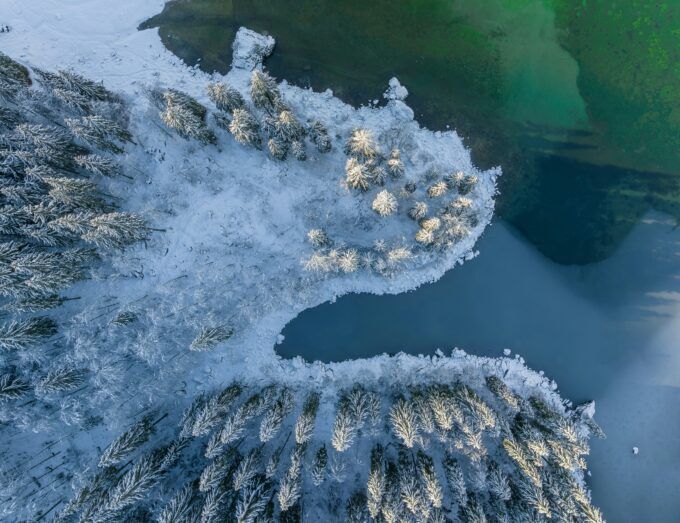
Image by Alex Krivec is licensed by Unsplash.

Permafrost Showdown

By Robert Hunziker

“Deep below the glistening surface of a frozen Arctic lake, something is bubbling—something that could cause global warming to accelerate beyond all previous projections… Now the freezer door is opening, releasing the carbon into Arctic lake bottoms. Microbes digest it, convert it to methane, and the lakes essentially burp out methane.’ Scientists estimate that permafrost holds up to 950 billion tons of carbon. As it thaws, 50 billion tons of methane could enter the atmosphere from Siberian lakes alone. That’s ten times more methane than the atmosphere holds right now,” (Katey Walter Anthony, biogeochemist, National Geographic Explorer Since 2011)

Rapid warming of Arctic permafrost has brought a significant threat to all life forms. Consequently, The Royal Society (est. 1660) felt compelled to support publication of a new video that exposes this threat: What Happens When the Permafrost Thaws? BBC in partnership with The Royal Society by Daniel Nils Roberts, British-Norwegian director, April 15, 2024.

“Thermokarst lakes (formed when permafrost melts) are projected to release approximately 40% of ancient permafrost soil carbon emissions this century.” (Source: K.M. Walter Anthony, et al, Decadal-scale Hotspot Methane Ebullition Withing Lakes Following Abrupt Permafrost Thaw, Environmental Research Letters, Vol. 16, No. 3, 2021)

“The Tibetan Plateau is the largest alpine permafrost region in the world, accounting for approximately 75% of the total alpine permafrost area in the Northern Hemisphere. Similar to high-latitude permafrost regions, this region has experienced fast climate warming and extensive permafrost thaw, which has triggered the widespread expansion of thermokarst lakes and other types of abrupt permafrost thaw. The number of thermokarst lakes in this permafrost region is estimated to be 161,300.” (Source: Guibiao Yang, et al, Characteristics of Methane Emissions from Alpine Thermokarst Lakes on the Tibetan Plateau, Nature Communications 14, Article No. 3121, 2023)

Ecosystems throughout the planet are rapidly transforming because of human-generated global warming. After all, what does the formation of 161,300 thermokarst lakes in only the Alpine permafrost region alone say about the impact of global warming?

Scientists are expressing renewed concerns about monster climate events lurking beneath the frozen ground of permafrost, which is 15% of the exposed land surface of the Northern Hemisphere (MIT Climate Portal). And monsters lurk above solid grounding in Antarctic glacial formations, starting to fracture as fissures widen like ogres of the deep.

From the Arctic to Antarctica the planet is sagging, dripping, slouching, changing the face of 10,000 years of nature coexisting with humanity side-by-side until only recently as it transforms into an adversarial relationship. Permafrost ranks alongside the Arctic, Antarctica, Greenland, The Great Barrier Reef, and the world’s three largest rainforests as the most important determinates of this changing future. Within permafrost’s confines exist thousands of years of latent ingredients that have the potential to set the world on fire. Its impact could be transcendent.

“Most of Earth’s near-surface permafrost could be gone by 2100, an international team of scientists has concluded after comparing current climate trends to the planet’s climate 3 million years ago… The team found that the amount of near-surface permafrost could drop by 93% compared to the preindustrial period of 1850 to 1900. That’s under the most extreme warming scenario in the latest report of the Intergovernmental Panel on Climate Change.” (Source: Study: Near Surface Permafrost Will Be Nearly Gone by 2100, Geophysical Institute, University of Alaska, Fairbanks, Sept. 15, 2023)

What Happens When the Permafrost Thaws (the film): “Permafrost is of huge importance to the entire planet… including one-half of Canada and two-thirds of Russia… and the Tibetan Plateau… permafrost is rock, sediment or ice that remains at or below zero degrees Celsius for two or more consecutive years… depending upon where it is found, permafrost can be millions of years old.”

Interviews in the What Happens film, living in permafrost regions, like Svalbard, Norway, when discussing noticeable climate change: “This kind of weather, it’s not supposed to be like this in October, it’s supposed to be minus 15°, clear, dry climate, and it’s not. It’s a rainstorm.”

As a result of abnormal climate behavior, especially where permafrost hangs out, the “active layer” of permafrost is getting deeper and deeper throughout the world. This is bad news. This creates more and more exposure to thousands of years of accumulation of “who knows what?” It’s happening at a fast enough rate now that it could expose 10,000,000 woolly mammoths (a very rough estimate by somebody?) as well as ancient viruses, and who knows what else?

Moreover, aside from 10,000,000 woolly mammoth skeletons with some of them kinda well-preserved skin, fur, etc., a unique study claims up to 20,000 toxic contamination sites could be exposed: “Here we identify about 4500 industrial sites where potentially hazardous substances are actively handled or stored in the permafrost-dominated regions of the Arctic. Furthermore, we estimate that between 13,000 and 20,000 contaminated sites are related to these industrial sites.”  (Source: Moritz Langer, et al, Thawing Permafrost Poses Environmental Threat to Thousands of Sites with Legacy Industrial Contamination, Nature Communications, March 28, 2023)

“But there’s something else that concerns scientists much more. The scariest thing that is happening with permafrost is what it is doing to the climate itself… permafrost acts as a storage… it locks up the carbon from dead vegetation quite effectively, and it’s accumulated over many thousands of years.” (What Happens).

Now, the freezer door is open. Nobody knows for sure what’ll come through. But the biggest concern is permafrost competing with human-driven carbon emissions like CO2. This could drive global warming to unspeakable levels.

“There’s estimated to be four times the amount of carbon in permafrost than all the human-generated CO2 emissions in modern history. The release into the atmosphere of even a fraction of this as carbon dioxide and methane will have a profound impact on the climate.” (What Happens)

“What can be done” is an open question that’s semi-addressed in the film What Happens: We can make more informed decisions and build communities that are resilient to changes, highlighted by the ways that humans are entangled with nature. In other words, adaptation is the most realistic solution, other than stopping fossil fuels, which is not happening.

Meanwhile, the backup position to frustration over ongoing CO2 emissions that are continuing to ratchet up, now at all-time highs, scientists are increasingly calling for “adaptation to climate change” instead of pounding the table for a halt to emissions. For example, a recent report by the prestigious Columbia Climate School makes the case: “Experts are warning that policymakers should consider adaptation to sea-level rise a primary concern.” But, how to adapt to permafrost thaw is an altogether different matter… the most challenging of all.

In truth, climate change is far ahead of schedule, as scientific models of yesteryear look like distant history. It’s likely that history will designate the 21st century “The Age of Adaptation” by default as countries react, after the fact, to collapsing ecosystems, which guarantees a future full of surprises beyond wildest imagination.

There are scientists who believe permafrost thawing will accelerate global warming beyond the comfort zone of life in several regions of the planet, in fact, it’s already very close to a large scale event in Pakistan, India’s Indus River Valley, eastern China, and sub-Saharan Africa.

Still, regardless of circumstances, finding a way forward to the future is in the lifeblood of humanity. In that regard, there is some good news (kinda good): According to the International Energy Agency (IEA) renewables will meet 35% of “global power generation” by 2025, thus a significant rise in CO2 emissions from global power activity is unlikely over the next few years. However global power generation is not the full enchilada of world energy: Along those lines, coal consumption is expected to drop 13.5% by 2030 but natural gas and oil will both rise as renewables, alongside fossil fuels, experience strong growth to meet increasing levels of demand. According to the IEA, fossil fuels will still account for 70% of world energy, down from today’s 82%, by 2030. This is progress but is it too slow, not enough soon enough? Moreover, and as endorsed by several oil CEOs, the IEA expects oil supply to remain robust into 2050. Hmm -global warming is all about excessive levels of fossil fuel CO2 emissions. Those emissions are not going away anytime soon, which will please the permafrost thawing gods.

As for US influence to lessen the impact of permafrost thawing, although not expressly stated as such in the legislative bill, the Inflation Reduction Act (IRA) provides $370 billion in clean energy investments. But can Biden’s IRA survive political wars? Is IRA bulletproof? More importantly, is it enough soon enough?

According to Barron’s d/d April 1, 2024: Trump Is Taking Aim at Biden’s Climate Law: He calls it a waste of money, and instead, has promised oil and gas CEOs favorable treatment, including scrapping Biden’s IRA, if elected, assuming they pony-up $1 billion for his campaign. Is this a bribe? It’s MAGA’s BMGW “Buy More Global Warming” to subsidize thawing of permafrost.

THE END

—————-
This article was originally published on May 17, 2024 © Counterpunch
Robert Hunziker lives in Los Angeles and can be reached at rlhunziker@gmail.com.

Note: This article will also be posted on the Facing Future Now! Facebook group. If you would like to comment on this article, please go to the Facebook group and post your comments there under the article posting.

Facing Future Now! https://www.facebook.com/groups/530755592068234
WMO Bright Red Alert

Image by NOAA
Image by NOAA

WMO Bright Red Alert?

By Robert Hunziker

The World Meteorological Organization (Geneva, Switzerland) State of Climate 2023 Report by Celste Saulo, secretary general, was issued on March 19th, 2024.

“As secretary general of the World Meteorological Organization, I am now sounding the Red Alert about the state of the climate.”

The WMO has issued an annual State of the Climate Report for more than 30 years. Accordingly, Dr. Celste Saulo’s release of the Flagship Report: “The year 2023 set new records for every single climate indicator. This annual report shows that the climate crisis is the defining challenge that humanity faces, closely intertwined with the inequality crisis as witnessed by growing food insecurity, population displacement, and biodiversity loss.”

According to WMO Secretary-General Saulo (Ph.D. Atmospheric Sciences, University of Buenos Aires): “Scientific knowledge of climate change has existed for more than five decades, and yet we’ve missed an entire generation of opportunity. We must base today’s decisions upon future generations rather than short-term economic interests.”

Economic interests might consider taking a back seat by adjusting, considerably lower, its “infinite growth as soon as possible” footprint so the planet can catch its breath. Short-term economic interests as a feature of the neoliberal brand of capitalism are antithetical to the staid principles of climate science. They simply don’t mix.

The inherent antagonism between neoliberalism’s free market dictates of “follow the money” versus the planet’s complex ecosystems that don’t need money is addressed in Global Social Challenges d/d May 4, 2021, The University of Manchester: “It seems then, that in order to prevent total ecological breakdown, we need to radically change our relationship with the way we produce and use resources. Any system that provides profit as an incentive, seems to always lead to exploitation of the earths finite resources. The idea of unlimited growth continuing indefinitely is the key culprit in climate breakdown.”

What’s more important for life: Profits or Mother Nature?

Accordingly, economic interests risk sudden failure, blindsided without the support of planetary ecosystems, i.e., planetary infrastructure which is increasingly under attack like never before. Throughout the biosphere, ecosystems struggle, rainforests emitting CO2, ice caps melting, Greenland a basket case, permafrost methane bubbling to surface, glaciers clobbered, and severe drought repeatedly hitting nations of the world, everywhere worldwide, Europe much harder, especially Spain subject to risk of 75% desertification with temperatures running in-excess of +2°C pre-industrial throughout the EU.

Some highlights of WMO’s State of the Climate:

Climate change is an existential threat to vulnerable populations everywhere: “The cost of climate action may seem high, but the costs of climate inaction are much higher.”

Glaciers, as of 2023, had the largest loss on record. Yet, glaciers are the “water towers of the world, and we’re losing them fast. They are freshwater reservoirs.”

A separate report by the Swiss Academy of Sciences, coincided with WMO’s Red Alert: “Swiss glaciers are melting at a rapidly increasing rate. The acceleration is dramatic, with as much ice being lost in only two years as was the case between 1960 and 1990. The two extreme consecutive years have led to glacier tongues collapsing and the disappearance of many smaller glaciers. For example, measurements of the St. Annafirn glacier in the canton of Uri had to be suspended as a result.”

On a positive note, according to the secretary-general: “A glimmer of hope… in 2023 clean renewable energy increased nearly 50% over 2022.” Africa has huge renewable potential that is only using 1% of renewable investments. “We must focus on renewables for Africa.”

Omar Badur, WMO Head of Climate Monitoring

A key climate Indicator: Global temperatures 2023 were the warmest on record at 1.45°C above 1850-1900 average. Past 9 years, warmest 9 years on record. This trend appears endless.

Sea ice loss in Antarctica was one of the major climate features reported in 2023. As a result, 2023 saw the highest rise in sea level ever. The rate doubled. In previous decades it was 2.13 mm per year. The recent decade recorded 4.17 mm/yr., nearly double.

The most extreme climate events for the year related to heat and extreme precipitation:

Extreme heat during the summer occurred (1) Japan had the hottest summer on record (2) Australia the hottest July-Sept on record (3) unprecedented wildfires in Canada (4) SE Asia extreme heat April/May (5) All-Europe extreme heat in summer (6) SE United States exceptionally hot summer (7) Mid-South America March, September extreme heat waves. All of which led to excessive mortality and massive forest fires.

WMO’s discussion of extreme precipitation and deficit precipitation references the impact on agricultural food security and flooding. Most of South America, Central America, and North America experienced extreme dry episodes. North Africa experienced a long drought with some dam reservoirs at nearly zero percent of capacity. Water deficits are defining significant parts of the African continent.

Meanwhile, pervasive flooding was seen throughout, especially in China and New Zealand, the worst flooding in recorded history. For example, in August 2023 more than 1,000,000 were forced to flee homes in China’s northeastern Hebei province, thereafter over one month to recede.

A major concern, maybe most significant of all, and most hidden from sight, major changes in the oceans, over time, become irreversible. According to WMO’s report, 80-90% of the oceans recorded marine heatwaves in 2023. Like drought on land, excessive heatwaves lead to desertification of the oceans. However, in contrast, changes in the ocean are not as fast as atmospheric changes, and as such. once a change is established in the oceans, it’s irreversible. This is an extremely worrying trend as 80-90% experienced heatwaves.

Confirming WMO’s observations, according to the Institute of Atmospheric Physics at the Chinese Academy of Sciences and the U.S. National Oceanic & Atmospheric Administration, 2o23 ocean temperatures were, in the words of researchers: “Off the charts.” (Source: Astounding Ocean Temperatures in 2023 Intensified Extreme Weather, Data Shows, The Guardian, Jan. 11, 2024)

According to Secretary General Celste: “We are having temperatures that are way above what we used to have, and our populations are not prepared to cope with that. Their infrastructure is not prepared. Their homes are not prepared. That’s why we spoke about a Red Alert.”

Future UN climate conferences should consider focusing on adaptation measures for countries infrastructure to withstand the onslaught of drought, wildfires, floods, and sea level rise. After all, insurance companies are raising rates and, in some areas, dropping coverage altogether to adapt to climate change’s impact on bottom line profits, but in the harshest fashion, leaving the public to fend for itself, hopefully finding state-sponsored support.

In contrast to insurance companies, which are running for the hills as global warming slashes profits, after 30 consecutive years of UN climate meetings, every issue brought before the plenary body of experts ends up worse until the following annual meeting, when it is again discussed one more time as an existential threat that gets progressively worse by the next annual session, on and on it goes. Yet, nothing about adaptation.

In fact, the UNEP Adaptation Gap Report 2023 found the world underfinanced, underprepared, with inadequate investment and thus exposed to “slow progress on climate adaptation.”

Adaptation to the forces of climate change at UN climate conferences, as a major focus, would likely be a welcomed relief and a more appropriate topic than whining about excessive fossil fuel CO2 emissions now that climate change/global warming is starting to look more and more like an out-of-control freight train barreling down the mountainside.

In line with publication of WMO’s 2023 flagship report, January 2024 was the hottest January on record.

Moreover, as reported by NOAA, February 2024 was the hottest February on record. February is the ninth consecutive month of record heat.

Now that the climate system is setting new hottest temperature records month-by-month, it goes without saying, it’s a deadly dangerous affair.

How long can this trend last?

——————-
This article was originally published on April 5, 2024 © Counterpunch
Robert Hunziker lives in Los Angeles and can be reached at rlhunziker@gmail.com.

Note: This article will also be posted on the Facing Future Now! Facebook group. If you would like to comment on this article, please go to the Facebook group and post your comments there under the article posting.

Facing Future Now! https://www.facebook.com/groups/530755592068234
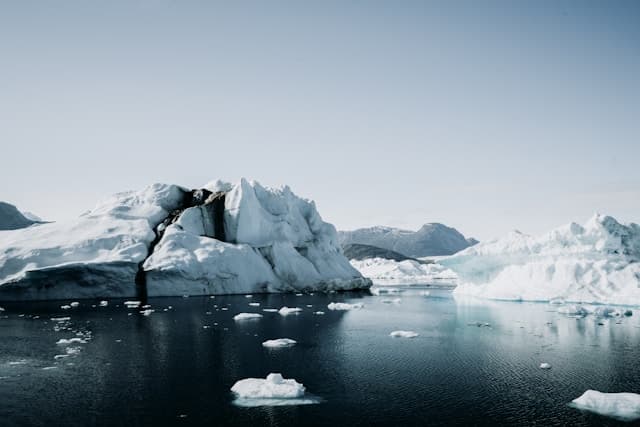
Greenland Cascading 30 Million Tons Per Hour

Photo by Annie Spratt is licensed by Unsplash.

Greenland Cascading 30 Million Tons Per Hour

By Robert Hunziker

Facing Future.tv recently conducted an interview about spooky new developments in Greenland. The ice sheet is cascading/gushing at unheard of rates never dreamed possible at this stage of global warming, or at any stage for that matter.

The video opens with a statement by Peter Wadhams, professor emeritus Ocean Physics, Cambridge University, a leading authority on Arctic sea ice (A Farewell to Ice: A Report from the Arctic, Oxford University Press, 256 pgs): “Greenland’s rate of melt in summer was something that we knew about, and it was gradually increasing, then suddenly it’s multiplied itself by about 8 times; this is 30,000,000 tons an hour. When I was last up there it was more like 30,000,000 tons per day. That’s just something unheard of and so we’re really worried about what’s going on with Greenland.”

As it happens, Dr. Wadhams’ expression “worried about what’s going on with Greenland” is a very strong candidate for ‘understatement of the year’ or maybe of the century. The rate of melt he discussed is 720,000,000 tons per day versus previous analyses of 30,000,000 tons per day.

The Facing Future.tv 25:33-min video is entitled: Greenland: Ice Loss Accelerating, 30 Million Tonnes an Hour with Paul Beckwith and Peter Wadhams, Hosted by Dale Walkonen March 3, 2024.

Question by the host: “How serious is the situation in Greenland?

Answer (Wadhams): “Well, it’s very serious because it’s unprecedented that the rate of melt… Suddenly its multiplied itself by about seven or eight; it’s 30 million tons an hour, but when I was last up there it was 30 million tons per day… now gone to an hourly rate which used to be daily rate… when you’re up on the ice sheet you see big changes. There are always large meltwater streams, holes filling up with water. It’s a very dynamic scene but it’s not nearly as dynamic as it is now because everything is speeding up by a factor of about eight. It’s something unheard of… it’s not figured into the climate models used by the IPCC.”

According to Paul Beckwith, climate system scientist, University of Ottawa, the High Arctic has been warming 5-8 times the global average for some time now as many scientists and newspaper reports erroneously claimed it was only two-three times, not 5-8 times. The High Arctic directly influences Greenland, and he claims there’s good data on Greenland and Antarctica via gravity anomaly satellites, e.g., NASA’s GRACE, CyroSat, and Copernicus Sentinel-3, that show melt rates doubling every decade for both regions.

Regarding the new data: “People are going to be very surprised at the accelerated growth of sea level rise in the next decade, or two, let alone if all of Greenland melted, it would be 25 feet of sea level rise.” (Beckwith)

According to Beckwith: James Hansen (Earth Institute/Columbia University) some time ago said he would not be surprised if we had 5 meters (16 feet) of sea level rise by 2100. He said that years ago when the IPCC expected about one-half a meter by 2100.

It should be noted that current IPCC sea level rise statistics assume 1-4 feet this century, depending upon various input data.

Beckwith: We’re seeing huge acceleration in global warming, in ocean warming, estimates of sea level rise are going to be going up, up, up a lot, continually revised upwards. He believes Hansen’s 5 meters is an underestimate. If perchance that happens, what’ll it be by 2030 or 2040 or 2050? After all, Greenland’s melt rate is not static; it’s already off the charts at a baffling 30M tons per hour, formerly 30M tons by the day. Seemingly, that’s comparable to breaking the sound barrier at Mach 1.

Wadhams on Hansen: “I think Hansen is right in expecting a higher rate than models give; he always has a healthy contempt for models which I think is correct because nearly always, models are inadequate, especially the Intergovernmental Panel on Climate Change, IPCC models.”

As queried by the host, since most people listen to what the IPCC says, for example, setting nation/state policies, where can people go for accurate information?

Beckwith’s response to ‘the dilemma of where to go for accurate information’: Scientists are individually willing to discuss their own research but reluctant to talk about research by other scientists and only make projections based upon computer models, but computer models are based upon history, often stale information by the time used.

Not included in climate modeling, major wildfires in Canada and Russia last year spewed massive amounts of ash onto Arctic ice which accelerated melting beyond expectations as dark background absorbs solar radiation rather than reflecting it to outer space.

Another new factor impacting Greenland’s ice melt that’s downright spooky is Hansen’s recent statement about Earth’s energy imbalance, which is completely out of whack with more energy than ever before coming into the planet as absorbed sunlight rather than going out as heat radiated to outer space. This imbalance has doubled within only one decade, according to a study by NASA and the US National Oceanic & Atmospheric Administration  This may be, probably is, the biggest ‘bad news of the year’.

Earth’s energy imbalance or “sunlight in” versus “sunlight out” is currently running at a frightful rate @ 1.36 W/m2 (watts per square meter) as of the current 2020s decade, which is double the 2005-2015 rate @ 0.71 W/m2 (Source: James Hansen).

Beckwith highlighted another major concern for Greenland as the change in jet streams at 20-40,000 feet altitude is altered, as a result of loss of Arctic sea ice, into vast wavey troughs that trap heat over Greenland. This never happened in the past. Another new dynamic, according to Beckwith, is a lot of rain in the Arctic instead of snow, thanks to global warming. And atmospheric rivers, like those that drenched the West Coast, hitting Greenland, accelerating the melt process.

It’s an understatement to conclude that Greenland is in trouble and conventional views of sea level rise are way too conservative. Unfortunately, by extension of these new facts, coastal cities are more vulnerable to flooding than ever before.

According to Climate Central, widespread areas are likely to see storm surges on top of sea level rise reaching at least 4 feet above high tide by 2030, and 5 feet by 2050. Nearly 5 million U.S. residents currently live on land less than 4 feet above high tide, and more than 6 million on land less than 5 feet above. Portland’s high tide broke all-time records, reaching 14 feet at the same time as record-breaking floods hit the US East Coast, January 14th, 2024. NOAA expects sea levels along US coasts to rise as much over the next 10 years as they did over past 100 years.

But the Climate Central study doesn’t include calculations for Greenland’s 30M tons per hour or Antarctica suddenly losing sea ice extent at a record-setting pace 2022,2023, 2024 in succession. Once again, Earth’s climate system outmaneuvers climate science research, leaving scientists bent over at the knees, coughing in its dust. It’s too fast for scientists to keep up.

Bottom line, it’s nice to assume everything will be okay, “we’ll get through it, there’s still time to fix it,” blah-blah-blah, but several new earth-shattering indicators, especially at both poles, are not waiting for that illusive fixit.

Frankly, nobody knows how bad, how soon this worldwide melt-off develops as both poles, the Arctic and Antarctica, experience unbelievably rapid change in concert with land-based melt-offs in the Alps, Patagonia, Andes, Himalayas, Caucasus, and all other mountain ranges worldwide. Meanwhile many of Europe’s famous ski resorts closed in February, even snow cannons stopped working due to high temperatures.

For the record, here’s the James Hansen sea level projection, as mentioned by Paul Beckwith: “In what may prove to be a turning point for political action on climate change, a breathtaking new study casts extreme doubt about the near-term stability of global sea levels. The study—written by James Hansen, NASA’s former lead climate scientist, and 16 co-authors, many of whom are considered among the top in their fields—concludes that glaciers in Greenland and Antarctica will melt 10 times faster than previous consensus estimates, resulting in sea level rise of at least 10 feet in as little as 50 years. The study, which has not yet been peer-reviewed, brings new importance to a feedback loop in the ocean near Antarctica that results in cooler freshwater from melting glaciers forcing warmer, saltier water underneath the ice sheets, speeding up the melting rate. Hansen, who is known for being alarmist and also right, acknowledges that his study implies change far beyond previous consensus estimates. In a conference call with reporters, he said he hoped the new findings would be “substantially more persuasive than anything previously published.” I certainly find them to be.” (Source: Earth’s Most Famous Climate Scientist Issues Bombshell Sea Level Warning, Slate, July 20, 2015)

Nine years later, increasingly it looks like Hansen will be right once again.

If he’s right about “at least 10 feet” within 50 years, which would be by 2065, then what will it be in 2050, 2040, or 2030? In rough numbers, sometime between 2030-40 it would surpass the IPCC highest estimate for 2100. That’s a big-time headache for every coastal city, right around the corner. Hopefully, a magic potion drops into Earth’s atmosphere and makes this go away like a bad dream.

And as long as the magic potion is around, why not use it to strip the world’s teeny-weeny percentage of the world’s population billionaires of some of their riches to buy renewable energy for the world marketplace and finance science projects to help combat Hot House Earth. It’s coming.

For the faint of heart, cheer up, there are plenty of respected climate scientists that disagree with the expectations stated in this article. Still, over time, somebody will be right; maybe it’ll be them but maybe don’t count on that, wondering what they’d say about Greenland’s turbo-charged 30 Million/Tons/Hour.

Nevertheless, one solution that can help solve global warming is “kill Citizens United” that allows corporate interests to spend unlimited funds to influence elections, politicians, and policy (they’ve made the worst possible choices) … before it’s too late to do anything, or is it?

————–
This article was originally published on March 15, 2024 © Counterpunch
Robert Hunziker lives in Los Angeles and can be reached at rlhunziker@gmail.com.

Note: This article will also be posted on the Facing Future Now! Facebook group. If you would like to comment on this article, please go to the Facebook group and post your comments there under the article posting.

Facing Future Now! https://www.facebook.com/groups/530755592068234
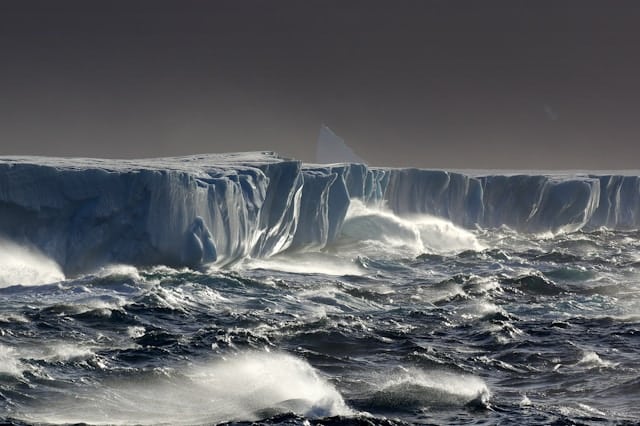
Coastal Cities at High Noon

Photo by Bob Brewer on Unsplash
Photo by Bob Brewer is licensed by Unsplash

Coastal Cities at High Noon

By Robert Hunziker

Antarctica, the massive continent of ice, the size of the continental US and Mexico combined, is breaking apart more and more as a recent scientific expedition discovered unambiguous signals of considerably more danger than previously realized.

“The changes to the sea-ice indicate that in the coming decades coastal cities will need to be reconfigured because of sea level rise,” according to Craig Stevens, Auckland

Professor of Physical Oceanography. (Source: Signs Found of Worryingly Fast Antarctic Ice Melt – New Zealand Expedition, RNZ, March 3, 2024)

Sea level rise for coastal cities, the world’s worst nightmare, is coming within indeterminate decades but probably sooner than expected because that’s how science works these days. It’s always late to the party and not properly dressed for the occasion. But don’t blame the scientists, as soon as they complete research, the fast-moving climate system has outdistanced them. This is the new normal. Science is too slow for climate change.

Moreover, reader commentary/feedback about articles such as this recognizes a distinct trend in the world’s climate system that’s starting to come apart at the seams much earlier than expected. That observation is true. But what can be done and why aren’t world leaders holding emergency meetings to challenge civilization’s biggest challenge is puzzling, to say the least. It’s only too obvious because of lack of expedient policies to halt greenhouse gas emissions global warming and consequent sea level rise are not taken seriously enough.

In that regard, it must be noted that the world’s rich/wealthy elite that buy/own politicians, buy/own Supreme Court justices could have stopped global warming dead in its tracks decades ago when Dr. James Hansen (Earth Institute/Columbia University) warned the US Senate in 1988 of global warming when he was head of NASA Goddard Institute of Space Studies but instead chose to go along with a fossil fuel-poisoned world where the money resides.

Since that time, the world has become a function of neoliberal capitalism, as dictated by Reagan/Thatcher almost 50 years ago. Therefore, the question must be asked: Has that socio-economic system that has made only a few filthy rich on the back of 99.75% of the world’s population been a good caretaker of the planet? Answer: No, it has not. Then, why should that warped socio-economic system be allowed to continue as absentee care-less caretaker of the planet? Neoliberal capitalism hasn’t done one positive thing for the planet, not one but has drained resources and enriched a teeny-teeny-weeny minority of people. Bravo! But what’s the ecological legacy?

Meanwhile, a team of New Zealand scientists Antarctic Science Platform and a research team from the Italian Programma Nazionale di Ricerche in Antartide aboard the 262-foot ice-breaker research vessel Laura Bassi just returned from two months in Antarctica’s Ross Sea. They got a first-hand look at sea ice retreat and came away with deep concern. Things are happening much faster than anybody thought possible. High noon for the world’s coastal cities is closer than they expected.

Craig Stevens, Professor of Physical Oceanography, Auckland led the expedition. The three lowest sea ice extents since modern records have been kept 2022, 2023, and 2024 are the lowest in the 46-year record of Antarctic sea ice. It’s gone fast and faster. Furthermore, the configuration of deeper parts of the ocean are changing via content of salty and oxygenated water. According to Dr. Stevens: ‘With a climate emergency underway, the work they were doing was urgent.”

It was only a couple of months ago when the following headline caught attention: Antarctic Sea-Ice at ‘Mind-Blowing Low Alarms Experts, RNZ, Sept.17, 2023. “It’s so far outside anything we’ve seen, it’s almost mind-blowing,” according to Walter Meier, who monitors sea-ice with the National Snow and Ice Data Center.

“It’s so far outside anything we’ve seen, it’s almost mind-blowing,” is language that’s as strong as climate scientists ever use. That one sentence about Antarctica should ring throughout the land a clarion call to take immediate action, but, so far, it hasn’t moved the needle.

Similar to Antarctica’s cousin Arctic sea ice up north, down south huge ice expanse regulates the planet’s temperature, steadily throughout a 10,000-yr episode of human history known as the Holocene Era, not too hot, not too cold. Its white surface spectacularly reflects 80-90% of solar radiation back into space, and it importantly cools the water beneath and near it. Without its cooling ice influence: “Antarctica could transform from Earth’s refrigerator to a radiator,” Ibid.

By all appearances, it is starting to transform into a radiator for the first time in human history. The real depth of the problem, moreover, is even deeper yet as both poles react in the same manner, almost regardless of the season, rapid ice melt, big losses of the all-important albedo effect reflecting 80-90% of solar radiation back to space, whilst a rapidly expanding dark ocean background absorbs considerably more heat than the surrounding ice can withstand. It’s a vicious melt-off circular that gooses the climate system into absolute nonsensical patterns turning normal jet streams (20-40,000 feet) abnormally whacky, rocking the hemisphere with massive doses of scorching heat that stays put, atmospheric rivers, massive flooding, and wildfires galore. It’s all massive scale. There is no more normal.

Ultimately, the bruised climate system is aiming for a surprise coastal flooding of major cities that carelessly will not be prepared because, based upon many, many climate conferences, and gobs of warnings by thousands of climate scientists over many years, the risk still has not sunk into policies of major nation/states that global warming’s favored course is destructive coastal flooding and ecosystem degradation. If they truly believed, they’d do everything possible to convert fossil fuel subsidies, which the IMF says surged to a record $7 trillion, and build seawalls, very tall seawalls. This then would complete the circle of moats surrounding countries in an ongoing left-right socio-politico battle over whether revival of the Middle Ages (500 – 1400 A.D.) comes to pass. Burning at the stake could be right around the corner.

Not that many years ago, scientists never thought Antarctica would awaken from its frozen past and succumb to global warming. Well, it’s finally awakened, and it is succumbing. “It’s potentially a really alarming sign of Antarctic climate change that hasn’t been there for the last 40 years. And it’s only just emerging now,” Ibid.

It was only three decades ago when Martin Siegert, glaciologist University of Exeter started studying Antarctica. Today he says: “Awakening this monster of the south threatens an absolute disaster for the world,” Ibid.

Refreshingly, scientists studying Antarctica are not holding back statements of fact. According to Anna Hogg, Earth scientist at University of Leeds: There are signs that what is already happening to Antarctica’s ice sheets is in “the worst-case scenario range of what was predicted,” Ibid.

The worst-case scenario is too unnerving to reiterate.

What about solutions? For starters, here’s a quote from Dr. James Hansen at a special event in Utah hosted by The Nature Conservancy: “We’ve got political parties on both sides taking money from special interests. And unless we solve this problem with our democracy, we really can’t change the climate change problem. And the public knows this.”

Answer: kill Citizens United as soon as possible

Citizens United – In 2010. the U.S. Supreme Court decided that Americans cannot prevent corporations from spending unlimited money to control elections, politicians, and policy based upon interpretation of the First Amendment.

The Supremes put the United States of America up for sale to the highest bidders.
————–
This article was originally published on March 8, 2024 © Counterpunch
Robert Hunziker lives in Los Angeles and can be reached at rlhunziker@gmail.com.

Note: This article will also be posted on the Facing Future Now! Facebook group. If you would like to comment on this article, please go to the Facebook group and post your comments there under the article posting.

Facing Future Now! https://www.facebook.com/groups/530755592068234
20,000 Toxic Sites in Sagging Arctic Permafrost

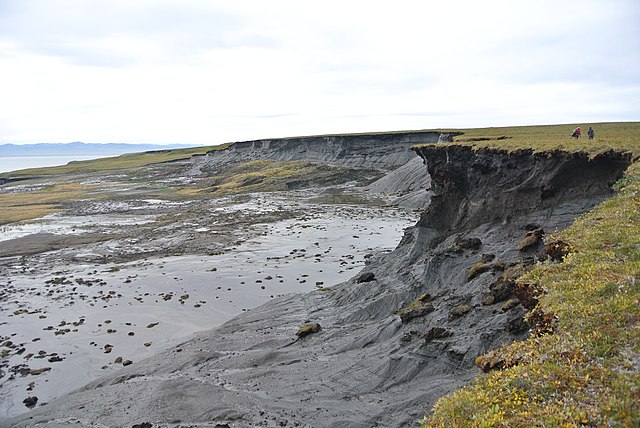
Thawing permafrost in Herschel Island
Photo of thawing permafrost in Herschel Island by Boris Radosavljevic is licensed by CC BY 2.0 DEED

20,000 Toxic Sites in Sagging Arctic Permafrost

By Robert Hunziker

New studies show the Arctic heating up 4-times the overall rate of global warming. This startling rate in one of the most sensitive environments in the world could trigger toxic disasters in up to 20,000 industrial contamination sites.

Twenty-five percent (25%) of the Northern Hemisphere is covered by permafrost that’s melting the fastest ever. The risks of toxic leaks at industrial sites are immeasurable. Nobody really knows for sure how it ends, but it has started.

“Industrial contaminants accumulated in Arctic permafrost regions have been largely neglected in existing climate impact analyses. Here we identify about 4500 industrial sites where potentially hazardous substances are actively handled or stored in the permafrost-dominated regions of the Arctic. Furthermore, we estimate that between 13,000 and 20,000 contaminated sites are related to these industrial sites.” (Source: Moritz Langer, et al, Thawing Permafrost Poses Environmental Threat to Thousands of Sites with Legacy Industrial Contamination, Nature Communications, March 28, 2023)

This percolating threat is starting to become reality as Arctic climate conditions shift into overdrive, heating up like never before. As stated in the Langer study: “The latest data analyses suggesting up to four-fold faster warming, substantially changing the ground stability.”

“Substantially changing the ground stability” is the last thing anybody wants to hear.

Previously, it was thought that the Arctic was warming roughly 2+times faster than the rest of the planet, but this new data suggests 4-fold, which is roughly twice the rate of past warming. It is a shocker with potential to kick-start release of massive amounts of extremely dangerous toxic materials, including radioactive waste, in permafrost throughout the Far North.

“For decades, industrial and economic development of the Arctic assumed that permafrost would serve as a permanent and stable platform: Past industrial practices also assumed that perennially frozen ground would function as long-term containment for solid and liquid industrial waste due to its properties as a hydrological barrier… A number of experiments were conducted in Alaska, Canada, and Russia in which toxic liquids and solids, including radioactive waste, were deliberately placed in permafrost for containment,” Ibid.

“Between 1955 and 1990, the Soviet Union conducted 130 nuclear weapons tests in the atmosphere and near surface ocean of the Novaya Zemlya archipelago off the coast of north-west Russia. The tests used 224 separate explosive devices, releasing around 265 megatons of nuclear energy. More than 100 decommissioned nuclear submarines were scuttled in the nearby Kara and Barents seas. While the Russian government has since launched a strategic clean-up plan, the review notes that the area has tested highly for the radioactive substances’ caesium and plutonium, between undersea sediment, vegetation, and ice sheets…The United States’ Camp Century nuclear-powered under-ice research facility in Greenland also produced considerable nuclear and diesel waste. When it was decommissioned in 1967, waste was left in the accumulating ice, which faces a longer-term threat from changes to the Greenland Ice Sheet.” (Source: Rapidly Warming Arctic Could Cause Spread of Nuclear Waste, Undiscovered Viruses and Dangerous Chemicals, New Report Finds, Aberystwyth University, September 30, 2021)

In 2021 the Russian newswire Tass claimed the country was at “the finish line,” removing thousands of tons of radioactive material from the Arctic. However: “Since the 1990s, the Bellona Foundation has been involved in discovering and documenting nuclear hazards and radiation threats in Arctic Russia and based on that experience, the organization asserts that Likhachev’s announcement is untrue — Russia is nowhere near the “finish line” in these efforts.” (Source:  Rosatom Says Nuclear Cleanup in Arctic Done- Far from the Case, Says Bellona, Bellona, June 7, 2023)

The problem may be magnified beyond what’s already known simply because, to date: “There has been no assessment of the environmental impact of these activities on the Arctic as a whole,” Ibid. In other words, nobody really knows what’s happened or what’s happening. This is a new under-researched arena of study that has horns protruding like glistening daggers in the night.

The following research of danger lurking in the Arctic should spook the daylights out of anybody: “Over 110 of Russia’s decommissioned nuclear submarines still have operating nuclear reactors, which, according to Russian designs, means two reactors per vessel or more than 220 individual reactors. There is nowhere to put the liquid waste or to store the spent fuel, so the reactors have to keep operating with only skeleton crews. While, in the past, one country’s failure to safely dispose of its military hardware might rightly have been viewed as its own problem, the case of nuclear submarines cannot be seen in the same light. The proliferation threats these vessels pose is global, due to the large amounts of highly enriched uranium (HEU) and plutonium—the key ingredients of nuclear weapons—contained in their fresh and spent fuel. This enormous stockpile of fissile material, which is currently not well protected from theft or diversion, presents an attractive target for a potential proliferator, whether a rogue state or sub-state actor.” (Source: Dismantling Russia’s Nuclear Subs, Arms Control Association, May 19, 2021)

Throughout the Arctic, the issue of what to do for remediation or cleanup is compounded due to the loss of ground stability which limits access to impacted sites and use of heavy equipment. As such, permafrost melt creates a barrier to cleanup. The Langer study found that many former industrial-use facilities are now abandoned and difficult to access.

In the face of clear warnings, the scope of danger is increasing in real time because of new industrial development. There are no international environmental regulations for the Arctic as formulated for the Antarctic in the Madrid Protocol that requires transparent documentation of contamination and potential sources of hazardous substances. However, governance for the Arctic falls under an umbrella organization called PAME (1991) that established an Arctic Council. PAME does delineate environmental issues and shipping issues with a softball approach that does not appear to have teeth for enforcement.

At the same time as scientists uncover more and more risks of toxic materials, the situation is made all the worse because of increased economic interest and commercial development in a less forbidding melting Arctic. But that is merely a ruse as it’s more forbidding than ever before; a melting Arctic is filled with unexpected dangers lurking right around the corner. There is risk of multiple contaminated sites leaking at the same time whilst new industrial development runs amok. Alas, this is starting to look like an exercise in madness at a level of human stupidity seldom witnessed in the history of civilized society. Such situations likely never end well.

Oceana Warns That Irresponsible Industrialization of the Arctic Could Lead to Catastrophic Consequences Worldwide, Oceana – “Protecting the World’s Oceans”:

“This sea ice loss has also opened the Arctic to the immediate threat of rapid industrialization. As Arctic sea ice melts, Arctic waters have become susceptible to new threats of increased industrial fishing, shipping, and oil and gas exploration and development. Increasing human activities could significantly accelerate the threats facing the Arctic, which would have cascading effects all over the world.”

The Norilsk Diesel Tank Incident

The disaster scenario is already playing-out for all to witness: The Norilsk Diesel Tank Incident d/d June 2020: A regional emergency was declared in the city of Norilsk when the supporting posts in the basement of a storage tank of diesel fuel suddenly sank because of cascading permafrost causing 21,000 tonnes of diesel to pour into rivers and lakes in Russia’s Arctic North. President Vladimir Putin declared a state of emergency. Just wondering: How many diesel tanks are located in the Arctic permafrost?

The scope of the Arctic permafrost problem is beyond belief with (1) pesticides like DDT packed in barrels and buried in the permafrost (2) increasing oil leaks by pipelines that stretch throughout the landscape (3) radioactive materials buried around former and current military bases, and (4) deposit reservoirs containing numerous industrial toxicants. Making matters even worse yet, only recently Canada’s massive fires are bringing into focus a whole new dynamic. Wildfires could be sending up plumes of toxicant-laden smoke that spreads across the land and to adjoining countries, like the USA.

Throughout the Arctic, airport runways are sinking, roads are cascading, and buildings are tilting, as some of the most toxic materials known to humankind sit in waiting to be released into the environment because of man-made global warming; once again proving the ancient proverb: “You reap what you sow.” According to Darcy Peter, a permafrost researcher at Woods Hole Research Center: “I’ve heard of dozens of houses falling in, and a few churches. There are multiple graveyards that are falling in, and there’s nothing that anybody can to.” (Eos, June 24, 2020)

Analysts that research and study Arctic permafrost say: “It’s a ticking time bomb.”

As the Arctic fall season of 2023 turns into an icy Arctic winter, which is a shadow of its former self, COP28 is scheduled to be held in Dubai where oil sheiks have taken over control of the science-based UN COP/28 meeting aka: Conference of the Parties for the UN Climate Change Conference starting in a few weeks, late November, when nations of the world and at least 100+ prime ministers and presidents show up for photo ops with Bono to allegedly challenge climate change with 80,000 attendees roaming the decorated halls, similar in many respects to extravagant US auto shows, that presupposes “all will be well, just hang in there, we’ll find solutions.” That would be historic!

Will climate scientists attend?
————————————-
This article was originally published on October 27, 2023 © Counterpunch
Robert Hunziker lives in Los Angeles and can be reached at rlhunziker@gmail.com.

Note: This article will also be posted on the Facing Future Now! Facebook group. If you would like to comment on this article, please go to the Facebook group and post your comments there under the article posting.

Facing Future Now! https://www.facebook.com/groups/530755592068234
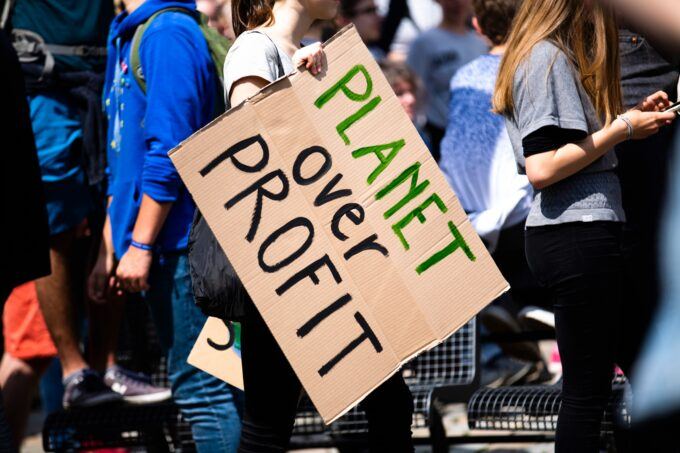
Climate Emergency Update, September 2023

Image by Markus Spiske
Photo by Markus Spiske is licensed by Unsplash

Climate Emergency Update, September 2023

By Robert Hunziker

Earth’s climate system is in a state of emergency. Emergencies are defined by four specific elements, i.e., (1) seriousness (2) unexpected (3) dangerous, and (4) requiring immediate action. Based upon a new YouTube broadcast by the inveterate commentator Dr. Peter Carter, all those elements are in-play in a very big way.

Dr. Carter, expert reviewer of the Intergovernmental Panel on Climate Change and director of the Climate Emergency Institute, posted a 26:33 minute YouTube update on the status of our climate system: Climate Emergency Update Sept. 2023. In his broadcast, the elements of an emergency are clearly related to the planet’s climate system.

Dr. Carter’s broadcasts are closely followed by people looking for answers to what’s really happening. Indeed, it is rare, in fact, almost impossible to find a source that truly lays it out without pulling any punches. His presentations are excellent, filled with factually backed statements that are brought to life with emphasis. Indeed, Dr. Carter is a rare personality, a breath of fresh air in today’s world of cynicism, disinformation, and the tendency to ignore difficult choices, especially the challenging status of the planet’s climate system. It is the one thing that we must “get right.”

The following synopsis, including editorial comment, highlights the issues as seen by Dr. Peter Carter:

In his opening statement he starts by reporting the state of the climate today as “worse… than ever before,” emphasizing the fact that it’s actually “much worse than ever before.” He suggests: “If it seems to you that the climate situation is getting worse, yes, it is. There’s no question about that, and it’s been getting worse for a long time. That’s what the science has told us, for example, in scientifically based assessments by the Intergovernmental Panel on Climate Change (IPCC).”

For years, his motto has been: “Everything is getting worse faster.”

The World Meteorological Organization (WMO) identifies the climate’s status as “a major climate disruption that’s driven by atmospheric CO2.” In that regard, the risks to the planet’s climate system have increased substantially, as atmospheric CO2 and methane are higher than they’ve ever been whilst increasing faster than ever before. Carter: “It’s a recipe for an overwhelmingly destructive global warming scenario.” And, frankly, that’s what’s been starting to appear on TV.

Ocean surface temperature has been off-the-charts, rapidly increasing like never before. According to Carter: Fossil fuel impact is adding heat to the oceans at the rate of 10 Hiroshima bombs per second. Moreover, he claims it’s at least that amount and some sources claim it’s even higher than 10 Hiroshima bombs per second. Of course, one problem with comparisons like 10 Hiroshima bombs/second is the impossibility of imagining that scope, which unfortunately causes people to fail to get it.

Meanwhile, the hard truth is that it was thirty years ago 1992 in Rio de Janeiro at the United Nations Framework Convention on Climate Change that 166 countries initially agreed that global warming needed to be counteracted. Over the subsequent 30 years nothing has happened. Meantime, the science has been hard at work, essentially confirming: “We are headed for the collapse of the biosphere… we are on a rapid trend of biosphere collapse” (YouTube, 4:52 min).

This fatal destiny of biosphere collapse is the result of a world economy agenda that’s designed “to burn all of the fossil fuels.” However, as if by the sleight of hand, it’s claimed, by pro-growth and pro-fossil fuel interests, we’ll be able to geo-engineer our way out of the quagmire of excessive atmospheric Co2, not-to-worry. But, according to Dr. Carter: “That is absolute nonsense.” More on the carbon capture ruse later.

The Methane Threat

Methane is coming into focus as an extremely troublesome threat with scientists on edge like never before. Over the past couple of years, since 2019-20, methane emissions have been explosive, which is precisely how scientists at the National Oceanic and Atmospheric Administration (NOAA) refer to today’s methane emissions: “Explosive!”

Even worse yet, Carter highlights what he refers to as “the newest terrible news”: “We have methane feedback,” meaning the explosive increase in methane emissions is hands free on auto pilot; it’s the wetlands! This is really bad news because the feedback is literally running wild. Carter: “This is what we have been dreading for decades.”

Even more troubling yet, most scientific models have claimed we did not have to worry about this specific event, i.e., self-reinforcing methane emissions, until the end of the century. Carter: “Well, it’s here now; it’s here bigtime.” The problem is not a small one as wetlands hold double the amount of carbon as forests. According to David Archer, in one of his carbon climate publications, the climate has never had as much carbon aboard as it has now, and it’s mostly in wetlands.

Euan Nesbit, Emeritus Professor, Earth Sciences, University of London, Honorary Fellow, Darwin College, the world’s leading scientist on methane has sounded the alarm about wetland methane feedback. He put out a paper a couple of weeks ago “that’s nothing short of terrifying.” The paper: Atmospheric Methane: Comparison Between Methane’s Record in 2006-2022 and During Glacial Terminations, American Geophysical Union, July 14, 2023.

Moreover, the ultra-dangerous East Siberian Arctic Shelf, which is loaded with methane hydrates, is possibly being compromised, see: Seafloor Methane Tipping Point Reached! Titanic Lifeboat Academy, September 18, 2023.

Methane explosiveness is likely one of the factors behind: “July was the hottest month ever on record.” According to NASA, the Northern Hemisphere was almost 1.7°C. Of course, one month does not make a year, but throughout the planet, for example, all of Europe, temperatures above the dreaded 1.5°C and/or 2.0°C continue to pop up, almost like a permanent trend. It’s unnerving and signaling a very early arrival of inhospitable ecosystems, like what’s already happening in northern Canada and all across the northern reaches of the Northern Hemisphere.

As a result, crazy things happen at both poles. For example, suddenly, Antarctica’s sea ice has become something to worry about after decades of “no worries.” It reached record lows in February 2023, and even worse, when it refreezes, it does so at a slower and slower pace. Carter: “This is a very, very bad, complex, disturbing, disrupting thing that’s happening in Antarctica.” (FYI -There are some well-known Antarctic experts who’ve flat-out said they are scared)

All the while, as the biosphere is experiencing massive intense disturbing, disrupting threats to ecosystems that literally support life, governments are pushing for more and more fossil fuels. According to The Economist, there will be no slowdown in extraction and burning of fossil fuels. According to the IPCC 6th Assessment, because of fossil fuel emissions increasing: “We are looking at temperature increases that are way far-out, totally unprecedented.” (YouTube, 12:40) A scientific paper that came out earlier this year made the point that the temperature rate of increase over the past decade was unprecedented.

Honestly, you only had to turn on the TV news over the past summer to know about unprecedented temperatures and the relationship to human-caused global warming. As such, global warming is slowly going mainstream, causing people to cock their heads to one side as if to question, “what’s going on and is this real news or is it fake news?” Poorly educated people claim it’s fake or totally exaggerated. But is it?

Another disturbing issue is drought conditions throughout the world – NASA’s Grace satellites are the most reliable measurements of drought. And nowhere is drought more responsible for climate chaos than Canada. Canada’s massive fires are driven by global warming; a recent study of Grace data shows the entire north of Canada in severe drought fed by global surface warming. It’s a massive climate catastrophe that simply will not stop and likely one of the worst most disheartening and threatening scenarios of the decade.

Moreover, another major concern detected by Grace satellites: “All of Europe is subject to ground water depletion drought.” In fact, the EU officially made mention of this at the beginning of the year in a public statement. What could possibly be worse? Already, consequences were on display in France and Italy when over 100 towns and villages ran out of ground water during the summer of 2022, governments scrambled to temporarily truck-in bottled water.

Last year (2022) was a record-year of unprecedented mega disasters. And 2023 is similar. All of this is being driven by fossil fuels. The Economist claims oil production/consumption will be higher in 2030 than it is today, as well as increased use of coal, because increased heat waves in China and India require extraordinary measures for air conditioning, requiring more power plant production. They easily turn to coal.

Dr. Carter issued what he refers to as “the worst news ever”the IMF recently published an assessment of fossil fuel subsidies worldwide of $7,000,000,000,000 in 2022. Meaning governments are subsidizing the destruction of the planet at the rate of $13M per minute. Ten years ago, it was $5 trillion for one year. He believes this is why young people rightfully protest fossil fuels.

Governments must act immediately to stop fossil fuels because the entire climate system is starting to turn inside out. For example, approximately 50% of emissions are absorbed by the carbon sinks of land and ocean. But boreal forests are on fire, emitting carbon, not absorbing carbon. Boreal forests circumnavigate the planet and are absolutely vital for our survival. They are vital to all life. Canada alone has had 5,936 boreal fires to date this year. The burned area is 58,687 square miles, a figure that boggles the mind.

According to Copernicus Atmosphere Monitoring Services, boreal forests in regions all over the world have experienced the worst wildfires in recorded history. As a result of the world’s major forests burning, emitting carbon instead of absorbing it, the year-over-year increase in Co2 from July 2022 to July 2023 was a record high increase of 3,29 ppm, 422.14 ppm versus 418.85, a massive increase.

The big question: What can we do? Carter: “We must recognize that we have an enemy, which is fossil fuels.”

We must act now because our greatest asset and one of our last lines of defense for life on the planet, the boreal forest, is burning, emitting CO2 instead of absorbing it. Carter: “This is beyond critical!!!” The boreal forest is the largest forest area of the world, covering one-tenth of the world’s land, wrapped around the entire Northern Hemisphere. It feeds our lungs and stores our carbon. Without it, we fail.

“Extreme wildfires are turning the world’s largest forest ecosystem from carbon sink into net-emitter.” (Source: Alaska Beacon, March 2023) How can this not be anything other than a worldwide emergency?

In summation, Dr. Carter’s update emphasizes six major categories (1) ocean surface temperatures off the charts (2) impending biosphere collapse (3) the methane threat coming unglued, way too early (4) world government policies continue to favor fossil fuels, more than ever (5) severe worldwide drought (6) loss of boreal forests – a key lifeline.

COP28/Dubai, the meeting of the nations of the world on climate change, starts in a few weeks. It’s likely that oil & gas interests will claim carbon removal and sequestration will save our asses. That’s extremely doubtful. (Carbon Capture Has a Long History of Failure, Institute for Energy Economics and Financial Analysis, September 2022)

According to the US EPA’s description of carbon capture: “It’s technologies that are not economically or technically feasible for widespread use.”

And according to a recent Al Gore speech, Orca (Iceland), the first large-scale carbon dioxide removal plant’s operations are being improved enough so that, in 7 years, each DAC unit will be able to capture 27 seconds worth of annual worldwide emissions. There are 8 units, do the math!

More to the point, according to Dr. Carter: “It is absolute nonsense.”

—————————-

This article was originally published on September 22, 2023 © Counterpunch
Robert Hunziker lives in Los Angeles and can be reached at rlhunziker@gmail.com.

Note: This article will also be posted on the Facing Future Now! Facebook group. If you would like to comment on this article, please go to the Facebook group and post your comments there under the article posting.

Facing Future Now! https://www.facebook.com/groups/530755592068234
Global Warming Did The Unthinkable

Image by NOAA
Image by NOAA is in the Public Domain.

Global Warming Did The Unthinkable

By Robert Hunziker

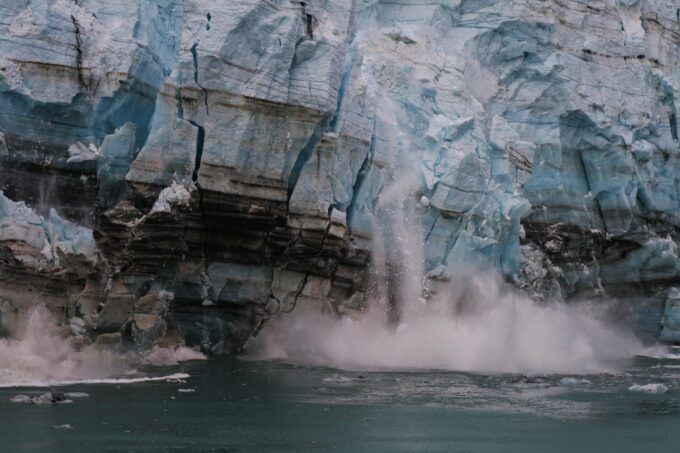
Jungfraujoch’s foreboding temperatures this September at the top of the world in Switzerland at 2.25 miles altitude alarmed glaciologists.

If anybody has lingering doubts about global warming’s strength of power to directly impact Earth’s ecosystems, think again. Antarctica, at the bottom of the world, experienced record high temperatures during its winter, as record high temperatures were also recorded at the top of the world in the Swiss Alps, where it’s always icy cold. As it happened, both the top and the bottom of the world hit record high temperatures, simultaneously, give or take a few days. There’s no known record of this ever happening before.

It’s proof positive that global warming is powerfully impacting the entire planet, simultaneously, and it’s happening horrifyingly fast! Too fast to justify petty, phony claims amongst some Americans, with a voice, that global warming’s nothing more than “natural events, the climate always changes, not to worry, blah, blah, blah!” Oh, please, grow up!

But maybe people should be in the streets demonstrating to pull out all the stops to prevent the inevitable, which is self-advertised in full-living descriptive color as both ends of the planet go off course in ballistic fashion within several days of each other. The upshot is global warming (heat) has become Top Dog of the Earth System, pushing aside Goldilocks’ not-too-hot-not-too-cold tenure over the past several thousand years of the Holocene Era. The problem: Goldilocks was a sweetheart. But global warming is a mean-spirited bully, without heart.

Jungfraujoch is the tallest SwissMetNet station in Switzerland at 11,715 feet. Temperatures above 0° Celsius (32°F) for eight straight days in the month of September shocked glaciologists. That had never happened before in its 90-year history of official recordings.

The Jungfraujoch environment, according to its web page: “Icy air sweeps your face, snow crunches underfoot, and the panorama almost takes your breath away: on one side the view of the Swiss Mittelland towards the Vosges, on the other the Aletsch Glacier, lined with four thousand metre peaks. Standing on the Jungfraujoch 3,454 metres above sea level, you can feel it with your first step: this is a different world.”

Glaciologists say this new zero-degree record at extreme altitude is an ominous sign. Of serious concern, Switzerland has ~1,500 ice giants that don’t fancy a lot of heat. Those ice giants have faithfully served as the world’s most trustworthy water towers ever since humans first huddled in caves during the Stone Age a couple million years ago. Now, those wondrous glaciers are at risk of meltdown within only one century after a couple million years of steady work.

Not only did Jungfraujoch register 8-straight days over zero, but at the higher altitude of 5,298 metres Swiss MeteoSwiss reported record temperatures over the zero-degree limit.

“The zero-degree limit is a key meteorological indicator particularly in mountainous regions, as it ‘affects vegetation, the snow line and the water cycle and so has considerable impact on the habitats of humans, animals, and plants alike.” (Source: Climate Records tumble as Switzerland Swelters in Heatwave, Swissinfo.ch, August 22, 2023)

Swiss glaciers have lost one-third of ice volume in only 20 years. The next twenty could be crucial. According to Daniel Farinotti, glaciologist at ETH Zurich: “With a zero-degree isotherm far above 5,000 metres, all glaciers in the Alps are exposed to melt — up to their highest altitudes. Such events are rare and detrimental to the glacier’s health… if such conditions persist in the longer-term, glaciers are set to be lost irreversibly,” Ibid.

“Since the pre-industrial era, the temperature in Switzerland has increased by almost 2° Celsius, well above the global average. At this rate, half of the 1,500 Alpine glaciers – including the majestic Aletsch glacier, a UNESCO heritage site — will disappear in the next 30 years. And if nothing is done to reduce greenhouse gas emissions, all glaciers in Switzerland and Europe risk melting almost completely by the end of the century.” (Source: Why Melting Glaciers Affect Us All, Swissinfo.ch, October 11, 2022)

All of which is a good primer on what to expect if the world average hits 1.5°C and then 2°C, both of which look doable based upon the rapidity of greenhouse gas emissions, for example, CO2 and methane both setting new world records in July 2023.

And it’s also instructive to note, the world is not uniform, e.g., according to Copernicus Climate Change Service: Extreme Heat, Widespread Drought Typify European Climate in 2022, April 20, 2023: “The C35 data show that the average temperature for Europe for the latest 5-year period was around 2.2°C above the pre-industrial era (1850-1900). In 2022 all hell broke out through0ut the EU with water deliveries by truck to 100 thirsty communities in France/Italy and major riverway barges sputtering in mud. It was an “end of the world” type of experience that they muddled through. Of special concern, 75% of Spain’s land risks desertification because of global warming’s severe drought.

Glaciers worldwide are being hit, getting thinner and thinner in the Himalayas and the Andes where hundreds of millions of people depend upon glaciers for hydro power, irrigation, and drinking water. The situation in Europe is horribly problematic as the water flow of major commercial rivers like the Rhône, Rhine, Danube, and Po decrease, especially in summer months because of severe drought that hammered the EU. This has already, at times, seriously impaired commercial barge traffic in Europe, and lo and behold, nuclear power plants are targets of global warming. France’s 56 nuclear reactors were impacted within the past two years. Marine life as well as nuclear reactors depend upon a constant flow of cold water for existence. However, when global warming makes life in an ecosystem nearly impossible, marine life moves, reactors cannot.

A new report on Himalayan glacier loss shows a melt rate 65% faster from 2010 t0 2020 than in the prior decade, 2000-10. That’s big-time acceleration for enormous chunks of ice. That finding adds to “a growing body of evidence that the consequences of climate change are speeding up, and that some changes will be irreversible.” (Source: Snow and Ice in the Hindu Kush Himalaya Are Fast Disappearing, with Grave Implications for People and Nature, International Centre for Integrated Mountain Development, icimod.org, 2023)

The Hindu Kush Himalaya provides freshwater for 2 billion people. At current melt rates, almost all of the glacial volume will be gone this century.

Peak Water

Researchers say the mountain glacier systems will reach a point by 2050 when the glaciers have shrunk so much that the meltwater starts dwindling. It’s called a turning point “peak water.”

Meanwhile, melting glaciers spur natural disasters of epic proportions, cascading disasters of flooding and huge landslides like sudden shocks to the system, like earthquake events. Furthermore, there is already evidence of loss of biodiversity habitat, especially butterflies have gone extinct in the Hindu Kush Himalaya. Frogs and other amphibians are on the short list to go next. Scientists expect a quarter of plants and animals to be “wiped out” over the coming decades with the Indian segment of the Himalayan mountains hit extremely hard. (Source: Sunita Chaudhary, ecosystems researcher, International Centre for Integrated Mountain Development).

As previously mentioned, Antarctica has joined the “it’s never happened before” party. The ice continent, as large as the U.S. and Mexico combined, is the coldest continent on Earth with a mean annual interior temperature of -71F. However, in the dead of winter, the Antarctic Peninsula, an 800-mile extension of the Antarctic continent, temperatures hit 32°F (Source: It’s Even Hot in Antarctica, Where it’s Winter, Vox, July 13, 2023). Which happened shortly before zero C at Jungfraujoch, as the top of the world and the bottom of the world coincided in extreme once-in-a-lifetime events, which researchers believe may become a trend, thereby losing the once-in-a-lifetime status, with the ramifications best not discussed herein. They’re too extensive and exhausting!

By now, it has become obvious that Earth’s climate system is askew, out of balance, and rapidly changing the face of the planet. Some knowledgeable people believe the best course of action is to learn to adapt to this rapidly changing environment because it does not appear that fossil fuel emissions are going anywhere but up, up, up, like they have for decades, higher every year, but for various legit reasons, do not count on CO2 capture/sequestration (CCS) or direct air capture (DAC) to bail us out of a worldwide heat jam, in part, because the scale is way beyond humongous, meaning the problem is as big as the planet is large, and that’s really, really big. Meanwhile, emissions continue to feed into more destructive global warming events, testing the mettle of humans, as fossil fuel emissions (the heart and soul of global warming) increasingly choke a planet that’s already sputtering.

COP28

All of which is supposed to be discussed amongst the nations of the world at the upcoming COP28 (UN Climate Change Conference) to be held in Dubai, November 30 – December 12, 2023, but there are serious reservations about the venue and the host and the participants as expressed in a letter sent by Freedom Forward and signed by 200 organizations: 200+ Organizations Call on Governments to Address UAE Human Rights Abuses Ahead of COP28 Climate Negotiations with the subtitle: Letter to COP28 participating Governments Regarding United Arab Emirates (UAE) Human Rights Violations and Climate Concerns, September 13, 2023.

The opening paragraph: “We write as a global network of organizations with grave human rights concerns regarding the government of the United Arab Emirates (UAE) host of the 2023 Cop28 to be held by the rulers of a repressive petrostate, and overseen by an oil executive, is reckless, represents a blatant conflict of interest, and threatens the legitimacy of the whole process.”

Meanwhile, the history of UN meetings to fix the planet is not encouraging: For example, in 2015, 193 countries agreed to UN Sustainable Development Goals, aka: Global Goals. As of August 2023, after 8 years of dalliance, not one of the goals looks set to be achieved. (Nature, 9/12/2023).

As a result of the failure of sustainable development goals and for that matter, any and all such goals, a new research report indicates that Earth’s life support systems have been so damaged that the planet is “well outside the safe operating space for humanity.” To come back to a safe space, two key actions are required: (1) stop fossil fuel burning (2) end destructive farming. (Source: Earth Beyond Six of Nine Planetary Boundaries, Science Advances, Sept. 13, 2023)

Alas, like the UN Sustainable Development Goals, Paris ’15 climate goals to achieve net zero have mostly bombed.

COP28/Dubai is weeks away. They expect a record turnout of up to 80,000 participants, claiming: “COP28 is poised to shape the course of international climate action.” Hmm.
——————
This article was originally published on September 15, 2023 © Counterpunch
Robert Hunziker lives in Los Angeles and can be reached at rlhunziker@gmail.com.

Note: This article will also be posted on the Facing Future Now! Facebook group. If you would like to comment on this article, please go to the Facebook group and post your comments there under the article posting.

Facing Future Now! https://www.facebook.com/groups/530755592068234
The Greenland Threat Escalates

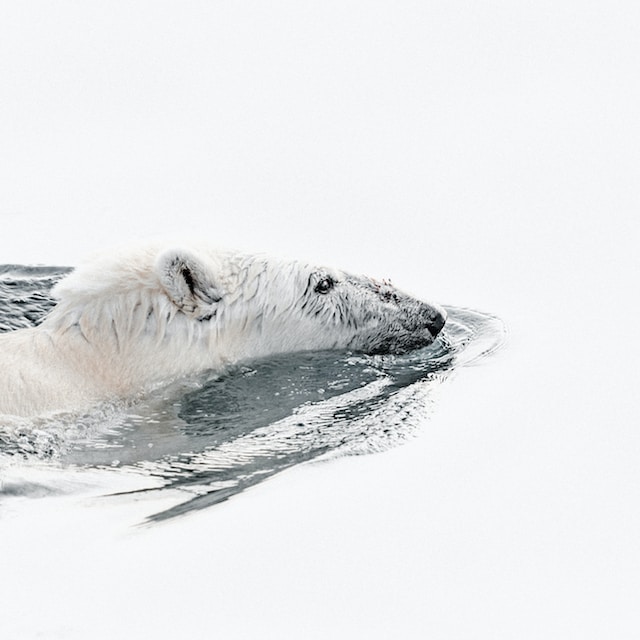
Photo of polar bear swimming by Annie Spratt on Unsplash
Photo by Annie Spratt on Unsplash

The Greenland Threat Escalates

By Robert Hunziker

Will the world’s major coastal cities, such as NYC, survive escalating global heat conditions in Greenland? And what if both Greenland and Antarctica follow the recent very disturbing pattern of the world’s oceans? For the first time that scientists can recall, sea surface temperatures that always recede from annual peaks are failing to do so, staying high.

Climate change is getting dangerously worse, which is becoming a more common statement among scientists. Ecosystems are starting to fail right before our eyes. For example, in 2022 Europe experienced a big scare with temporary loss of full service for navigable commercial waterways, like the Rhine, and loss of potable water in regions of France and Italy, necessitating water delivery by truck to over 100 communities, with much of Asia experiencing similar issues, especially China and India.

Suddenly, the world is a different place, a description that fits Greenland, especially August 14th, 2021, when it rained at Summit Station, 10,551 feet elevation. There’s no previous record of rainfall at the 2-mile summit. It was one more unprecedented climate event. More on Greenland and coastal cities follows herein.

According to the IPCC 6th Assessment Report: “There is high confidence that climate change has already caused irreversible losses in terrestrial, freshwater and coastal and open ocean marine ecosystems.” Still, climate scientists continue pumping out reports about those same irreversible losses, but frustration mounts as reports pile on top of reports in the face of negligible efforts by the 195 signatories to Paris ‘15.

It’s not surprising that climate scientists are becoming street protestors.

Scientists Rebel

In December 2021 an offbeat science article called for scientists to stop feeding research into a bottomless pit of inaction: “The science-society contract is broken. The climate is changing… The tragedy of climate change science is that at the same time as compelling evidence is gathered, fresh warnings issued, and novel methodologies developed, indicators of adverse global change rise year upon year.” (Source: Bruce C. Glavoic, et al, The Tragedy of Climate Change Science, Climate and Development, Vol 14, Issue 9, 2022)

Furthermore: “We therefore call for a halt to further IPCC assessments. We call for a moratorium on climate change research until governments are willing to fulfil their responsibilities in good faith and urgently mobilize coordinated action from the local to global levels. This third option is the only effective way to arrest the tragedy of climate change science,” Ibid.

“Over 1,00o scientists from 25 countries staged protests last week following the release of IPCC’s new report.” (Source: Scientists Stage Worldwide Climate Change Protests After IPCC Report, Smithsonian Magazine, April 13, 2022).

At the American Geophysical Union meeting in December 2022, which is the largest annual meeting of scientists, activists’ scientists unfurled a banner that read: “Out of the lab & into the streets,” demanding rapid deep cuts to greenhouse gas emissions by 2025 to avoid catastrophic climate effects, meaning all hell will break lose. But maybe it’s already breaking lose? In fact, in many respects it is already breaking lose.

Greenland is starting to come apart at the seams right before our eyes, threatening to impact the world’s most prominent cities: New York City, Miami, Bangkok, Amsterdam, Ho Chi Minh City, Cardiff, New Orleans, Manila, London, and Shenzhen are the 10 most vulnerable cities for sea level rise. Based upon the following chart of Greenland melt extent, capturing only a short duration in time, the famous cities must hope this ominous graph, June 28th, is nothing more than an aberration that dissipates soon. A nearly vertical spike of ice sheet melt extent can be seen on the chart from Jason Box, climatologist, Geological Survey of Denmark and Greenland,.

A picture containing text, screenshot, plot, line Description automatically generated

Surely the radical spike up does not forecast new higher levels down the road, as it naturally dissipates, but what if it does not dissipate, similar to sea surface temperatures that always recede from annual peaks but failed to do so, staying high? Then, seawalls become mandatory.

“Sea surface temperatures (SST) have risen 5 degrees Celsius above normal during June. This is the warmest they have been in more than 170 years for this time of the year.” (Source: North Atlantic Marine Heatwave ‘Beyond Extreme’, Down to Earth, July 5, 2023)

Already, the combined ice mass loss for Greenland and Antarctica has been accelerating, fast and faster, from 116 billion tons per year in the late 1990s to 410 billion tons per year 2017-2020, which comprises the most recent data set. That’s a 250% increase in one decade, which is piping hot for a colossal block of ice. At that rate, it’s probably a good idea to start building seawalls, forget the plans, just build.

Meanwhile, the 10 coastal cities should keep their collective fingers crossed that the spike up doesn’t portend the future, like the recent experience with ocean heat, which demonstrated major, maj0r unwelcomed changes in climate behavior. If so, the word “trouble” takes on new meaning for some of the world’s biggest cities. In fact, The Economist declared Greenland a “goner” a couple of years ago: The Greenland Ice Sheet Has Melted Past the Point of No Return, The Economist, April 25th, 2020.

However, the problem runs deeper yet. A recent study of icesheets shows that the current generation of sea level rise modeling that’s commonly used by the Intergovernmental Panel on Climate Change (IPCC) and policymakers is too conservative, unintentionally lowballing, missing data that changes the complexion from a cautionary yellow to a red alert.

According to the study, the hidden interior of the Greenland ice sheet is destabilizing because of millions of hairline cracks that cause hydro-fracking that satellite observations and previous studies have not yet recognized. (Source: David M. Chandler, et al, Widespread Partial-Depth Hydrofractures in Ice Sheets Driven by Supraglacial Streams, Nature Geoscience, June 2023)

The implications of the Chandler study are profound as the hydrofractures occur far from crevasse fields and melt lakes where science ordinarily finds such occurrences. Over time tiny hairline cracks grow into giant gaping maws large enough to swallow a cathedral. Ice sheet stability is compromised.

Beyond the Chandler study, other recent studies reveal vulnerabilities that are not yet factored into sea level expectations by the IPCC or policymakers. For example (1) warm ocean currents are flowing under ice shelves in Greenland and Antarctica, destabilizing, undercutting outlet glaciers (2) Abnormal levels of rainfall in Greenland, including regions where, in unprecedented fashion, it’s never rained before, accelerate surface melt (3) foreign surface materials darken Greenland’s ice sheet and absorb more solar radiation, accelerating melt. And (4) Is Antarctica included in IPCC calculations for sea levels, or did they not have enough data points to include it? I think not. Meantime, the Antarctic Peninsula and West Antarctica are already teetering, like listing ships at sea. Nobody knows for sure how soon a crash happens, maybe Thwaites, the alleged Doomsday Glacier, hmm.

An international collaboration of 65 polar scientists established in 2011, named Ice Sheet Mass Balance Inter-Comparison Exercise -IMBIE- to reconcile measurements of ice sheet mass balance. It’s supported by the European Space Agency (ESA) and NASA. According to an April 20, 2023, press release: Since the early 1990s there has been a fivefold increase in melting of ice sheets. A five-fold increase is beyond disturbing, whatever that may be.

Underestimating sea level rise by the IPCC and policymakers is exposed in study-after-study, for example Eric Rignot, senior research scientist NASA Jet Propulsion Laboratory and professor, University of California, co-led a study of the Petermann Glacier, Greenland which proved that the melt rate at the junction of the ocean with grounded ice is much more vigorous than expected. Their finding potentially doubles projections of sea level rise. (Source: Enrico Ciraci, Eric Rignot, et al, Melt Rates in the Kilometer-Size Grounding Zone of Petermann Glacier, Greenland, Before and During Retreat, Proceedings of the National Academy of Sciences, May 2, 2023)

Doubling sea level rise is difficult to fathom and would be nearly impossible to handle, especially with nobody planning for it to happen.

“These ice-ocean interactions make the glaciers more sensitive to ocean warming,’ said senior co-author Eric Rignot, UCI professor of Earth system science and NASA JPL research scientist. ‘These dynamics are not included in models, and if we were to include them, it would increase projections of sea level rise by up to 200 percent – not just for Petermann but for all glaciers ending in the ocean, which is most of northern Greenland and all of Antarctica,” Ibid.\

Based upon numerous requests for a shorter-term forecast of likely sea level rise, an analysis was undertaken by NASA, the National Oceanic and Atmospheric Administration (NOAA), and the U.S. Geological Survey, expecting significant sea level rise over the next 30 years, by region. They projected 10 to 14 inches (25 to 35 centimeters) of rise on average for the East Coast, 14 to 18 inches (35 to 45 centimeters) for the Gulf Coast, and 4 to 8 inches (10 to 20 centimeters) for the West Coast. (Source: NASA Study: Rising Sea Level Could Exceed Estimates for U.S. Coasts, NASA- Global Climate Change, November 1, 2022)

The wild card in NASA’s calculations is whether “the accelerating rate of sea level rise detected in satellite measurements from 1993 to 2020 – and the direction of those trends” used to determine future sea levels remains the same or accelerates beyond initial baseline calculations.

What can be done?

The answers for what can be done are in the public domain. Indeed, what can be done is all about when, or if it will be done, which is the real issue.

“The greatest threat to our planet is the belief that someone else will save it.” (Robert Swan, one of the world’s greatest explorers, first to walk both the North and South Poles)

This article was originally published on July 7, 2023 © Counterpunch
Robert Hunziker lives in Los Angeles and can be reached at rlhunziker@gmail.com.

El Nino Threatens Unparalleled Heatwaves

Photo by Raphael Wild on Unsplash

El Niño Threatens Unparalleled Heatwaves

By Robert Hunziker

Can the world handle a climate that exceeds the far-reaching excesses of 2022 when the entire world turned upside down with unprecedented flooding, fires, and drought?

NOAA and climate researchers in Germany and China believe an El Niño, starting in 2023-24, is in the works. El Niños equate to more heat throughout the planet.

Buckle-up! El Niño could increase ocean temps by 2°-to-4° Fahrenheit, impacting the planet’s entire climate system, and it’s coming on top of the whackiest, hottest, boldest climate year (2022) in recorded history as paradoxically La Niña in 2022, which is supposed to help cool the planet, didn’t help!

In 2022, the planet set heat records, drying up major commercial waterways (Po, Danube, Rhine), extreme severe drought necessitated water delivery by trucks (France, Italy, Chile), fires burned down entire towns (California), as record heat killed thousands (India). None of 2022’s record-setting fires, heat, floods, and droughts were normal. In fact, it was especially abnormal, happening in the face of a La Niña, which is part of the El Niño-Southern Oscillation (ENSO) climate pattern when the sea surface temperature across the eastern equatorial part of the central Pacific Ocean is typically lower (cooler) by 3° to 5 °C (5.4°to 9°F). But a cool La Niña didn’t do the job!

Now an El Niño (warmer-to-hotter) event is on tap for some time in 2023/24, likely lasting 2-5 years. The ramifications will be worldwide. According to Prof Bill McGuire, at University College London, UK: “When [El Niño arrives], the extreme weather that has rampaged across our planet in 2021 and 2022 will pale into insignificance.” (Source: El Niño Is Coming—and the World Isn’t Prepared. Wired, Dec. 24, 2022)

El Niño could very easily provide a preview of life at 1.5C, which is widely considered a line-in-the-sand not to be crossed before triggering tipping points that’ll far exceed the challenges of a record-setting hot year in 2022. The last El Niño in 2016 was the hottest year ever recorded, but not surprisingly, the oceans ever since then have accumulated much more heat over these past 6 years, now with enough to make 2016 look tame. This next El Niño could be a gut-punch, and the world is not prepared, not even close.

NOAA believes the odds favor El Niño starting this year. Researchers in Germany and China have suggested it could be “a strong one.” As a result, climate scientists are worried about a more-powerful-than-ever strain on sensitive ecosystems like the Great Barrier Reef and the Amazon rainforest, especially as they are already in a fragile state.

The risks are big: “It’s very likely that the next big El Niño could take us over 1.5C,” according to Prof Adam Scaife, the head of long-range prediction at the UK Met Office. “The probability of having the first year at 1.5C in the next five-year period is now about 50:50… We know that under climate change, the impacts of El Niño events are going to get stronger, and you have to add that to the effects of climate change itself, which is growing all the time. You put those two things together, and we are likely to see unprecedented heatwaves during the next El Niño.” (Source: Warming of Unprecedented Heatwaves as El Niño Set to Return in 2023, The Guardian, March 2021).

A strong El Niño, similar to 2015/16, could bring on permanent damage to ecosystems. Back in 2015-16, the Great Barrier Reef experienced its most devastating coral bleaching ever as marine heat killed more than one-half of the corals in the northern portion of the reef. Moreover, even in the La Niña (cooling) year of 2022 it was still hot enough to cause massive bleaching.

Meanwhile, the Amazon rainforest is very near a critical tipping point of no return as it struggles with global warming and deforestation. The last El Niño killed 2,500,000,000 trees, which temporarily turned one of the world’s largest carbon-capturing ecosystems into a source of carbon emissions. Such an unfolding tragedy requires no preamble to understand the enormity of risks when tampering with the planet’s most significant hydrosphere, releasing billions of tons of moisture into the atmosphere with key worldwide impact.

That same 2015-16 El Niño brought severe drought to Indonesia with massive wildfires in forests, emitting vast stores of carbon into the atmosphere. And the same El Niño was behind a massive bout of melting in Antarctica in January 2016 as a sheet of meltwater formed across the Ross Ice Shelf, the largest ice shelf of Antarctica.

Yet, it cannot be emphasized enough that 2015-16 was merely a warning of what was to come with increasing levels of greenhouse gases like CO2 and Ch4 and N2O. As of February 2023, according to the US EPA: “Global carbon emissions from fossil fuels have significantly increased since 1900. Since 1970, CO2 emissions have increased by about 90%, with emissions from fossil fuel combustion and industrial processes contributing about 78% of the total greenhouse gas emissions increase from 1970 to 2011. Agriculture, deforestation, and other land-use changes have been the second largest contributors.”

And according to the National Oceanic and Atmospheric Administration: “Greenhouse gases continued to increase rapidly in 2022… Carbon dioxide, methane and nitrous oxide rise further into uncharted levels… 2022 was the 11th consecutive year CO2 increased by more than 2 ppm, the highest sustained rate of CO2 increases in the 65 years since monitoring began. Prior to 2013, three consecutive years of CO2 growth of 2 ppm or more had never been recorded.” (Source: US EPA, April 5, 2023)

Clearly, greenhouse gases are out of control more so than at any other time in human history in the face of a climate system that’s unmistakably burping, coughing, wheezing, burning, and dying. The great iconic masterpieces of nature like the Amazon rainforest and the Great Barrier Reef are sickly and turning against nature. This is not normal.

All of which leads to a distinct possibility of an upcoming extreme topsy-turvy climate scenario in the face of a very weak, in fact feeble-minded, discordant world leadership, which is a toxic combination that is certain to be fatal, as dire circumstances require unity of purpose, not discord.

Meanwhile, as the oceans absorb increasing levels of planetary heat, there’s evidence that El Niños are starting to affect El Niños leading to Super El Niños. “Over the last 40 years or so, the world has seen some of the strongest El Niños on record.” (Source: A Looming El Niño Could Give Us a Preview of Life at 1.5C on Warming, Grist, Feb. 24, 2023).

As greenhouse gases like CO2 emitted by cars, trains, planes, and industry increase by the year, Super El Niños will start to affect Super El Niños, bringing in its wake Super-Super El Niños with devastating consequences never considered possible. Then what?

There is only one logical solution to hopefully counter this fierce impending risk. The world must convert to renewables and initiate carbon removal techniques as quickly as possible, but what are the prospects remains an open question? What on earth can discordant leadership accomplish?


Robert Hunziker is a freelance writer and environmental journalist whose articles have been translated into foreign languages and published in over 50 journals, magazines and sites worldwide.

This article was originally published on April 21, 2023 © Counterpunch
Robert Hunziker lives in Los Angeles and can be reached at rlhunziker@gmail.com.

Can the Climate Be Restored?

Photo by Li-An Lim on Unsplash

Can the Climate Be Restored?

By Robert Hunziker

A fresh approach to fixing climate change/global warming is outlined in a new book: Climate Restoration, which focuses on how the climate can be restored. Indeed, the book is full of fascinating details, meriting a closer look and critique (Peter Fiekowsky and Carole Douglis, Climate Restoration, Rivertowns Books, 2022).

But first: The words climate change and global warming have become imbedded in the fabric of society so much so that the attendant dangers become a nonevent in people’s minds. Over time, they become comfortable with their own personal knowledge of what it means. That’s a problem because studies suggest that only a tiny fraction of people truly understand the real science and inherent dangers.

Meanwhile, in touch with reality, the risks associated with climate change/global warming keeps climate scientists wide-eyed in the middle of the night staring at the ceiling, unblinking, in a cold sweat.

For example, one well-known scientist claims: “At just 1.2°C of global average warming, tipping points (ed. meaning the point of no return) have been passed for several large Earth systems.  These include Arctic sea ice, the Greenland Ice Sheet, The Amundsen Sea glaciers in West Antarctica, the eastern Amazonian rainforest, and the world’s coral systems… The meme that ‘we have eight years to avoid 1.5°C and tipping points’ should be deleted from the climate advocacy vocabulary. It is simply wrong.”

Moreover: “Certainly, in the case of West Antarctica, the evidence continues to pile… Thwaites ‘doomsday’ glacier could begin rapid melt with ‘just a small kick’, researchers say… Similarly, scientists now report that Greenland ice sheet has passed a point of system stability and is now “irreversibly committed” to a significant sea-level rise regardless of twenty-first-century climate pathways.” (Source: Climate Dominoes, National Centre for Climate Restoration, Melbourne, May 2022 by David Spratt, Climate Code Red, September 28, 2022).

On the other hand, from a positive viewpoint, is it possible to roll back time and restore the climate to its former self? Climate Restoration makes that claim and offers supporting evidence.

But first, Climate Restoration tells the ugly truth about the popular rallying cry “Net Zero by 2050.” This idiom is widely accepted as the solution to the global warming monster, but that assumption is simply wrong.

In point of fact, if the world follows through on Net Zero by 2050, by the year 2050 CO2 will be at 460ppm, or higher, and according to Fiekowsky/Douglis, the world will have changed: “The great coral reefs are gone… the oceans are largely devoid… gone, too, are most of the old-growth forest and rainforests… average sea level rise of about two feet. The path of humankind in this scenario is a risky one from which there may be no turning back.” pgs. 7-9

Therefore, assuming the nations of the world continue on the pathway of Net Zero by 2050. Fiekowsky-Douglis make a case for a planet that nobody will want to live on. And, maybe they should’ve even gone further in the analysis by stating major portions of the planet will basically be unlivable. There are scientists who believe that’ll be the consequences of Net Zero by 2050, which the world at large has already embraced as the magical solution: “No worries, we’re gonna hit Net Zero by 2050!”

Thus and therefore, it’s vitally important to be brutally honest about whether one book can change the world, re-educate enough people to see the scientific truth and find a better pathway? Hopefully, Climate Restoration can turn enough heads to make a difference. Moreover, double-hopefully, will it truly work?

Fiekowsky-Douglis, echoing Al Gore, state: “It’s time to acknowledge the inconvenient truth that climate scientists and activists have failed to confront, which is: Meeting the goal of Net Zero by 2050 in no way guarantees the survival of human society as we know it or even that of homo sapiens as a species.” pg. 22.

That paragraph is a shot across the bow for today’s world leaders as the Net Zero by 2050 ship logs into Titanic’s route, Southampton to New York. According to the authors: “The ecosystems we depend on will still continue to collapse” even as society achieves Net Zero by 2050 with universal renewable energy, electric vehicles, and total elimination of fossil fuels.

The hard truth: A monster hangs over, and in fact deflates, Net Zero by 2050: “There will still be a trillion tons (ed. 1,000,000,000,000) of excess CO2 lingering in the atmosphere for a millennium or longer.” pg. 23

Under that scenario with a trillion tons of CO2 still hanging around like a big blanket in the atmosphere continuing to heat up the planet (1) ice caps will continue melting (2) sea levels will keep going up and (3) ecosystems will continue collapsing all whilst the world community pops champagne corks on January 1, 2051 to celebrate Net Zero!

Net Zero does not remove the big blanket. Get over it!

Furthermore, according to the book: “No scientist I know will defend the claim that humankind is likely to survive if we limit our climate efforts to meeting the Paris goals… I sometimes refer to the Paris Accords as ‘the Paris Suicide Pact.” pg. 27

The authors initially discuss the goals of climate restoration on page 28: “Achieving the net zero goal set by the Paris Accords is not enough to guarantee a healthy, sustainable future… We need to go further by reducing the level of atmospheric CO2 to below 300 ppm level to which our species originally evolved and has historically flourished.”

Significantly, the climate restoration plan supplements and completes the work that Paris has started with its target of Net Zero by 2050. Keep in mind, it’s not all bad, as Paris ’15 has inspired the world to work towards a common goal of a cleaner, healthier, sustainable planet as well as motivating nations to work to reduce emissions. In spite of general neglect by nations to abide by IPCC commitments to reduce emissions, Paris ‘15 is still a positive event in many respects, specifically by bringing the issue onto the world stage.

Beyond the work to be (hopefully) accomplished by Net Zero by 2050, the good news is that climate restoration is already fairly well advanced. It involves technological processes not anticipated by Paris ’15. Many have already been tested and successfully developed.

Climate Restoration

“Restoring the climate means reducing atmospheric carbon dioxide from today’s 420 ppm to below 300 ppm by 2050. This will require removing roughly a trillion tons of carbon dioxide that we’ve already pumped into the air that would otherwise remain in the atmosphere far beyond our lifetimes, as well as removing any continuing emissions while we head to zero emissions.” pg. 30

Removing a trillion tons of CO2 is the same as removing seven tons of CO2 per year for every person on the planet. Try that one on for size!

All of which prompts a burning question for many people: Where is all of the CO2 located? According to MIT: “Carbon dioxide mixes evenly through the atmosphere. But the atmosphere as a whole is densest near the ground, so a cubic foot of air at ground level will contain more carbon dioxide molecules than a cubic foot of air high up in the sky.” (Source: Is There a Place in the Atmosphere Where Carbon Dioxide is Concentrated, and if so, Can we Remove it? MIT Climate Portal)

The restoration schedule: The decade of the 2020s is projected for scaling up the removal technologies. Thereafter, removal technologies work full tilt from 2030-2050, thus removing a minimum of 50 gigatons of CO2 each year, which in effect removes legacy CO2 by 2050.

Significantly, the technologies all have one thing in common. Each is an adaptation of natural processes that have actually occurred in former geological eras, hands free, no humans involved.

Climate restoration is not based upon fancy new technology breakthroughs. Rather, it’s as 0ld as nature itself. The planet on its own merits has encountered and resolved the same exact global warming problems over the eons but much, much, much more slowly. As explained by the authors: “Nature was not in a hurry to remove geologically relevant amounts of CO2.” However in contrasts to good ole slow Mother Nature: “Using modern technological tools, we can do the same as nature but on an accelerated timetable. For our survival, we now need to do so roughly a thousand times faster.” Hmm.

Accordingly, “scientists and engineers have developed and demonstrated four major technology processes for reducing greenhouse gas levels that reproduces large-scale natural processes.” pg. 33

Four Major Technologies

The technologies for climate restoration are classified as biomimicry and geomimicry, as follows:

1. Synthetic Limestone Manufacture – capturing CO2 and converting it to synthetic limestone producing a commercial product, which when scaled-up could pull 50 Gt of CO2 per year from the atmosphere.

2. Seaweed Permaculture – the construction of arrays of light-latticed structures constructed of tubes to which seaweed can attach in mid-ocean. At scale it could capture enough CO2 to reduce excess CO2 by 20% over 20 years.

3. Ocean Iron Fertilization – adding trace amounts of iron-ore dust to iron-poor ocean areas, in turn, photosynthesis increases rapidly with expansion of phytoplankton which in turn pulls CO2 from the atmosphere. “If just one or two percent of the ocean bloomed with phytoplankton thanks to ocean pasture restoration, the trillion tons of excess carbon could be drawn… within 20-30 years.” Pgs. 40-41

4. Acceleration of Natural Methane Oxidation – by adding iron chloride to the atmosphere to oxidize methane and thus restore pre-industrial methane levels by 2028.

Each of the four strategies is discussed at length in four separate chapters, pgs. 83-162.

Climate Restoration is a bold idea; it is a fresh idea; it is new to the scene as an adjunct to Net Zero by 2050, which by itself can make a huge difference, but it cannot and will not stop the legacy of 1,000,000,000,000 tons of CO2 hanging-out in the atmosphere. That massive blanket will continue to heat up the planet post 2050. It must be removed… period!

In Conclusion, once you’ve read this article, you have some choices to make. One obvious choice is to think about it for a moment but move on with life, biz as usual.

Or, think about what you can personally do to help restore the climate. Here are a couple of suggestions:

Forward this article to everybody you know with a personal message that you intend to get involved and want friends to help, asking them to also spread the word. It’s that important. After all, “restore the climate” is not exactly well known, but the more word gets around, the better chances it can happen. Word of mouth is a powerful tool for making things happen. Your forwarding message could be: “I am sending an article about climate restoration. It’s fascinating stuff! Let me know what you think.”

Or, contact the Foundation for Climate Restoration and ask how you can join in the effort: https://foundationforclimaterestoration.org/

Or, write to every local, state, and federal government representative asking them to look into climate restoration.

Or, maybe forward William Shatner’s message, which is found in the postscript to this article.

It’s important to be realistic when it comes to fixes for climate change. For decades now, nations have dragged their feet, not keeping commitments and breaking promises to cut emissions. And, the climate change issue has acquired a considerable amount of cynicism, which is fed by various sources like Fox News, politicians of note like Trump and Bolsonaro, and a general public belief that it’s old news, heard over and over again, that somebody somewhere will handle it if it gets bad enough. In other words, the general public is not well-educated about the reality.

In that regard, it’s much worse than people realize and happening so much faster than scientists ever expected. Ecosystems are stressed to breaking points from the far northern latitudes to the far southern and everywhere in between.

Harmful climate change is happening everywhere where nobody lives. For example, while blindfolded throw a dart at a globe; it’ll probably hit close to a stressed ecosystem, for example, Thwaites “Doomsday” Glacier in West Antarctica (tipsy) or Greenland (massive ice loss) or Siberian permafrost (methane bubbling lakes) or Lake Mead (close to dead pool status) or the Po River/Italy (a trickle this past summer) or the Amazon rainforest (30,000+ human-fires/August) or melting Andes’ glaciers (water wars in So. America) or tanker trucks supplying drinking water to 400,000 families outside of Santiago, all signs of stressed ecosystems threatening to shut down nature’s climate system of life support.

Thus and therefore, whether Climate Restoration can gain enough traction to get the job done is a major concern, and it’s why every person who can help, must help. Our home, our planet is at stake, and right now it does not look good. Time is of the essence.

It is imperative that Climate Restoration gets a chance to prove itself because, frankly, it is the only known technological process for naturally reviving our spectacular blue planet.

Postscript: Dateline, October 13, 2021: Capital Kirk, aka: William Shatner’s feet touched ground after a 10-minute 66-mile trip four miles beyond the edge of space on Blue Origin. Shatner wept, but he wasn’t sure why, until he reflected for a spell: “I discovered that the beauty isn’t out there, it’s down here, with all of us. Leaving behind made my connection to our tiny planet even more profound.”

Upon more reflection: “My trip to space was supposed to be a celebration; instead, it felt like a funeral.”

At a later date, upon more reflection: We must have “a clarion call to stop climate change… a Manhattan Project of scientists charged with removing carbon dioxide, methane, and other greenhouse gases from the atmosphere.”

Climate Restoration, Rivertowns Books, 2022


Robert Hunziker is a freelance writer and environmental journalist whose articles have been translated into foreign languages and published in over 50 journals, magazines and sites worldwide.

This article was originally published on October 28, 2022 © Counterpunch
Robert Hunziker lives in Los Angeles and can be reached at rlhunziker@gmail.com.