Discovery of Immense Methane Leaks in Antarctica

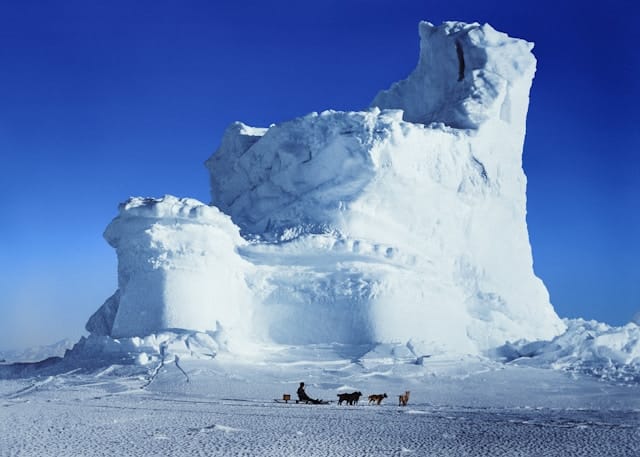
Photo by Unseen Histories is licensed by Unsplash
Photo by Unseen Histories is licensed Unsplash

Discovery of Immense Methane Leaks in Antarctica

By Robert Hunziker

A new discovery of methane leaks in Antarctica could be a game-changer and potential near-term threat that’s difficult to characterize without sounding overly negative. Of course, situations like this that appear threatening to civilization, or life as we know it, are difficult to believe and accept as something that will really happen, which is understandable because nothing in human history compares to the risk attendant to the dreaded runaway greenhouse effect. So, there’s nothing in human history to compare it to.

Nevertheless, there are scientists who believe we are living on borrowed time because of massive changes happening at the top and at the bottom of the planet where only scientists and Indigenous people hang out. Now, this new discovery serves to emphasize their concerns of a climate monster capable of altering everything, lurking in the background.

The threat is explained in a YouTube video: Immense Methane Leaks in Antarctica: A Hidden Climate Theat Unveiled by Phantom Ecology, which is headed by Milton Muldrow, Ph.D. asst. professor at Wilmington University and Chair/College of Arts & Sciences.

As a prelude to this new information, it’s important to note that Russian scientists have been monitoring the risks of methane breakouts in the High Arctic for a couple of decades and have voiced concern about the risks of a sudden burst as undersea methane clathrates increasingly melt, bubbling to surface in ever-larger diameters, which they have measured. As it happens, methane (CH4) is many times more potent than CO2 at trapping excessive global heat.

Additionally, the risk of a methane breakout is mentioned by Peter Wadhams, emeritus professor, Ocean Physics, University of Cambridge, in his celebrated, brilliant interview: The Future of Sea Level Rise: “Russian scientists working the region believe a huge pulse of methane could erupt.” This could crank up global temperatures to ultra-dangerous levels in as little as 2-3 years. The consequences would be unspeakable. And with Antarctica joining, the game changes.

As a science researcher/writer of over 400 articles, this new development is extraordinarily spooky and difficult to accept because the consequences feel way too close for comfort. Stated at the opening of the Phantom Ecology video: “Deep beneath the icy plains of Antarctica, a slumbering giant is beginning to stir. Scientists have made a startling discovery. Vast reservoirs of methane hydrates locked away for millennia are showing signs of instability.”

The finding sent ripples of concern throughout the world of science. The consequences for the planet could be quite dangerous, maybe sooner rather than later. Rising plumes of methane (CH4) near the Antarctic Peninsula raises a major concern that trapped methane will be released into the atmosphere, exacerbating an already dire situation of accelerating global temperatures. The Intergovernmental Panel on Climate Change (IPCC) Maginot line of 1.5C above pre-industrial not to be exceeded as framed at the Paris 2015 climate conference by nearly all the nations of the world is kaput. To date, global temperatures have been exceeding that level for nearly two years running.

Meanwhile, world famous climate scientist James Hansen (Earth Institute, Columbia University) says 2C is on the horizon. “The pace of global heating has been significantly underestimated, according to renowned climate scientist Prof James Hansen, who said the international 2C target is “dead” (Climate Change Target of 2C is ‘Dead’ Says Renonwed Climate Scientist, The Guardian, Feb. 4, 2025). It’s a huge understatement to say this would be horrendous for Antarctic methane leaks, Arctic methane leaks, including Siberian methane leaks and Alaskan methane leaks, as well as Glacial methane leaks (see below “Methane Double Trouble” for another disturbing new discovery).

The volume of methane locked away in Antarctic ice is estimated to be more carbon than all other fuel deposits combined for the planet. A small fraction of this escaping into the atmosphere could have catastrophic consequences for the climate system “in the not-too-distant future.” (Muldrow)

A Climate Time Bomb

Methane hydrates consist of methane molecules trapped within a crystalline lattice of water molecules. This forms an ice substance that can ignite if brought to surface and lit with a match. According to the video: “Release of methane from these hydrates is a frightening prospect. Such a release could trigger a runaway greenhouse effect leading to rapid and catastrophic climate change.” Rapid onset of methane would bring sea levels rising at unprecedented rates, extreme weather events more frequently, and widespread disruptions/destruction to global ecosystems.

Muldrow’s analysis of the first time that large-scale CH4 emissions have been detected in Antarctica is confirmed by Polar Journal d/d March 2025: Large Methane Leaks Discovered in Antarctica: “A research team led by the Institut de Ciències del Mar (ICM-CSIC) and the Spanish Geological and Mining Institute (IGME-CSIC) undertook an expedition to the Antarctic Peninsula as part of the ICEFLAME project. The researchers returned on February 17 and have now reported the discovery of large methane leaks on the sea floor in an ICM publication. For the first time, they were able to observe that large quantities of methane are released from the seabed in a gaseous state where methane hydrates occur.”

Additionally, according to an article in Rapusia.org d/d March 14, 2025, Massive Methane Leaks Detected in Antarctica, Posing Serious Climate Risks: “A team aboard the Sarmiento de Gamboa research vessel observed large columns of gas escaping from the ocean floor, with some extending up to 700 meters (2,300 feet) long and 70 meters (230 feet) wide.”

Methane Double Trouble

In addition to massive CH4 leaks discovered in Antarctica, up north in the Arctic scientists recently discovered Arctic glaciers leaking “significant amounts of methane,” revealed for the first time. As explained: “Glacial melt rivers and groundwater springs are transporting large volumes of methane from beneath the ice to the atmosphere. This previously unrecognized process could contribute to Arctic climate feedback, accelerating global warming.” (‘Glacial Fracking’: A Hidden Source of Arctic Greenhouse Gas Emissions, ScienceDaily, Feb. 19, 2025)

As a result, scientists now need to reassess methane budgets, incorporating glacial emissions alongside permafrost thaw and wetland methane fluxes. The complexities of multiple dangers of global warming continue to expand and merge in time. It now appears that both ends of the planet have turned dicey, risky, subject to sudden change all too soon for comfort and all together at the same time.  This could get very ugly; an article in Space.com deals with the issue of runaway global warming: How The Runaway Greenhouse Gas Effect Can Destroy a Planet’s Habitability — Including Earth’s, Space.com, December 19, 2023. Here’s the storyline: “Using advanced computer simulations, scientists have shown how easily a runaway greenhouse effect can rapidly transform a habitable planet into a hellish world inhospitable to life.”

Alas, as explained many times in prior articles, corporations, oil and gas operations, countries are all failing to honor commitments to mitigate climate change even before the U.S. reversed course on combating climate change under the Trump administration. This becomes infectious as Germany recently announced an intention to lessen its commitments. The timing could not be worse. The WMO State of the Climate 2024 Update once again issued a Red Alert at the sheer pace of climate change in a single generation, turbo-charged by ever-increasing greenhouse gas levels in the atmosphere. 2015-2024 will be the warmest ten years on record; the loss of ice from glaciers, sea-level rise and ocean heating are accelerating; and extreme weather is wreaking havoc on communities and economies across the world. (World Meteorological Organization)

Making matters more unnerving yet, according to Copernicus Global Climate Highlights 2024: “Each month from January to June 2024 was warmer than the corresponding month in any previous year. August 2024 equaled the record warmth of August 2023 and the remaining months from July to December were each the second warmest for the time of year, after the corresponding months in 2023.”

With a strong dose of humility, it’s suggested that the world’s leadership undertake all available efforts to confront this real, already started, threat to life on the planet via a super-duper Marshall Plan for the world. Alas, it’s almost assured that this suggestion will go unheeded, especially with consideration of the following headline in the prestigious science publication Nature d/d Feb. 25, 2025: Trump 2.0: An Assault on Science Anywhere is an Assault on Science Everywhere.

The climate system is not going to ring a bell before all hell breaks loose. It’ll happen out of the blue, temperatures relentlessly climbing month by month by month to intolerable levels, possibly already started, observed by Copernicus as stated above. Nobody has ever theorized, or even suggested, that it’s impossible for humanity to exterminate itself.
————————————
This article was originally published on March 21, 2025 © Counterpunch
Robert Hunziker lives in Los Angeles and can be reached at rlhunziker@gmail.com.

Note: This article will also be posted on the Facing Future Now! Facebook group. If you would like to comment on this article, please go to the Facebook group and post your comments there under the article posting.

Facing Future Now! https://www.facebook.com/groups/530755592068234
Greenland Cascading 30 Million Tons Per Hour

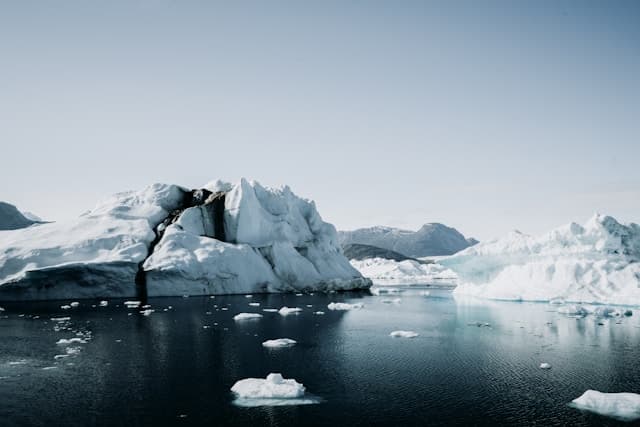
Photo by Annie Spratt is licensed by Unsplash.

Greenland Cascading 30 Million Tons Per Hour

By Robert Hunziker

Facing Future.tv recently conducted an interview about spooky new developments in Greenland. The ice sheet is cascading/gushing at unheard of rates never dreamed possible at this stage of global warming, or at any stage for that matter.

The video opens with a statement by Peter Wadhams, professor emeritus Ocean Physics, Cambridge University, a leading authority on Arctic sea ice (A Farewell to Ice: A Report from the Arctic, Oxford University Press, 256 pgs): “Greenland’s rate of melt in summer was something that we knew about, and it was gradually increasing, then suddenly it’s multiplied itself by about 8 times; this is 30,000,000 tons an hour. When I was last up there it was more like 30,000,000 tons per day. That’s just something unheard of and so we’re really worried about what’s going on with Greenland.”

As it happens, Dr. Wadhams’ expression “worried about what’s going on with Greenland” is a very strong candidate for ‘understatement of the year’ or maybe of the century. The rate of melt he discussed is 720,000,000 tons per day versus previous analyses of 30,000,000 tons per day.

The Facing Future.tv 25:33-min video is entitled: Greenland: Ice Loss Accelerating, 30 Million Tonnes an Hour with Paul Beckwith and Peter Wadhams, Hosted by Dale Walkonen March 3, 2024.

Question by the host: “How serious is the situation in Greenland?

Answer (Wadhams): “Well, it’s very serious because it’s unprecedented that the rate of melt… Suddenly its multiplied itself by about seven or eight; it’s 30 million tons an hour, but when I was last up there it was 30 million tons per day… now gone to an hourly rate which used to be daily rate… when you’re up on the ice sheet you see big changes. There are always large meltwater streams, holes filling up with water. It’s a very dynamic scene but it’s not nearly as dynamic as it is now because everything is speeding up by a factor of about eight. It’s something unheard of… it’s not figured into the climate models used by the IPCC.”

According to Paul Beckwith, climate system scientist, University of Ottawa, the High Arctic has been warming 5-8 times the global average for some time now as many scientists and newspaper reports erroneously claimed it was only two-three times, not 5-8 times. The High Arctic directly influences Greenland, and he claims there’s good data on Greenland and Antarctica via gravity anomaly satellites, e.g., NASA’s GRACE, CyroSat, and Copernicus Sentinel-3, that show melt rates doubling every decade for both regions.

Regarding the new data: “People are going to be very surprised at the accelerated growth of sea level rise in the next decade, or two, let alone if all of Greenland melted, it would be 25 feet of sea level rise.” (Beckwith)

According to Beckwith: James Hansen (Earth Institute/Columbia University) some time ago said he would not be surprised if we had 5 meters (16 feet) of sea level rise by 2100. He said that years ago when the IPCC expected about one-half a meter by 2100.

It should be noted that current IPCC sea level rise statistics assume 1-4 feet this century, depending upon various input data.

Beckwith: We’re seeing huge acceleration in global warming, in ocean warming, estimates of sea level rise are going to be going up, up, up a lot, continually revised upwards. He believes Hansen’s 5 meters is an underestimate. If perchance that happens, what’ll it be by 2030 or 2040 or 2050? After all, Greenland’s melt rate is not static; it’s already off the charts at a baffling 30M tons per hour, formerly 30M tons by the day. Seemingly, that’s comparable to breaking the sound barrier at Mach 1.

Wadhams on Hansen: “I think Hansen is right in expecting a higher rate than models give; he always has a healthy contempt for models which I think is correct because nearly always, models are inadequate, especially the Intergovernmental Panel on Climate Change, IPCC models.”

As queried by the host, since most people listen to what the IPCC says, for example, setting nation/state policies, where can people go for accurate information?

Beckwith’s response to ‘the dilemma of where to go for accurate information’: Scientists are individually willing to discuss their own research but reluctant to talk about research by other scientists and only make projections based upon computer models, but computer models are based upon history, often stale information by the time used.

Not included in climate modeling, major wildfires in Canada and Russia last year spewed massive amounts of ash onto Arctic ice which accelerated melting beyond expectations as dark background absorbs solar radiation rather than reflecting it to outer space.

Another new factor impacting Greenland’s ice melt that’s downright spooky is Hansen’s recent statement about Earth’s energy imbalance, which is completely out of whack with more energy than ever before coming into the planet as absorbed sunlight rather than going out as heat radiated to outer space. This imbalance has doubled within only one decade, according to a study by NASA and the US National Oceanic & Atmospheric Administration  This may be, probably is, the biggest ‘bad news of the year’.

Earth’s energy imbalance or “sunlight in” versus “sunlight out” is currently running at a frightful rate @ 1.36 W/m2 (watts per square meter) as of the current 2020s decade, which is double the 2005-2015 rate @ 0.71 W/m2 (Source: James Hansen).

Beckwith highlighted another major concern for Greenland as the change in jet streams at 20-40,000 feet altitude is altered, as a result of loss of Arctic sea ice, into vast wavey troughs that trap heat over Greenland. This never happened in the past. Another new dynamic, according to Beckwith, is a lot of rain in the Arctic instead of snow, thanks to global warming. And atmospheric rivers, like those that drenched the West Coast, hitting Greenland, accelerating the melt process.

It’s an understatement to conclude that Greenland is in trouble and conventional views of sea level rise are way too conservative. Unfortunately, by extension of these new facts, coastal cities are more vulnerable to flooding than ever before.

According to Climate Central, widespread areas are likely to see storm surges on top of sea level rise reaching at least 4 feet above high tide by 2030, and 5 feet by 2050. Nearly 5 million U.S. residents currently live on land less than 4 feet above high tide, and more than 6 million on land less than 5 feet above. Portland’s high tide broke all-time records, reaching 14 feet at the same time as record-breaking floods hit the US East Coast, January 14th, 2024. NOAA expects sea levels along US coasts to rise as much over the next 10 years as they did over past 100 years.

But the Climate Central study doesn’t include calculations for Greenland’s 30M tons per hour or Antarctica suddenly losing sea ice extent at a record-setting pace 2022,2023, 2024 in succession. Once again, Earth’s climate system outmaneuvers climate science research, leaving scientists bent over at the knees, coughing in its dust. It’s too fast for scientists to keep up.

Bottom line, it’s nice to assume everything will be okay, “we’ll get through it, there’s still time to fix it,” blah-blah-blah, but several new earth-shattering indicators, especially at both poles, are not waiting for that illusive fixit.

Frankly, nobody knows how bad, how soon this worldwide melt-off develops as both poles, the Arctic and Antarctica, experience unbelievably rapid change in concert with land-based melt-offs in the Alps, Patagonia, Andes, Himalayas, Caucasus, and all other mountain ranges worldwide. Meanwhile many of Europe’s famous ski resorts closed in February, even snow cannons stopped working due to high temperatures.

For the record, here’s the James Hansen sea level projection, as mentioned by Paul Beckwith: “In what may prove to be a turning point for political action on climate change, a breathtaking new study casts extreme doubt about the near-term stability of global sea levels. The study—written by James Hansen, NASA’s former lead climate scientist, and 16 co-authors, many of whom are considered among the top in their fields—concludes that glaciers in Greenland and Antarctica will melt 10 times faster than previous consensus estimates, resulting in sea level rise of at least 10 feet in as little as 50 years. The study, which has not yet been peer-reviewed, brings new importance to a feedback loop in the ocean near Antarctica that results in cooler freshwater from melting glaciers forcing warmer, saltier water underneath the ice sheets, speeding up the melting rate. Hansen, who is known for being alarmist and also right, acknowledges that his study implies change far beyond previous consensus estimates. In a conference call with reporters, he said he hoped the new findings would be “substantially more persuasive than anything previously published.” I certainly find them to be.” (Source: Earth’s Most Famous Climate Scientist Issues Bombshell Sea Level Warning, Slate, July 20, 2015)

Nine years later, increasingly it looks like Hansen will be right once again.

If he’s right about “at least 10 feet” within 50 years, which would be by 2065, then what will it be in 2050, 2040, or 2030? In rough numbers, sometime between 2030-40 it would surpass the IPCC highest estimate for 2100. That’s a big-time headache for every coastal city, right around the corner. Hopefully, a magic potion drops into Earth’s atmosphere and makes this go away like a bad dream.

And as long as the magic potion is around, why not use it to strip the world’s teeny-weeny percentage of the world’s population billionaires of some of their riches to buy renewable energy for the world marketplace and finance science projects to help combat Hot House Earth. It’s coming.

For the faint of heart, cheer up, there are plenty of respected climate scientists that disagree with the expectations stated in this article. Still, over time, somebody will be right; maybe it’ll be them but maybe don’t count on that, wondering what they’d say about Greenland’s turbo-charged 30 Million/Tons/Hour.

Nevertheless, one solution that can help solve global warming is “kill Citizens United” that allows corporate interests to spend unlimited funds to influence elections, politicians, and policy (they’ve made the worst possible choices) … before it’s too late to do anything, or is it?

————–
This article was originally published on March 15, 2024 © Counterpunch
Robert Hunziker lives in Los Angeles and can be reached at rlhunziker@gmail.com.

Note: This article will also be posted on the Facing Future Now! Facebook group. If you would like to comment on this article, please go to the Facebook group and post your comments there under the article posting.

Facing Future Now! https://www.facebook.com/groups/530755592068234